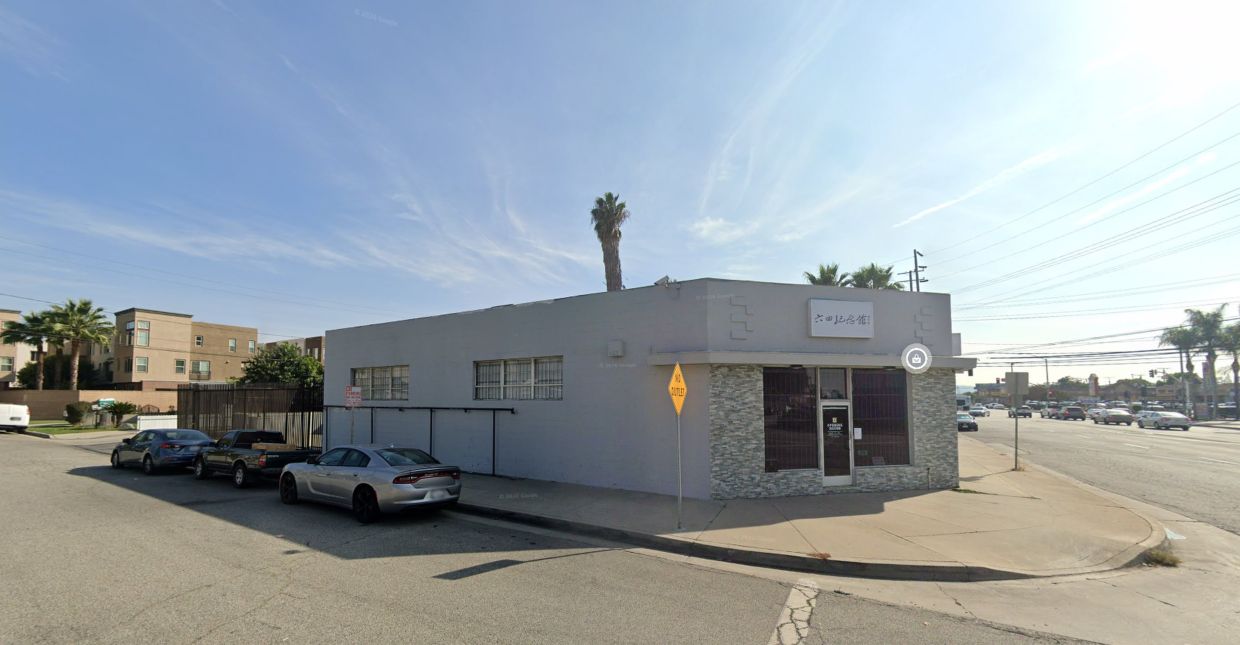
Two prominent Republican leaders have formally requested that the US Justice Department launch a comprehensive investigation into a vandalism incident at a museum dedicated to memorialising the 1989 Tiananmen Square crackdown. The June 4th Memorial Museum in El Monte, California, suffered a break-in on May 31 in which unknown assailants spray-painted displays, damaged property, and deliberately disabled surveillance equipment. The timing of the attack—just days before the anniversary of the June 4 crackdown—has prompted concerns among US policymakers that the incident may represent a coordinated effort to suppress freedom of expression among Chinese diaspora communities seeking refuge in America.
John Moolenaar, a Michigan Republican and chairman of the House Select Committee on China, and Christopher Smith, a New Jersey Republican serving as co-chairman of the Congressional-Executive Commission on China, signed a three-page letter submitted to the Justice Department on Thursday demanding a thorough federal response. The lawmakers specifically requested that the FBI's Los Angeles Field Office and the National Security Division investigate whether the attack was planned, encouraged, or supported by agents acting on behalf of the People's Republic of China or the Chinese Communist Party. Their intervention underscores growing bipartisan concern in Congress about what some perceive as coordinated campaigns designed to intimidate critical voices abroad.
The June 4th Memorial Museum occupies a modest but significant place in the landscape of Chinese diaspora activism in the United States. Opened in 2023, the non-profit institution was originally based in New York before relocating to Los Angeles to reduce operational costs. The museum serves as a repository of historical materials documenting the 1989 Tiananmen Square incident and its aftermath, functioning as both a memorial and an educational resource for Chinese communities seeking to preserve historical memory. According to the museum's own account, it has been sustained through independent fundraising, crowdsourced donations, and civil society contributions rather than government funding, reflecting the grassroots nature of the initiative.
Officials at the museum said the attack included spray-painted markings across framed newspaper clippings and related exhibits, causing what they characterised as serious damage to the institution's physical assets. In a statement posted on their website, museum leadership condemned the perpetrators and vowed not to succumb to pressure, while simultaneously flagging the incident to El Monte police. The museum's response has been notably restrained, avoiding inflammatory rhetoric while still addressing the seriousness of the breach. Museum administrators noted that they had gathered initial leads and expressed willingness to cooperate fully with law enforcement to resolve the case.
Most significantly, the museum's official statement explicitly referenced suspicions of "transnational repression," a term increasingly used by human rights advocates and policymakers to describe efforts by authoritarian governments to intimidate, harass, or suppress dissidents and activists operating beyond their borders. Though the museum declined to elaborate on these suspicions, the allegation carries substantial weight given the geopolitical context surrounding Chinese diaspora activism in Western nations. Such concerns have gained credibility following numerous documented cases of harassment campaigns, surveillance operations, and intimidation tactics allegedly directed at overseas Chinese communities by Beijing-affiliated entities.
The El Monte Police Department has opened a formal investigation into the vandalism and break-in, though neither local authorities nor the Justice Department have publicly confirmed receipt of the congressional letter or announced any plans for federal involvement. The delay in federal response reflects the bureaucratic processes typically involved when congressional bodies request agency action, though the bipartisan nature of the request and the involvement of two established China-focused committees suggests the matter may receive elevated priority consideration. El Monte sits in Los Angeles County, one of the most diverse regions in the United States and home to substantial Chinese American communities with deep connections to diaspora activism.
The House Select Committee on China was formally established in January 2023 as part of congressional efforts to address perceived economic and security competition between the United States and China. The committee operates on a bipartisan basis and possesses the authority to investigate matters related to US-China relations, though it cannot directly propose legislation. Alongside this newer body, the Congressional-Executive Commission on China—created two decades earlier in 2000 during China's accession to the World Trade Organization—has functioned as an independent agency monitoring human rights conditions and rule of law developments within China. Both institutions command significant influence over US policymaking discussions concerning China despite lacking legislative authority.
Beijing's diplomatic mission in Washington declined to comment on the vandalism incident or the congressional request for investigation, maintaining a pattern of non-engagement with what Chinese officials have dismissed as partisan congressional activities. The Chinese government has regularly characterised the House Select Committee and the Congressional-Executive Commission as "political tools" lacking credibility and driven by Cold War mentality and ideological bias. This reflexive dismissal reflects broader tensions between Washington and Beijing over human rights advocacy, religious freedom, and the rights of diaspora communities to organise and speak freely.
For Southeast Asian observers and policymakers, this incident highlights broader concerns about the transnationalisation of political tensions and the increasingly fraught environment surrounding Chinese diaspora communities in democratic nations. Malaysia, Singapore, and other countries throughout the region host substantial Chinese-origin populations, some of whom maintain political interests or family connections to historical events like the 1989 Tiananmen Square crackdown. The vandalism incident and subsequent congressional response underscore how geopolitical tensions between the United States and China increasingly extend into disputes about historical memory, freedom of expression, and the rights of overseas Chinese communities. These dynamics may influence how regional governments balance relations with both Beijing and Washington while managing domestic communities with transnational political concerns.
The broader implications for the diaspora movement remain significant. Museums and memorial institutions dedicated to commemorating sensitive historical moments face unusual vulnerabilities, particularly when they operate with limited funding and modest security resources. The El Monte museum's reliance on crowdsourced funding—having raised USD500,000 toward an ultimate goal of USD2 million—highlights the financial constraints facing such institutions. Congressional interest in the vandalism may increase the museum's profile and potentially attract additional donor support, though it could simultaneously intensify scrutiny from various quarters. The incident ultimately reflects the complicated position of diaspora historical activism in the contemporary geopolitical landscape, where memory and commemoration become intertwined with international relations.

