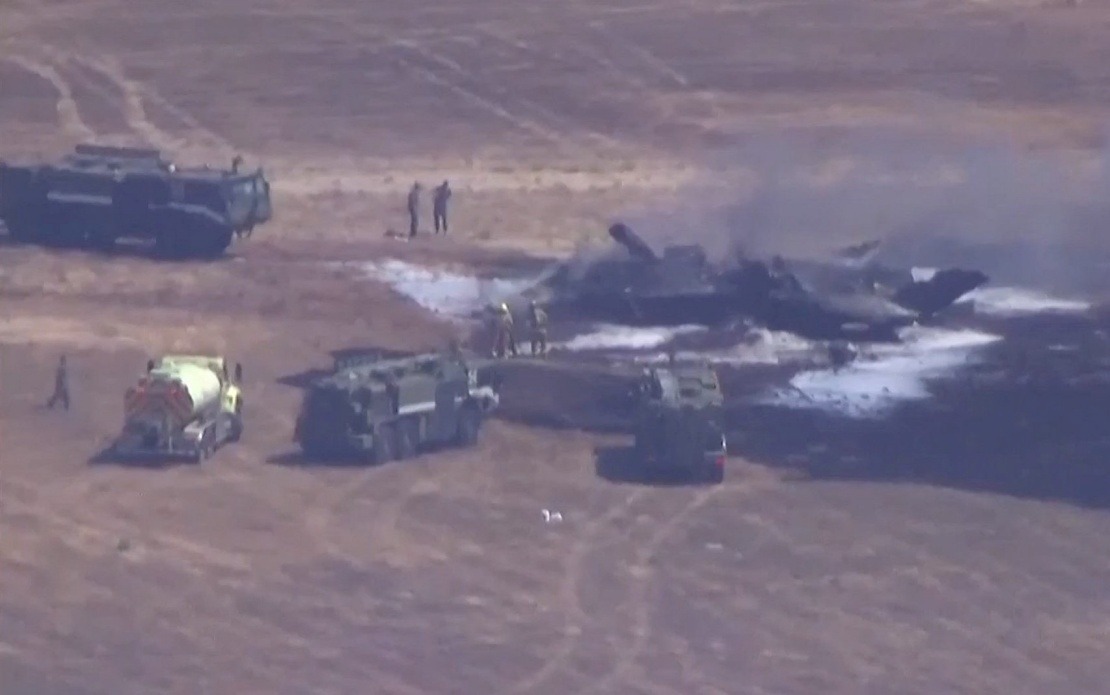
A US Marine Corps F-35B fighter jet experienced a mishap near Marine Corps Air Station Miramar in the San Diego area on Friday, prompting an immediate emergency response from base personnel. The incident unfolded around 10 am local time, with military authorities quickly confirming the development through official statements. The pilot, who was operating the advanced combat aircraft, executed an emergency ejection and was subsequently recovered by rescue teams, according to accounts from the base command.
Marine Corps officials released a brief but confirmation-focused statement regarding the incident, emphasizing the successful recovery of the aircrew member. "We can confirm a mishap involving a Marine Corps F-35B in the vicinity of MCAS Miramar," a base spokesperson announced to assembled media representatives. The rapid acknowledgement reflected the transparency expected of the military command when significant incidents occur at major installations. Further details indicated that the pilot had ejected from the aircraft and was being transported to receive medical evaluation, a standard protocol following emergency procedures of this nature.
The aircraft involved belonged to the 3rd Marine Air Wing, specifically under the command of Marine Air Group 11, according to military records and reporting from regional news outlets. This organizational detail provides insight into the operational structure of the San Diego-based installation, one of the United States' most prominent military air bases. The assignment of advanced F-35B jets to this particular air group underscores the strategic importance of MCAS Miramar within the broader Pacific defense infrastructure.
MCAS Miramar represents a significant hub of American military activity on the West Coast, hosting approximately 15,000 service members drawn from all branches of the US armed forces. The installation serves not only as an operational base but also as a training center for pilots and crews working with cutting-edge aviation technology. Its location in southern California positions it strategically for Pacific operations and provides crucial capabilities for naval and air defense missions across a vast maritime region.
The F-35B variant operates as a specialized short takeoff and vertical landing fighter jet, distinguishing it from conventional runway-dependent aircraft. This particular model represents a significant investment in next-generation defense technology for the Marine Corps, providing enhanced operational flexibility through its ability to operate from austere locations and specialized landing platforms. The aircraft's advanced capabilities, however, come with considerable technical complexity that demands rigorous pilot training and maintenance protocols.
The circumstances surrounding the crash remained unclear in the immediate aftermath, with military investigators beginning a comprehensive examination of the incident. Multiple factors could contribute to aircraft mishaps, ranging from mechanical failures and maintenance issues to pilot error or environmental conditions. The investigation would likely involve detailed analysis of flight data, communications records, and physical evidence from the aircraft, with preliminary findings potentially taking weeks or months to emerge.
For Malaysia and the broader Southeast Asian region, developments involving advanced military aviation systems carry implications for regional security considerations. The F-35 program represents a significant technological commitment by allied nations, and incidents involving these platforms receive careful attention from defense analysts and military planners throughout the region. Many Southeast Asian nations maintain close defense partnerships with the United States, and questions about equipment reliability or operational procedures naturally resonate within those professional circles.
The successful ejection and recovery of the pilot demonstrates the effectiveness of modern safety systems integrated into contemporary military aircraft. Despite the severity of requiring an emergency ejection, the outcome avoided potential loss of life—a crucial achievement in military aviation operations. This positive outcome reflects decades of engineering advancement focused on aircrew protection and survival systems, technologies that have become increasingly sophisticated with each generation of military jets.
Investigations into military aviation mishaps typically involve multiple agencies and expert teams, with the Marine Corps likely coordinating with manufacturer representatives, federal aviation authorities, and specialized accident investigation teams. The thoroughness of such investigations helps identify systemic issues that might affect broader fleet operations, making the process essential for maintaining safe operations across the entire inventory of advanced aircraft. Findings from detailed incident reviews often inform procedural changes, maintenance schedules, or equipment modifications affecting not only the immediate unit but potentially entire air arms.

