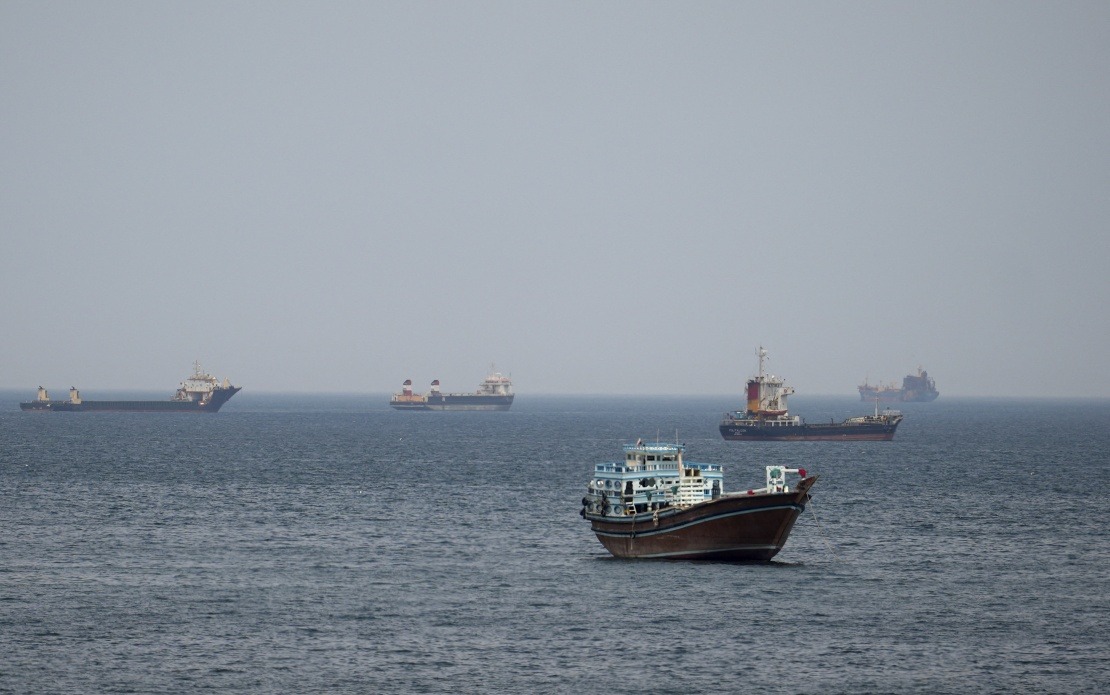
The United States military has successfully facilitated the transit of over 800 commercial vessels through one of the world's most strategically important maritime chokepoints in recent months, according to a statement from US Central Command released Thursday. The operation, which commenced in early May, has enabled the movement of 380 million barrels of crude oil through the Strait of Hormuz, underscoring the critical role American military presence plays in maintaining freedom of navigation in this vital international trade corridor.
The Strait of Hormuz represents one of the most economically significant waterways globally, with roughly one-third of all seaborne traded oil passing through its narrow passages. For Malaysia and other Southeast Asian economies heavily dependent on stable energy supplies and maritime trade routes, the continued functioning of this corridor is essential to regional prosperity and energy security. Any prolonged disruption would have cascading effects across supply chains throughout Asia, potentially driving up costs for energy-dependent industries and consumers across the region.
CENTCOM's announcement comes at a particularly volatile juncture in US-Iran relations. The fragile equilibrium that has characterised the region in recent months faces mounting pressure as both nations engage in tit-for-tat military operations. The renewal of direct military exchanges marks a significant deterioration from the preceding period of relative restraint, raising concerns among international observers about the potential for further escalation that could directly threaten commercial shipping.
The immediate trigger for this latest round of tensions stems from Iranian attacks on three commercial vessels operating within the Strait of Hormuz. These incidents, which occurred in the days preceding the statement, prompted swift retaliatory responses from the United States. Rather than de-escalating the situation, Washington's overnight strikes on Iranian targets appeared to provoke a broader Iranian response that extended across multiple countries in the Gulf region.
Iran's retaliation manifested in a series of military strikes targeting American infrastructure across Bahrain, Kuwait, Qatar, and Jordan. This geographic spread of Iranian operations suggests a deliberate attempt to demonstrate capability and resolve beyond the confines of the Strait of Hormuz itself. The escalation pattern reflects a dangerous cycle wherein each side's response becomes more expansive in scope, increasing the risk of unintended consequences or miscalculation.
Despite the heightened military tensions, the data presented by CENTCOM suggests that commercial shipping has continued to navigate the waterway without major disruptions. This resilience may be attributed to the visible presence of American naval assets and their demonstrated commitment to protecting merchant vessels. The sheer volume of traffic processed—over 800 vessels in approximately two months—demonstrates that despite rhetoric and military posturing, the fundamental imperative to maintain economic flows has compelled both parties to permit continued commercial operations.
For Malaysian policymakers and business leaders, the situation presents a complex risk calculus. Malaysia's position as a maritime nation and a participant in global trade networks makes it acutely sensitive to disruptions in critical waterways like the Strait of Hormuz. The country's shipping and energy sectors depend upon the predictability and safety of these routes. Any prolonged instability could redirect traffic through alternative passages, raising transportation costs and affecting the competitiveness of Malaysian ports and trading enterprises.
The sustainability of current US military operations in the region also carries implications for broader regional security architectures. The continued American commitment to Gulf security underpins strategic calculations throughout Asia. Nations like Malaysia monitor these dynamics closely to assess the reliability of international security arrangements and the stability of global trade systems upon which they depend. The visibility of American naval operations in the Strait of Hormuz serves as a reassurance mechanism that extends well beyond the immediate participants in the conflict.
Looking forward, the challenge lies in determining whether the current pattern of military exchanges can be contained within manageable limits or whether escalation will accelerate. Each new incident creates precedent and justification for more forceful responses. The window for diplomatic intervention narrows as military operations become more entrenched as instruments of policy. International stakeholders, including Southeast Asian nations with substantial interests in Gulf stability, face pressure to advocate for de-escalation while maintaining their own strategic relationships with key parties.
The concentration of global energy supplies moving through this single chokepoint remains a structural vulnerability in the international economic system. While CENTCOM's protective efforts have thus far maintained commercial flows, the underlying fragility of the arrangement deserves attention. Regional competitors and adversaries are acutely aware that disruption of the Strait would impose enormous costs on economies worldwide, creating leverage in regional disputes. Malaysia and fellow Southeast Asian nations should consider this vulnerability when formulating energy diversification strategies and maritime security policies.
The successful passage of 380 million barrels of crude oil represents not merely a logistical achievement but a critical contribution to global energy stability. For energy importers throughout Asia, including Malaysia, this continued access to Gulf supplies remains fundamental to economic functioning. The American military commitment to maintaining these flows, irrespective of underlying political tensions, provides a degree of predictability that enables global commerce to continue despite diplomatic friction.

