The USS Abraham Lincoln, an American aircraft carrier, is preparing to dock at Thailand's Pattaya resort city this week after an extended deployment in the Middle East, bringing with it economic opportunity and complex social challenges for the coastal destination. The vessel, accompanied by two Navy support ships, will host nearly 5,000 sailors and Marines seeking shore leave following more than 200 days at sea, according to Thai government officials. The arrival is being closely monitored by local law enforcement and business leaders, who view the visit as both a potential windfall for Pattaya's struggling tourism sector and a test of the city's capacity to manage its most controversial attraction.
The Abraham Lincoln departed its home port in San Diego in November before being redirected to support American military operations in the region, ultimately setting a modern record for consecutive days deployed, according to Democratic lawmakers who raised concerns about the deployment's length. The vessel's extended mission has drawn scrutiny beyond strategic circles, with military-focused media outlets reporting troubling incidents aboard including suicide attempts and declining crew morale during the latter stages of deployment. These reports have added another dimension to discussions surrounding the shore leave visit, as authorities consider the mental and physical wellbeing of personnel stepping ashore in Pattaya.
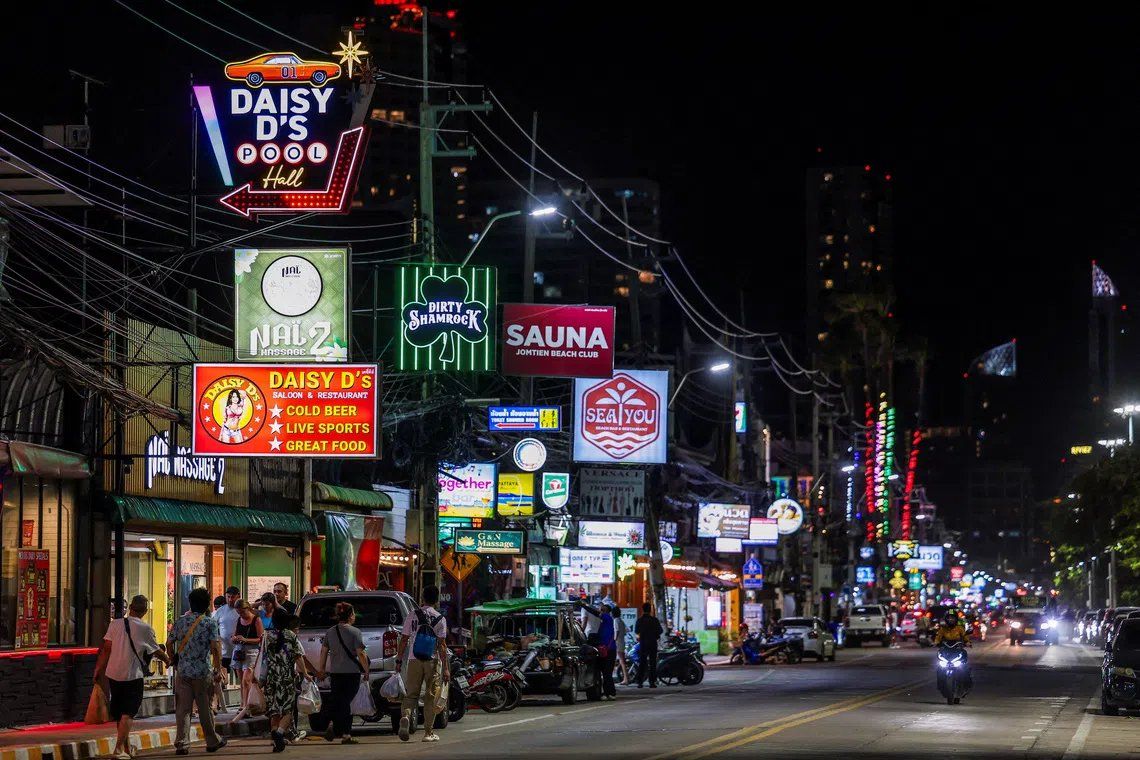
In anticipation of the arrival, Pattaya's police force has intensified enforcement operations, conducting raids over the preceding weekend that resulted in the detention of between 40 and 50 individuals suspected of involvement in prostitution. Additional patrols have been mobilised around the city's primary beachfront and entertainment districts, where nightlife venues and informal sex work operate in proximity. Pattaya Police Chief Anek Srathongyoo acknowledged the complexity of maintaining order, noting that despite concentrated efforts, the decentralised nature of solicitation makes comprehensive enforcement nearly impossible, as sex workers frequently operate in public spaces beyond immediate detection.
Prostitution remains formally prohibited under Thai law, yet the sex industry operates with striking visibility across major tourism centres including Bangkok and Pattaya. The trade has deep historical roots in Pattaya, which developed from a modest fishing community into a tourism hub partly through the influx of American servicemen seeking entertainment during the Vietnam War era. That historical connection has transformed into an economic dependency that local leaders now feel compelled to manage carefully, balancing revenue generation against reputational and social costs.
Economic projections suggest the carrier visit could deliver immediate financial stimulus to the local economy. Pattaya Mayor Poramase Ngampiches estimated that individual military personnel might spend between 1,000 and 3,000 baht, roughly USD30 to USD91, per day ashore, with actual expenditure varying based on leave duration and overnight accommodation decisions. Shore leave is typically staggered to prevent overcrowding, meaning personnel will arrive and depart in waves rather than simultaneously, which could extend the economic benefit across multiple days. The Pattaya Nightlife Business Association's president, Lisa Hamilton, expressed hope that the visit would reverse what she characterised as an exceptionally difficult year for the sector, noting that her two decades in the city had not previously witnessed such pronounced economic stagnation.
However, the anticipated spending by military personnel threatens to reinforce Pattaya's entrenched association with sexual exploitation. The American Federal Bureau of Investigation identified Pattaya as one of the world's most significant sex tourism destinations approximately a decade ago, a designation that reflects both the scale and the international character of the trade. Pipatpong Fakfare, an associate professor at Bangkok University's School of Humanities and Tourism Management, warned that the influx of a large transient population could amplify health and safety risks, particularly heightening vulnerability to sexual exploitation and increasing the potential transmission of sexually transmitted infections among workers and visitors alike.
Fakfare's concerns extend beyond immediate commercial transaction dynamics. The psychological vulnerability of naval personnel following an exceptionally long and stressful deployment, combined with reports of mental health challenges aboard the Abraham Lincoln, creates conditions that observers suggest could intersect dangerously with Pattaya's sex industry. Personnel experiencing stress, isolation, or psychological strain may be more susceptible to engaging in exploitative transactions or risky behaviour, particularly in an environment specifically designed to facilitate such interactions.
The broader economic benefit to Pattaya will partly depend on where visiting personnel choose to spend their time during shore leave. Thanet Supornsahasrungsi, president of the Association of Chonburi Tourism Federation, noted that some sailors and Marines might travel to Bangkok or other destinations rather than concentrating spending in Pattaya itself, thus dispersing the economic impact across the region. Pattaya itself operates over 300,000 hotel rooms, suggesting capacity to absorb visitor influx, but the diversification of spending destinations means the city cannot necessarily claim the full benefit of the carrier's visit.
For Malaysia and other Southeast Asian nations, the USS Abraham Lincoln's visit to Pattaya illustrates the complex relationship between military engagement and tourism infrastructure in the region. American naval deployments through Southeast Asian ports serve both strategic purposes, reinforcing regional security partnerships, and economic functions, delivering spending to allied nations' tourism sectors. Yet the pattern also highlights how military engagement can reinforce or expand problematic aspects of tourism economies, particularly sex tourism industries that persist across multiple Southeast Asian destinations. The tension between economic necessity and social harm remains unresolved in Pattaya and similar regional hubs, where government revenues depend partly on industries built on exploitation.
Thailand's approach to the carrier visit—simultaneous law enforcement crackdowns and promotional efforts to attract spending—reflects the pragmatic accommodation many Southeast Asian governments adopt toward persistent social problems. Rather than attempting fundamental transformation of tourism sectors, authorities typically implement periodic enforcement sweeps designed to create appearance of control while permitting underlying dynamics to continue. This approach allows governments to maintain relationships with strategic military partners while nominally addressing social concerns, though it does little to address root causes of exploitation or to protect vulnerable individuals within the sex industry.

