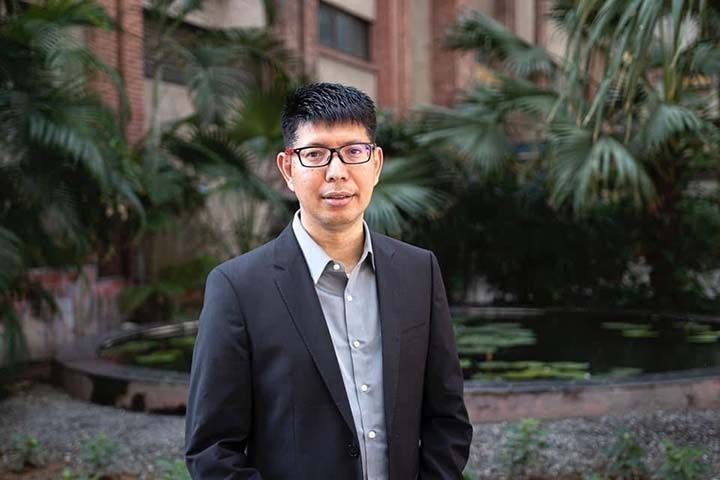
An American scholar specialising in Myanmar affairs detained in China's Kunming city in early June was participating in a legitimate academic conference, according to the think tank he established, which has called for his immediate release without preconditions. Min Zin, executive director of the Institute for Strategy and Policy (ISP) - Myanmar, faced arrest on June 3 on suspicion of engaging in espionage activities and posing a threat to national security, according to an announcement from China's foreign ministry released the previous week.
The institute founded by Min Zin issued a formal statement on Wednesday rejecting what it characterised as baseless accusations against its leader. In the statement, ISP-Myanmar emphasised that Min Zin's sole reason for travelling to Kunming was to participate in an academic workshop, stressing that the organisation categorically repudiated any allegations made against him. The think tank's position reflects growing concerns among international research communities about the political dimensions of scholarship and mobility in the region.
The United States State Department has also denied the Chinese allegations, with an official spokesperson confirming that American consular officers have been granted access to Min Zin since his detention. The department indicated it was actively engaged with Chinese authorities to secure his welfare and provide necessary diplomatic support during the legal process. This response underscores broader tensions between Washington and Beijing over detention practices and the treatment of foreign nationals accused of security-related offences.
China's foreign ministry maintained its position when questioned by international news agencies, restating that Min Zin was suspected of espionage and reaffirming that the case would be handled according to Chinese law. The opaque nature of China's legal proceedings in such matters has long been a source of friction with Western governments, particularly when foreign nationals are involved. The timing of the arrest carries particular significance given the regional geopolitical context surrounding Myanmar and China's strategic interests in Southeast Asia.
Min Zin's detention occurred roughly three weeks before Myanmar's military leader Min Aung Hlaing was scheduled to make an official five-day state visit to China, suggesting the arrest may have occurred against a backdrop of complex bilateral negotiations between Beijing and Naypyidaw. China maintains profound strategic importance for Myanmar's military government, which seized power in February 2021 by overthrowing the democratically elected administration led by Aung San Suu Kyi. The coup triggered immediate and sustained public resistance, which subsequently evolved into an armed insurgency encompassing newly established pro-democracy militia organisations working in coalition with long-established ethnic minority armed groups challenging military rule.
The scholar's personal background demonstrates his deep commitment to understanding Myanmar's political trajectory. Min Zin was formerly a student activist who participated in Myanmar's landmark 1988 pro-democracy movement, one of the most significant political upheavals in the nation's modern history. He later pursued advanced study in political science at the University of California, Berkeley, where he gained expertise in governance and institutional analysis that would inform his subsequent research endeavours.
Following his academic training, Min Zin became instrumental in establishing the Institute for Strategy and Policy, initially operating from within Myanmar before relocating its operations abroad following the 2021 military coup. The relocation reflected the increasingly constrained environment for independent policy research and critical analysis within Myanmar itself. The institute's research agenda has centred on examining the ongoing civil conflict and processes of political change, the country's deteriorating economic circumstances, and the intricate dynamics of bilateral relations between Myanmar and China—a nation that provides critical military and economic support to the ruling junta.
The institute's decision to base itself overseas after the coup allowed it to continue publishing analysis on sensitive topics that would face severe restrictions if produced domestically. This geographical separation has enabled ISP-Myanmar to maintain academic independence while tracking the military's policies and their consequences for Myanmar's population and regional stability. The think tank's body of work addresses dimensions of the current crisis that remain politically contentious within Myanmar itself.
The detention raises significant questions about the boundaries of acceptable scholarly activity in China and the risks faced by researchers studying Myanmar's military and its relationship with Beijing. Academic institutions across Southeast Asia have expressed concern about the case, viewing it as emblematic of broader pressures on independent research and international scholarly exchange. For Malaysian and regional observers, the incident highlights how geopolitical tensions can intersect with academic freedom, particularly when research focuses on China's relationships with neighbouring states.
ISP-Myanmar's statement emphasised the necessity for research and policy institutions to operate without fear of intimidation or state interference, underscoring principles widely held as fundamental to scholarly endeavour globally. The organisation's call for Min Zin's unconditional release reflects international norms regarding academic freedom and the free movement of researchers across borders. The case will likely become a focal point in discussions about research ethics, national security considerations, and the proper scope of state authority over foreign scholars in the region.
The developments surrounding Min Zin's detention also illuminate the precarious position of Myanmar-focused researchers attempting to maintain objectivity while operating in an increasingly polarised environment. Scholars studying the country's military, its Chinese connections, and the ongoing civil war face inherent sensitivities, particularly when their work circulates internationally. For Southeast Asian policymakers and analysts, the incident serves as a cautionary tale about the intersection of academic inquiry and state security concerns in an era of heightened regional competition.