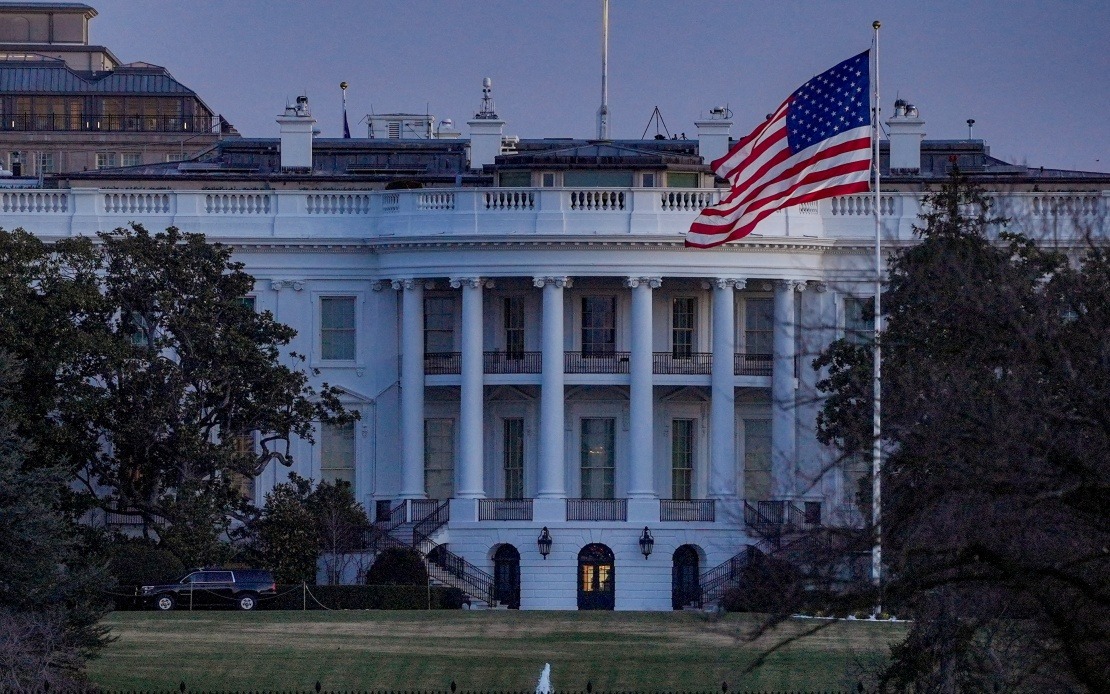
The United States Secret Service is confronting what its leadership describes as an exceptionally challenging security environment, with Director Sean Curran openly acknowledging the gravity of threats facing the agency's protectees, particularly President Donald Trump. Speaking at a briefing ahead of the White House Correspondents' Association dinner on July 23, Curran made clear that the protective demands on his organisation have reached unprecedented levels, encompassing threats not only to the sitting president but also to other senior officials and former presidents.
The escalation in threat assessments reflects a troubling pattern of actual security breaches over the past two years. Trump has survived three separate assassination attempts since mid-2024, beginning with a shooting incident at a campaign rally in Pennsylvania during July of that year, when the assailant managed to wound the then-candidate in the ear. This initial attack demonstrated vulnerabilities in protective procedures at large outdoor political gatherings, a category of event that poses inherent risks for any security detail. The second incident unfolded in September 2024 at Trump's private golf club in Florida, indicating that threats extend even to ostensibly secure, restricted-access venues.
Most recently, in April 2026, another shooting erupted during the White House Correspondents' Association Dinner itself, an event that had been rescheduled and attracted extensive media attention partly because of its historical significance as a white-house-adjacent gathering. The suspect arrested in connection with that incident faced multiple charges, including attempted assassination of a sitting US president. The fact that a breach occurred at such a high-profile, carefully controlled event underscores the formidable challenge facing those tasked with protecting senior American leaders in the contemporary threat landscape.
Beyond these physical attempts, intelligence agencies have documented what they characterise as credible threats emanating from Iran. Trump himself asserted in early July that he represents the primary target of Iranian assassination plots, and American officials have taken such claims seriously enough to elevate national security briefings on the matter. The Department of Justice has even formally designated certain conspiracy plots, including one uncovered in June 2026 targeting a UFC event at the White House, as additional assassination attempts against the president.
These compounded threats have forced the Secret Service to adopt more stringent protective measures across multiple venues and circumstances. The agency's acknowledgment of a "heightened level of threat environment" should be understood not merely as rhetorical positioning but as a description of operational reality. Every major event involving the president now requires exponentially greater resources, advance planning, and coordination with other federal, state, and local agencies. The scope of potential attack vectors—from outdoor campaign rallies to indoor state functions to private recreational facilities—demands a level of vigilance that stretches protective personnel and budgets alike.
For Southeast Asian observers and policymakers, the American experience offers sobering lessons about the vulnerabilities inherent in protecting democratic leaders in an age of determined individual actors and transnational state-sponsored threats. Malaysia and its regional neighbours, which have themselves faced sporadic security challenges, can recognise in this scenario the tensions between maintaining open democratic processes and ensuring adequate protection for senior officials. The White House Correspondents' Association dinner, disrupted by violence in April, symbolises how even ceremonial and symbolic gatherings cannot be presumed safe.
The Iranian dimension also carries regional significance. While Tehran's alleged targeting of an American president might seem distant from Southeast Asia, the broader pattern of state-level threats to foreign leaders demonstrates how regional and global security concerns increasingly intersect. Intelligence sharing and coordinated responses to transnational threats form an increasingly important component of regional security architecture, making the American experience relevant to discussions within ASEAN forums and bilateral security arrangements.
Trump's own public statements about the threat level, including his assertion that sitting US presidents face a 5.2 per cent fatality risk while in office, have contributed to a climate of heightened anxiety about presidential security. Whether these figures are precisely calibrated or somewhat hyperbolic, they reflect genuine concern within the highest echelons of American government about the adequacy of existing protective measures. The Secret Service director's willingness to publicly confirm serious threat elevation suggests that internal assessments have crossed some threshold of severity that demands public acknowledgment.
The rescheduled White House Correspondents' Association dinner on July 24, which Trump confirmed he would attend despite previous security concerns, represents a deliberate statement about resilience and the continuance of democratic traditions. Yet the very need to reschedule the event and implement revised security protocols illustrates how substantially threat environments can alter the operational landscape for protective services. Each such event now requires collaboration between multiple agencies, intelligence briefings, technological security enhancements, and personnel deployments that would have seemed excessive in earlier administrations.
Moving forward, the Secret Service faces a dilemma common to many security organisations in democratic systems: how to provide robust protection without imposing such restrictions that democratic life itself becomes constrained or inaccessible. The multiple assassination attempts and the acknowledged heightened threat environment suggest that this balance has become increasingly difficult to maintain, with genuine security imperatives competing against the openness and accessibility that democratic leaders, particularly in the American context, have traditionally sought to maintain with the public.

