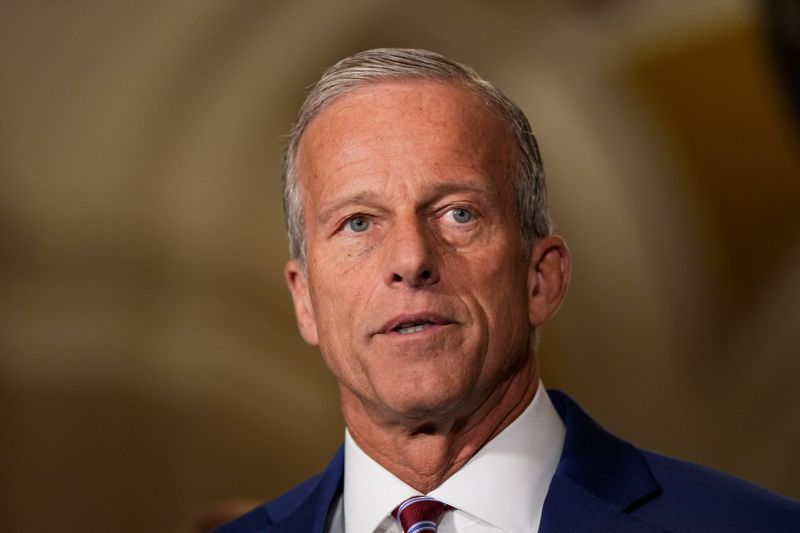
The US Senate is edging closer to passing comprehensive federal cryptocurrency legislation, with Republican leadership filing procedural motions this weekend to advance the Clarity Act when lawmakers return from their August recess in mid-September. Senate Majority Leader John Thune initiated the scheduling process early Saturday morning, signalling that Republican leadership believes they can assemble sufficient votes to overcome a 60-vote threshold required for passage—a significant hurdle in an evenly divided chamber where the bill currently lacks sufficient Democratic support.
The Clarity Act would represent a watershed moment for digital asset regulation in the United States, establishing the first federal rulebook governing how cryptocurrencies are treated by regulators and courts. The legislation would clarify the distinction between digital tokens classified as securities, which fall under Securities and Exchange Commission oversight, and those categorised as commodities, which would be regulated by the Commodity Futures Trading Commission. This classification system has long remained ambiguous, creating legal uncertainty that has hampered mainstream adoption and forced crypto companies to navigate a patchwork of state and federal regulations.
For the cryptocurrency industry, passage would represent validation of years of lobbying efforts and substantial financial investment in political campaigns. Crypto-affiliated donors and organisations channelled more than $119 million into backing pro-cryptocurrency candidates during the 2024 election cycle, with explicit focus on securing votes for the Clarity Act and related stablecoin legislation. Industry advocates argue that the regulatory clarity would unlock significant economic potential, enabling crypto companies to operate with confidence and potentially accelerating broader adoption of digital currencies across consumer and institutional markets.
President Donald Trump has made cryptocurrency reform a centrepiece of his second-term policy agenda, marking a significant shift in White House priorities from previous administrations. Trump's administration has been actively promoting the Clarity Act within Congress, viewing its passage as a signature legislative achievement. This presidential backing carries substantial weight with Republican lawmakers, many of whom are prioritising alignment with Trump's policy preferences. The President's personal financial stakes in the crypto sector add another dimension—his family's cryptocurrency ventures generated reported income exceeding $1.4 billion last year, though Trump administration officials argue this merely reflects the sector's economic importance rather than creating conflict of interest.
The bill would also represent a second major crypto policy victory for Trump, following his signature on stablecoin legislation last year. Stablecoins, digital tokens pegged to the US dollar or other stable assets, have emerged as a critical infrastructure element for cryptocurrency trading and financial transactions. The previous legislation supported their development, and the Clarity Act builds on that foundation by providing more comprehensive regulatory guidance that would enable broader institutional adoption.
For Malaysia and Southeast Asia, the advancement of comprehensive US crypto regulation carries significant implications. The region has emerged as a global hub for cryptocurrency innovation and trading, with Singapore, Malaysia, and other Southeast Asian countries hosting major crypto exchanges and blockchain companies. A clear US regulatory framework would likely influence how other nations structure their own crypto policies, as American standards often set global precedents. Malaysian regulators would closely monitor developments in Washington, potentially using the Clarity Act as a reference point for refining the local regulatory environment and attracting additional crypto investment.
However, the bill faces genuine obstacles to passage. Democratic senators remain sceptical, with many expressing concerns about inadequate consumer protections and the influence of crypto industry money on lawmakers. Currently, the legislation requires support from all Republican senators plus at least eight Democrats to reach the 60-vote threshold. Democrats have particularly focused on provisions affecting government officials' cryptocurrency holdings, fearing that insufficient restrictions create conflict of interest opportunities. Negotiations on these provisions remain fluid, suggesting that amendments may be necessary to secure additional Democratic support.
The banking sector has also mobilised opposition to certain provisions of the Clarity Act. Banks fear that language allowing crypto companies to offer rewards on customer stablecoin holdings could effectively enable crypto platforms to compete for deposits—a core banking function. Financial institutions worry that such competition could undermine their deposit base and profitability, particularly if crypto platforms can offer higher yields on stablecoin holdings. This banking industry concern has resonated with some Democratic and Republican lawmakers representing districts with significant financial services presence.
The timing of the procedural vote for mid-September, after the August recess, provides lawmakers with several weeks to negotiate amendments and shore up additional support. Senate leadership would not have initiated the scheduling process without confidence that passage remains achievable, though Republican calculations could prove optimistic if Democratic opposition hardens or unexpected amendments complicate negotiations. The weeks ahead will likely see intensive discussions between Senate leadership, the White House, and individual lawmakers weighing their positions on crypto regulation against constituent concerns and party dynamics.

