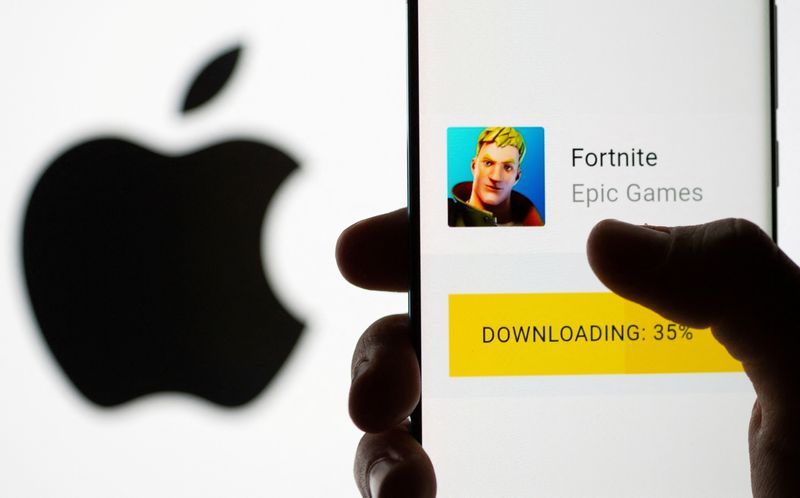
The United States Supreme Court has accepted Apple's appeal to overturn a contempt of court ruling handed down by a lower court judge who determined the technology giant violated judicial orders requiring substantial modifications to its App Store business model. The decision, announced on Tuesday, propels the ongoing antitrust dispute between Apple and Fortnite developer Epic Games to the nation's highest court, with hearings expected to begin when the Supreme Court's term opens in October. This marks another escalation in a legal battle that has already reshaped debates about platform control and fair competition in the digital economy.
The controversy centres on Apple's enforcement of app payment regulations following an earlier court order. In 2021, Oakland-based U.S. District Judge Yvonne Gonzalez Rogers issued an injunction requiring Apple to permit developers to include links directing users toward alternative payment methods outside the App Store ecosystem. While Apple technically complied by allowing such links, the company simultaneously imposed new financial conditions that Epic Games argues effectively nullified the original ruling. Specifically, Apple implemented a 27 percent commission charge on transactions completed outside its platform if users clicked through from a linked payment option within a seven-day window—a rate substantially higher than the 30 percent charged within the App Store itself, creating what Epic characterised as a deliberately punitive fee structure.
Judge Gonzalez Rogers agreed with Epic's interpretation in 2025, finding Apple in civil contempt for what the judge deemed deliberate non-compliance with the injunction's spirit and intent. The ruling represented a significant victory for the North Carolina-based gaming company, which initially filed suit in 2020 to challenge Apple's monopolistic control over app distribution and in-app purchases on devices running the iOS operating system. Although Epic ultimately lost the broader antitrust case—with Apple winning on most substantive claims—the contempt finding suggested the court believed the company had pushed regulatory boundaries by engineering compliance that preserved its core commercial advantages.
When the San Francisco-based 9th U.S. Circuit Court of Appeals reviewed the case in December, the appellate panel upheld Judge Gonzalez Rogers' contempt determination while simultaneously offering Apple a potential lifeline. The circuit court permitted the technology company to present fresh arguments about what commission rate would constitute reasonable compensation for payments processed outside the App Store but for digital goods distributed through Apple's platform. This opening left the door ajar for potential compromise, though Epic's position remains that any additional commission beyond standard payment processing fees represents unjustified profit extraction.
Apple's case before the Supreme Court advances several compelling arguments rooted in regulatory uncertainty and commercial practicality. The company contends that applying the injunction broadly to millions of developers worldwide creates untenable ambiguity about permissible commission structures across diverse markets and payment scenarios. In filings with the court, Apple emphasised that regulators globally are monitoring the case to determine what charge rates the company may legitimately impose on covered transactions in major markets outside the United States. This international dimension adds significant weight to Apple's arguments, as different jurisdictions have increasingly scrutinised big technology platform fees through antitrust lenses.
For Malaysian and Southeast Asian readers, this dispute carries tangible implications. Regional app developers increasingly distribute through the Apple App Store, and any Supreme Court ruling will directly influence what commission rates they face when monetising their applications. Currently, thousands of Southeast Asian software companies rely on iOS distribution to reach international audiences, and changes to the fee structure could substantially alter their profit margins and business models. Moreover, if the Supreme Court sides with Apple, it may embolden the company to resist similar regulatory pressures from governments across Asia, where antitrust concerns about tech platform fees have intensified considerably in recent years.
The case also reflects broader tensions between innovation incentives and fair market access. Apple argues that allowing third-party payment processing without adequate compensation would undermine its ability to maintain secure, reliable infrastructure for hundreds of millions of users. The company contends that the 27 percent rate, while higher than its standard charge, remains justified by additional verification and fraud prevention costs associated with external payment systems. Epic counter-argues that once a user has navigated away from the App Store through a provided link, Apple's involvement and associated costs diminish significantly, making such fees economically unjustifiable.
The Supreme Court's decision to accept the appeal signals the justices' recognition that fundamental questions about platform economics and regulatory compliance remain unsettled. Unlike the lower court proceedings, which focused narrowly on whether Apple violated a specific injunction, the Supreme Court will likely grapple with broader constitutional and commercial questions about how courts should enforce compliance orders against large technology companies and what constitutes reasonable accommodation of competing interests. The outcome could establish precedent affecting not just Apple and Epic, but the regulatory relationship between courts and major platforms across numerous industries.
The litigation has already consumed nearly five years and spanned multiple judicial decisions with contradictory implications. This Supreme Court phase will likely extend the dispute further, potentially into 2026 or beyond. During this extended period, the contempt ruling remains technically in effect, though Apple continues operating under its own interpretation of permissible fees. The company has consistently denied violating the judge's order, contending instead that its revised structure represents a reasonable accommodation balancing app developer interests with legitimate business requirements. Meanwhile, Epic Games and other developers advocating for open platforms have used the contempt ruling as evidence that Apple's fundamental commitment to fair competition cannot be trusted and that more stringent regulatory intervention may ultimately prove necessary.
The Supreme Court's involvement elevates this from a dispute between two companies into a case with systemic implications for how the digital economy functions. Policymakers across Southeast Asia, Europe, and elsewhere are watching closely to understand whether American courts will enforce substantive constraints on platform power or whether technology companies can successfully navigate judicial oversight through careful compliance rhetoric combined with economically equivalent outcomes. The answer the Supreme Court provides will reverberate through global app ecosystems and influence how regulators approach platform governance for years to come.

