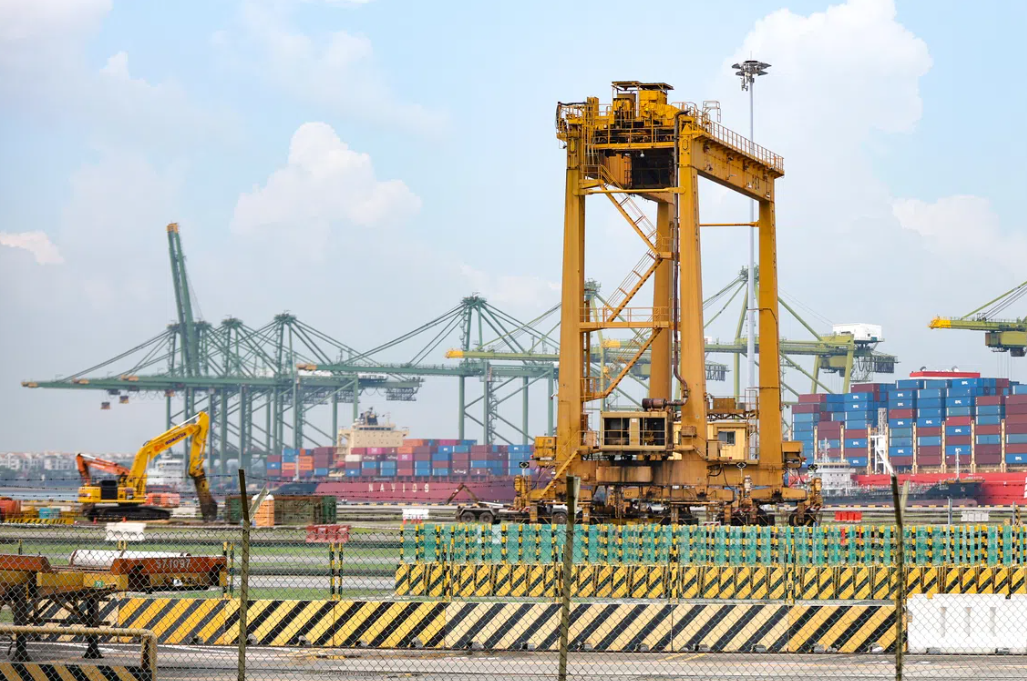
The Trump administration has escalated its trade enforcement strategy by publicly naming 40 economies, among them Singapore, as vulnerable nodes in what it describes as a coordinated Chinese effort to evade American tariff regimes through illegal transshipment schemes. According to a White House report released in August titled "The Great Transshipment Scam", these jurisdictions have become staging points for Chinese-origin goods that are lightly processed or repackaged in intermediate countries before entering the United States under false country-of-origin declarations, thereby circumventing punitive duties imposed since 2018.
The financial stakes underlying this enforcement push are substantial. Using data compiled from both government agencies and private research organisations, the White House estimates that tariff-evading transshipments may have deprived the US Treasury of between US$40 billion and US$303 billion in customs revenue. This extraordinarily wide range reflects the inherent difficulty in quantifying illicit trade flows, but the sheer magnitude underscores why Washington views the matter as a priority. The Biden-era tariff architecture, which imposed duties on Chinese goods to protect domestic manufacturers and reshape supply chains, has allegedly been rendered porous by the systematic exploitation of loopholes and jurisdictional gaps.
Singapore occupies the most exposed position in the White House's analytical framework, classified within Tier 3 of the transshipment risk hierarchy. This tier groups what the report terms "small, opportunistic Chinese targets"—economies like Cambodia, Laos, Myanmar, and the Philippines that possess specific structural vulnerabilities. The report identifies particular weak links that make these jurisdictions attractive for illicit rerouting: low-cost labour, free-trade zones with minimal oversight, strategically positioned ports and border infrastructure, bonded warehousing facilities, niche manufacturing capacity, preferential access to US markets under existing trade agreements, and limited customs enforcement resources. For Singapore specifically, the classification reflects not necessarily higher absolute volumes of illegal transshipment compared to larger economies, but rather the perception that its role as a global logistics and financial hub creates discrete opportunities for exploitation by Chinese export networks seeking to obscure product origins and circumvent tariffs.
The report establishes a three-tier taxonomy that reveals Washington's strategic assessment of transshipment vulnerability across different economic contexts. Tier 1 encompasses major developed and emerging economies—Canada, the European Union, India, Israel, Japan, and Taiwan—where transshipment risks are characterised as "embedded within broad legitimate trade flows." These are economies with deep integration into US supply chains and significant domestic value-addition, making it difficult to distinguish between legitimate repositioning of goods and intentional evasion. Tier 2 includes significant Asian players such as Indonesia, Malaysia, Thailand, and Vietnam alongside Brazil and Turkey, all characterised by substantial economic interdependence with China in raw materials, intermediate inputs, and logistics networks. The placement of these Southeast Asian nations reflects their growing role as assembly and processing hubs within China-centric production ecosystems.
What distinguishes the White House analysis from previous trade enforcement actions is its assertion that China-linked exporters are systematically deploying these economies as integral components of a coordinated architecture rather than exploiting them opportunistically. The report argues that Chinese businesses, often with state support or encouragement, deliberately route goods through these 40 jurisdictions, employing minimal processing to satisfy rules-of-origin requirements while preserving the fundamental character of the products as Chinese-manufactured. As intermediate countries become increasingly dependent on Chinese inputs, logistics services, and capital investment, the White House warns, Beijing gains not merely commercial advantage in accessing the US market but also geopolitical leverage over these nations. This framing positions the transshipment issue within broader strategic competition between Washington and Beijing for influence over developing economies, particularly across Southeast Asia.
Singapore's response reflects the delicate diplomatic position it occupies between these competing powers. The Ministry of Trade and Industry and Singapore Customs have emphasised that the nation's regulatory framework governing transshipment adheres to international best practices established by the World Customs Organization and facilitates legitimate commerce through transparency and predictability. Singapore Customs has clarified that transshipped goods retain their original country of origin designation and cannot be relabelled as Singapore-origin products, a crucial technical distinction that theoretically prevents fraudulent tariff circumvention. The agency maintains that all companies engaged in transshipment activities must comply fully with Singapore's laws and that it actively cooperates with international counterparts to detect and prosecute illicit trade.
Yet the classification itself presents risks for Singapore's commercial interests. Already in July, the US imposed a separate 12.5 per cent tariff on goods accounting for roughly one-third of Singapore's domestic exports to America, citing alleged failures to enforce prohibitions on forced labour in supply chains. This follow-on tariff action reveals that Washington views Singapore's regulatory actions across multiple trade compliance dimensions as insufficient, irrespective of the nation's own compliance assertions. The cumulative effect of tariffs across different justifications compounds pressure on Singapore's export-oriented manufacturing and services sectors, while the transshipment designation suggests additional enforcement actions may follow.
The Trump administration has signalled that technological tools will complement traditional customs enforcement. It plans to deploy an artificial intelligence-powered system referred to as "Detective Border" to identify suspicious transshipment flows and identify goods that have been illegally rerouted. The sophistication of this approach acknowledges that modern supply chains, with their complexity and velocity, often outpace manual inspection capabilities. Digital forensics applied to shipping manifests, customs documentation, and trade finance records could theoretically identify patterns inconsistent with declared product origins. However, as with all AI-enabled enforcement, questions persist regarding false-positive rates, the interpretability of algorithmic decisions, and the evidentiary standards required to prove intentional evasion versus inadvertent misclassification.
The timing of this enforcement push reflects broader shifts in American trade policy. The August 2025 announcement preceded a court decision that undercut key elements of the tariff regime, prompting the administration to reconstruct its legal authorities and enforcement mechanisms. By naming the 40 economies publicly and categorising their vulnerabilities, Washington signals that no jurisdiction will escape scrutiny, while also creating diplomatic pressure for these countries to strengthen enforcement unilaterally. For Malaysia, Indonesia, Thailand, and Vietnam—all identified as Tier 2 risks—the report implies that increased US regulatory attention and potential targeted tariffs may follow if transshipment volumes do not decline demonstrably.
For Singapore and other Southeast Asian economies classified as transshipment vulnerabilities, the White House report presents a complex challenge. Accepting the implicit invitation to strengthen enforcement may disrupt logistics networks, increase operational costs for legitimate businesses, and reduce attractive arbitrage opportunities that have historically anchored these jurisdictions as global commerce hubs. Conversely, ignoring the report risks triggering additional American tariffs that could damage export-dependent sectors. This dilemma illustrates how US trade enforcement, even when framed as addressing Chinese evasion, generates collateral consequences for third countries caught between the tariff regimes of major powers. The resolution will likely require negotiated agreements between Washington and these economies regarding enforcement standards and dispute-resolution mechanisms, adding another layer of complexity to an already fractious trade landscape shaped by great-power competition.

