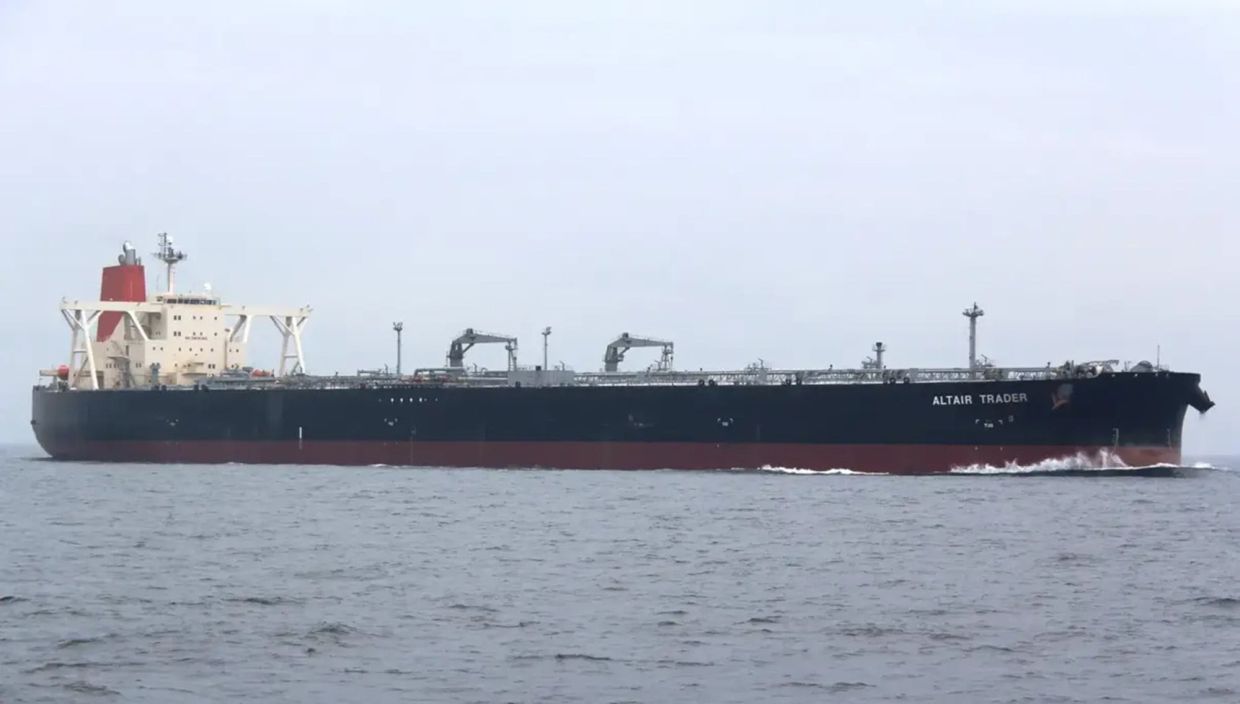
The United States intensified its financial pressure on Iran on Wednesday by designating eight shipping companies based in mainland China and Hong Kong, which authorities accused of facilitating the transport of Iranian crude oil and petroleum products to Asia. The action represents a significant expansion of Washington's economic warfare against Tehran, complementing its existing military enforcement operations in the Persian Gulf. American officials framed the sanctions as part of a coordinated strategy combining financial restrictions with naval blockade measures designed to curtail Iran's oil sales and reduce government revenues.
The US State Department and Treasury Department identified six of the targeted vessels as having transported Iranian crude specifically to China, with some carrying volumes in the millions of barrels during 2026 alone. Among the designated companies, Qi Hang Ship Management Limited based in mainland China operates the Marshall Islands-flagged tanker Well Sail, which allegedly moved hundreds of thousands of barrels to the United Arab Emirates this year. Hong Kong-registered firms including Confident Apex Limited, Billion Nexus International, Nevada Spirit Company, and Marinova Freight each control or manage vessels implicated in transporting substantial quantities of Iranian oil to Chinese ports since 2025 or earlier.
The sanctions mechanism freezes any assets these companies hold within American jurisdiction and prohibits US persons and entities from conducting business with them. Foreign financial institutions and multinational firms face potential sanctions exposure if they facilitate designated transactions involving these targets. Treasury Secretary Scott Bessent characterised Iran's economy as in freefall with triple-digit inflation, arguing that the regime desperately seeks revenue to sustain military and security operations. He portrayed the sanctions as necessary measures to prevent Iran from weaponising international commerce and using shipping networks to finance the Islamic Revolutionary Guard Corps.
State Department spokesman Tommy Pigott explicitly linked the designations to broader American naval enforcement operations, stating that today's actions support the US Navy's blockade of Iranian ports and coastal installations. This framing underscores how Washington views its economic and military strategies as interconnected elements of a comprehensive containment approach. The designation also extended to two Iranian entities accused of operating what American officials characterise as an extortion scheme targeting international shipping transiting the Strait of Hormuz. The Persian Gulf Marine Insurance Company and Hormuz Safe Marine Services Authority allegedly impose mandatory insurance charges on commercial vessels, with the latter accepting cryptocurrency payments including bitcoin.
Treasury officials argue that these insurance arrangements represent coercive practices whereby Iranian government entities artificially manufacture maritime risks and subsequently charge shipping operators for protection against dangers created by Iran itself. Hormuz Safe, developed by Iran's Ministry of Economy, purportedly offers insurance, traffic management, security and emergency services while channelling revenue to the Revolutionary Guard Corps. This characterisation reflects American views that Iran systematically exploits its geographic position controlling one of the world's most critical energy chokepoints to extract economic rent from global commerce.
China's response rejected American allegations and defended its commercial relationship with Iran as legitimate and transparent. Liu Pengyu, spokesman for the Chinese embassy in Washington, emphasised that Sino-Iranian cooperation operates within lawful frameworks and therefore warrants respect from the international community. Beijing characterised the sanctions as an abuse of unilateral restrictions and extraterritorial jurisdiction wielded unfairly against Chinese enterprises. The Chinese government pledged to defend the legitimate interests of its shipping companies and indicated it would continue pursuing whatever measures necessary to protect their rights.
Beijing's principled opposition to American sanctions reflects broader strategic tensions over global commerce and the limits of unilateral coercive measures. For Malaysia and Southeast Asian nations navigating between great power competition, these developments raise practical concerns about shipping routes, insurance costs, and financial exposure. Regional shipping companies operating in the Indian Ocean and beyond must increasingly assess sanctions compliance risks, particularly when transacting with Chinese or Hong Kong counterparts. The possibility of secondary sanctions against foreign institutions dealing with designated firms could complicate legitimate regional trade and maritime commerce.
State Department officials portrayed the sanctions as serving broader global interests by protecting navigational freedoms and maritime security in critical chokepoints. Pigott stated that Washington would collaborate with allied nations to isolate Tehran diplomatically and economically until the regime abandoned what American officials characterise as destabilising behaviour. This approach positions sanctions enforcement as synonymous with defending international order rather than as unilateral coercion. However, the explicit linkage between economic designations and military blockade operations may concern nations like Malaysia that emphasise sovereignty and the rule of law in international affairs.
The scale of Iranian oil movements to China revealed by the designations underscores the difficulty American policy faces in preventing energy trade between willing buyer and seller. Treasury identified individual vessels carrying millions of barrels annually, suggesting that despite previous sanctions campaigns, Iranian crude continues reaching Asian markets through shadow fleet operations. The designation of multiple Hong Kong-based companies indicates that international financial centres facilitate these transactions despite American pressure. This pattern suggests that comprehensive sanctions require broader international cooperation that Washington may struggle to achieve, particularly with China viewing the restrictions as protectionist rather than legitimate security measures.
For Malaysian policymakers and business leaders, these sanctions developments present complex navigation challenges. Malaysia's significant shipping and maritime services sector could face indirect consequences if banks and insurers impose stricter compliance measures across the region. The cryptocurrency dimensions of Iranian insurance schemes raise additional questions about financial sector vulnerabilities. More broadly, the US-China competition over sanctions enforcement reflects divergent visions of international economic governance that will increasingly affect Southeast Asian commerce and geopolitical positioning. Malaysia and fellow ASEAN nations must balance maintaining stable trade relationships while managing secondary sanctions risks emanating from great power competition.

