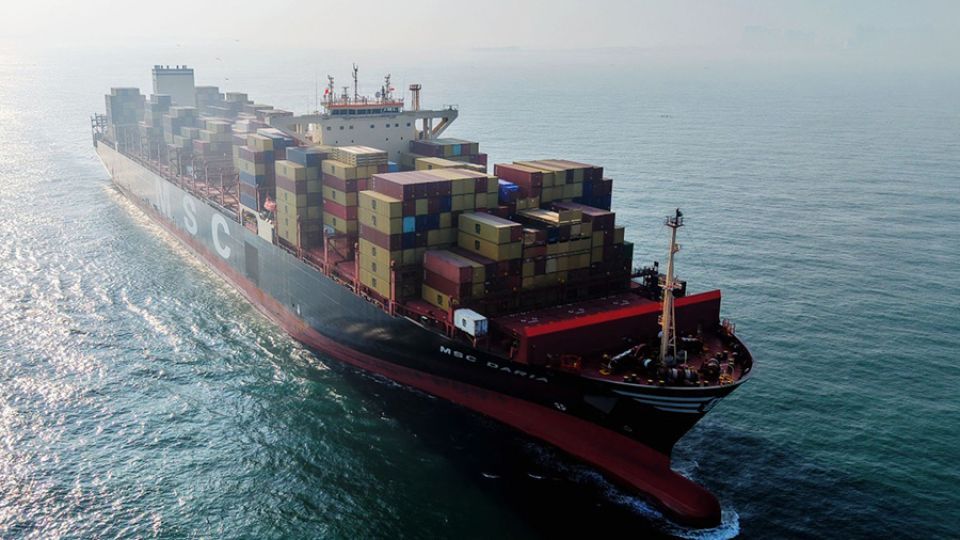
Washington has moved to impose sanctions against 10 Chinese shipping firms allegedly participating in the transport of Iranian crude oil, marking the latest escalation in American efforts to enforce its maximum pressure campaign against Tehran. The companies, headquartered in Hong Kong and mainland China, alongside eight vessels under their control, now face asset freezes and are barred from conducting transactions with US entities or citizens, effectively cutting them off from the world's largest economy.
The action underscores the expanding scope of American sanctions enforcement, which now ensnares shipping operators across East Asia. By targeting maritime companies in China, a major global shipping hub, Washington is attempting to choke off alternative routes for Iranian crude sales and squeeze the Iranian government's oil revenues. The practical effect is to isolate Iran further from international commerce, particularly in the energy sector where it traditionally held significant export capacity.
Beijing has responded with predictable resistance, through its Foreign Ministry voicing opposition to what it characterises as extraterritorial overreach that lacks legitimate international legal foundation. Chinese officials maintain that unilateral sanctions, particularly those applied beyond American borders to restrict third-country actors, constitute a violation of international law and an abuse of Washington's position as holder of the world's reserve currency. This rhetorical posture reflects growing friction between the superpowers over the scope and legitimacy of sanctions as a foreign policy tool.
The addition of two Iranian insurance providers to the sanctions list — Persian Gulf Marine Insurance Company and Hormuz Safe Marine Services Authority — reveals the comprehensive nature of America's blockade strategy. These firms were accused of leveraging control over maritime insurance to compel commercial vessels transiting the Strait of Hormuz to purchase their services, effectively taxing passage through one of the world's most critical chokepoints. By targeting insurers, Washington addresses a crucial vulnerability in Iran's ability to maintain shipping operations, since vessels cannot operate internationally without adequate insurance coverage.
The Strait of Hormuz remains central to global energy security, though its strategic importance has been fundamentally altered by recent geopolitical developments. Before escalating hostilities with Iran commenced on February 28, approximately one-fifth of global oil shipments flowed through this narrow waterway. The surge in American sanctions and Iranian counter-measures has since reduced that figure to a fraction of historical levels, creating disruptions in energy markets and threatening the economic interests of nations dependent on reliable Middle Eastern crude supplies.
For Malaysia and other Southeast Asian economies, the tightening sanctions regime carries significant implications. Many regional shipping firms and port operators have previously engaged in Iranian trade or have the capacity to do so. The expansion of sanctions to Chinese companies signals that Washington intends to prosecute violations through secondary sanctions against third parties, deterring regional players from involvement in Iranian commerce even indirectly. This creates a compliance burden on Southeast Asian maritime industries already navigating complex geopolitical terrain.
The accumulation of over 100 sanctioned tankers reflects the scale of American enforcement against what officials describe as sanctions evasion. Each vessel represents an attempt by Iranian or allied operators to circumvent the blockade, and each designation reinforces Washington's determination to prevent alternative export pathways. The sheer number of designations suggests a cat-and-mouse dynamic, where Iranian operators continually seek to evade detection through vessel reflagging, shell companies, and operational opacity, while American intelligence agencies work to identify and expose these schemes.
Critics of the sanction-heavy approach offer a broader perspective on its effectiveness. Anthony Moretti, a communications scholar at Robert Morris University, observes that the repetitive application of sanctions risks diminishing their credibility and impact, both domestically and internationally. His assessment suggests that the constant flow of new designations, while projecting an image of enforcement toughness, may actually undermine the administration's strategic objectives by fostering sanctions fatigue and eroding international consensus around the legitimacy of the measures.
Moretti further argues that the sanctions strategy lacks coherent strategic vision, operating more as an expression of administrative resolve than as a component of a comprehensive approach to managing US-Iran relations. This observation carries weight in Southeast Asian policy circles, where nations must balance relationships with Washington, Tehran, and Beijing while protecting their own economic interests. The absence of a clear endgame or pathway for sanctions relief creates uncertainty about whether current measures are negotiating tactics or expressions of permanent strategic antagonism.
The economic dimension extends beyond shipping firms and maritime insurers. Global energy markets remain vulnerable to supply disruptions stemming from continued sanctions escalation in the Persian Gulf region. Crude prices, though influenced by multiple factors, can spike if sanctions further restrict Iranian exports or if naval incidents disrupt transit through the Strait of Hormuz. Malaysia, as an energy importer with refining capacity, faces potential cost pressures that cascade through the economy.
China's position as the target of these sanctions also warrants consideration. By designating Chinese companies, Washington applies pressure on a strategic competitor while simultaneously demonstrating its willingness to weaponise financial access and commerce. Beijing's economic interests in Iran, partly rooted in its Belt and Road Initiative and broader Middle East engagement, now face constraints that require diplomatic response and potentially retaliation against American companies operating in Chinese markets.
The longer-term trajectory remains uncertain. Regional states and maritime operators must now navigate a sanctions landscape where the rules, while clearly stated by Washington, face consistent challenges from determined parties seeking to maintain trade relationships. For Southeast Asian governments and companies, the lesson is that proximity to sanctioned activities carries risk, and compliance with American sanctions enforcement requires vigilance and potentially costly operational adjustments.

