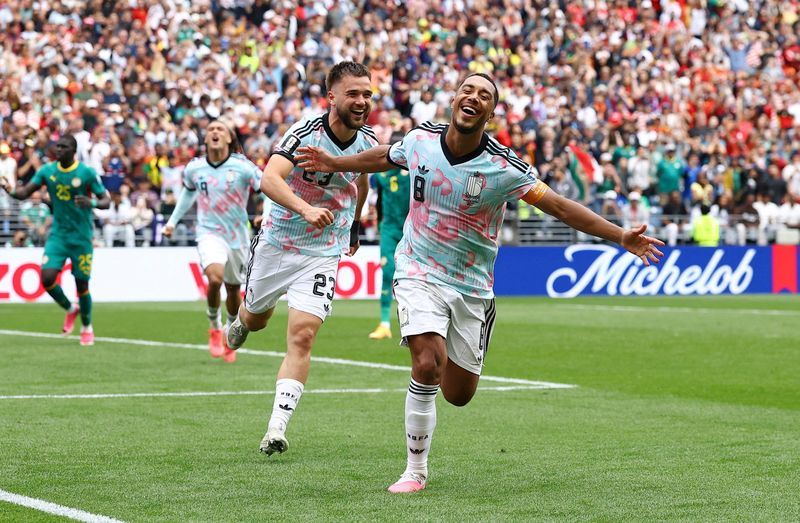
The United States will seek to advance deeper into the World Cup than many anticipated when they face Belgium in a knockout round match in Seattle on July 4. Hosting the encounter at a renowned NFL stadium known for its vocal crowd, the American squad arrives with significantly elevated ambitions compared to pre-tournament projections, where simply reaching the last 16 was viewed as a credible achievement.
The trajectory of the US campaign has shifted markedly in recent weeks. Victories over Paraguay and Australia in group-stage play, capped by an impressive 2-0 result against Bosnia—achieved while playing the final 36 minutes with a numerical disadvantage—have transformed the narrative surrounding manager Mauricio Pochettino's team. What once seemed like a modest objective has now evolved into genuine hopes for a prolonged tournament stay on home turf, with each successful performance bolstering confidence within the squad and among supporters.
Belgium presents a formidable obstacle, though the European side has not showcased the level of performance that might be expected from their pedigree. The Belgians required a dramatic late sequence to eliminate Senegal, trailing through most of their encounter before scoring twice to level the match. A VAR-assisted penalty decision in extra time ultimately resolved the contest, but the manner of victory left observers questioning whether Belgium possessed the consistency needed for a deep tournament run, particularly given the experience-laden nature of their roster.
For Belgium, this World Cup represents a potentially final opportunity for their celebrated group of senior players to make a meaningful tournament impact. Kevin De Bruyne, Romelu Lukaku, and Thibaut Courtois—names synonymous with Belgian football's recent golden era—carry the weight of accumulated World Cup disappointments and unfulfilled potential into this fixture. The window for this generation to deliver is narrowing, lending additional significance to their progression prospects.
The US defensive unit, which entered the tournament under scrutiny regarding its reliability, has emerged as an unexpected source of strength. Performances against Bosnia particularly highlighted improvements in organization and execution, suggesting that Pochettino's tactical approach has yielded tangible benefits in shoring up a previously vulnerable area. This defensive solidity will face examination against an attack featuring Jeremy Doku, a Belgian winger who has underwhelmed in tournament matches thus far and appears primed for a more consequential appearance.
The absence of striker Folarin Balogun creates a significant complication for American preparation. Balogun scored during the first half of the Bosnia encounter before receiving a dismissal midway through the second half, ruling him out through suspension. This development forces Pochettino into important tactical deliberation, requiring recalibration of attacking options as the team pursues knockout advancement.
Historical resonance surrounds this matchup, evoking memories of the 2014 World Cup in Brazil, when Belgium eliminated the United States in the last 16 after extra time. That encounter remains indelibly marked by Tim Howard's extraordinary goalkeeping display, where the American custodian registered 16 saves—a tournament record—in a performance ultimately insufficient to prevent defeat despite a late US surge that nearly forced a penalty shootout. The passage of a decade has shifted contexts entirely, yet the psychological undertones of seeking redemption persist.
For American football, the broader implications extend beyond sporting competition. The team's unexpected performance trajectory has captured genuine domestic attention at a moment when soccer occupies an increasingly prominent position within the national sporting landscape. Each successive victory has enlarged the audience and elevated stakes, with supporters recognizing that extended tournament success would meaningfully advance the sport's cultural positioning and provide momentum heading toward future competitions.
US midfielder Tyler Adams articulated the aspirational nature of the campaign when describing team objectives. His comments about leaving a mark and establishing a legacy reflected the understanding that this tournament moment carries significance exceeding individual match results. The further the Americans progress, the more the sport itself gains traction, creating a virtuous cycle where on-field success translates into broader societal engagement with professional soccer at both domestic and international levels.
The match itself carries the distinctive atmosphere of a major sporting occasion, with Seattle's renowned venue providing an intimidating environment for visiting teams. The concentration of passionate home supporters creates acoustic and emotional conditions that historically advantage the team wearing their national colors, a factor that cannot be discounted when analyzing match dynamics and momentum shifts during critical moments.
Belgium's composition, despite accumulated talent and experience, confronts questions about cohesion and performance consistency that have plagued their recent tournament appearances. Whether the European side can channel their considerable quality into decisive action remains an open proposition, particularly against an American team that has demonstrated progressively improved tactical discipline and defensive organization throughout the tournament.

