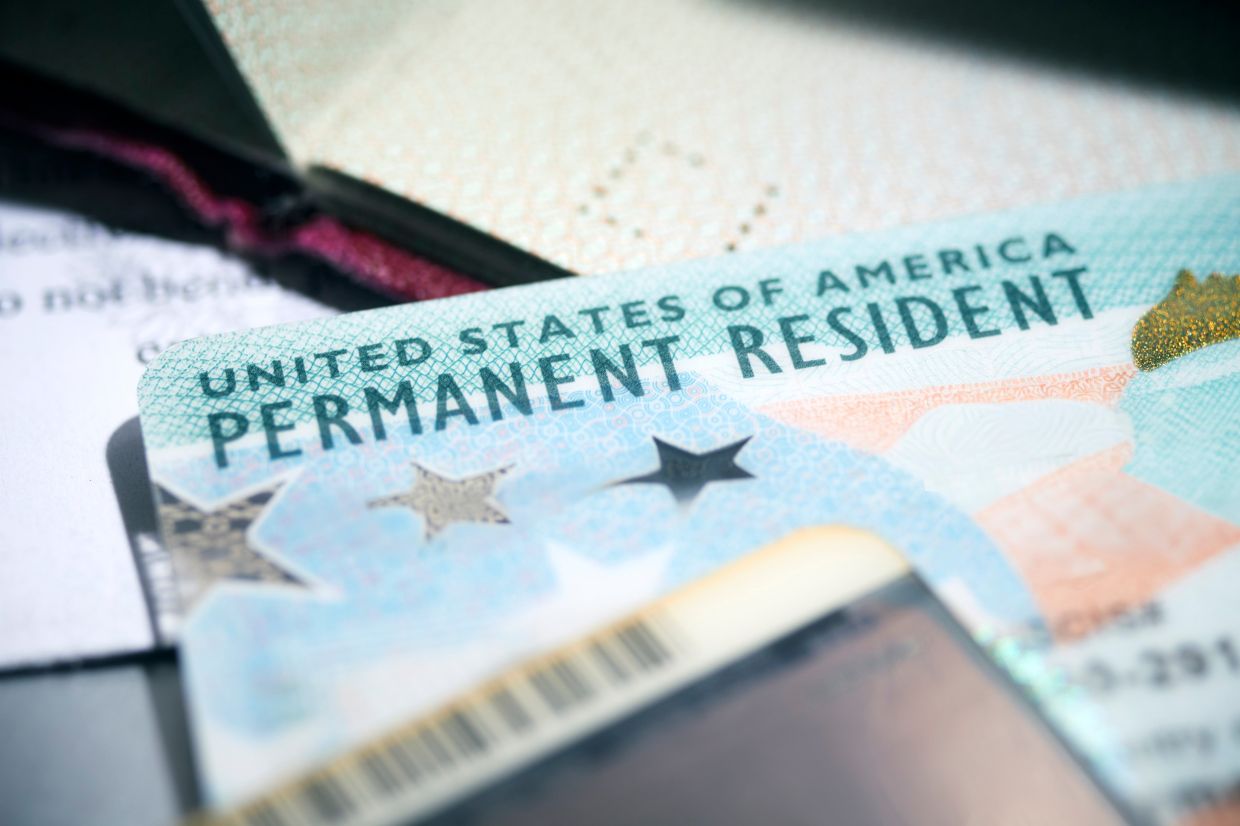
The United States is implementing a more rigorous evaluation standard for immigrants seeking permanent residency, with immediate consequences across its global network of diplomatic posts. Embassies and consulates worldwide have suspended processing of immigrant visa applications while staff undergo training on a tougher interpretation of the "public charge" doctrine—essentially a determination of whether an applicant is likely to become dependent on government assistance. This freeze represents a significant procedural shift that will extend timelines for hundreds of thousands of pending cases, including many from Malaysia and Southeast Asia.
The timing of this administrative overhaul is not coincidental. Just days before the training freeze was announced, a federal judge invalidated a separate travel ban affecting 75 nations, which rested on comparable logic about dependency and risk assessment. The State Department has instructed visa officers to apply the public charge evaluation "comprehensively and consistently" across all posts—a directive that masks what immigration experts characterise as a fundamentally more punitive approach to adjudication. Rather than tweaking an existing framework, the administration appears to be reshaping the criteria used to assess applicants' suitability for permanent residence.
The assessment factors themselves have long been standard in immigration law: age, health, family composition, financial resources, educational attainment, professional skills, and employment prospects. What constitutes the genuine shift is the mandate to weaponise these considerations more aggressively. Officials are now empowered to demand public charge bonds in certain circumstances—essentially financial guarantees that applicants will not burden taxpayers—a tool deployed sparingly under previous administrations. This escalation suggests that factors previously treated as minor concerns may now become dealbreakers, particularly for applicants from lower-income backgrounds or those without substantial wealth.
Examining the implementation mechanics reveals the disruption's scope. Sarah Pierce, director of social policy at Washington-based think tank Third Way and a former USCIS analyst, contends that the Trump administration "chose the most disruptive possible way to roll this out." Rather than phasing in the stricter standard or providing clear guidance, officials have essentially shuttered the visa interview system pending retraining. For applicants already deep in the approval pipeline—those with approved petitions and scheduled interviews—this represents an indefinite postponement. The State Department has not announced when normal scheduling will resume, leaving thousands in administrative limbo.
The delay itself constitutes genuine hardship. Many applicants have already booked travel, sold homes, or completed medical examinations as part of the immigration process. Others have secured job offers contingent on timely visa issuance or coordinated family reunification plans around expected interview dates. This bureaucratic pause, ostensibly temporary for training purposes, effectively resets the processing timeline for an entire category of applications. Those pursuing diversity visas face particular urgency, as such visas must be issued by September 30 each fiscal year—a hard deadline the State Department cannot extend, meaning delayed interviews could mean forfeited allocations.
Charles Kuck, an Atlanta immigration attorney with extensive experience challenging Trump-era policies, offers darker interpretation of the training initiative. He characterises the instruction set as guidance "on how to deny cases under public charge rules," suggesting the retraining represents not clarification but a wholesale reorientation toward rejection. Family-based immigration—historically the pathway through which most Malaysian and Southeast Asian immigrants enter the United States—will become substantially more difficult to navigate. Diversity lottery beneficiaries will similarly face elevated barriers, effectively narrowing the two principal routes through which lower-to-middle-income applicants have traditionally secured American residence.
Understanding what this freeze does and does not affect is critical for affected applicants. The suspension covers green card interviews conducted abroad—the consular window through which prospective immigrants must pass. Critically, the freeze does not extend to H-1B worker visas, student visas, or tourist visas, though legal experts warn that the public charge doctrine could theoretically be invoked against non-immigrant categories as well. For those already selected in the diversity visa lottery or with approved family petitions, the core status of their applications remains unchanged. A cancelled interview does not automatically revoke an underlying approved petition or erase a priority date—rather, it postpones the final adjudication moment.
However, the approved-petition status offers less comfort than it might appear. Consular officers retain discretionary authority to return files to USCIS if they identify fraud, material changes in circumstances, or evident errors in the initial approval. This reopening of previously approved cases represents another layer of uncertainty. Many employment-based petitions, in particular, face "second-guessing" from consular officers applying the new standard, and while some returned files ultimately receive reapproval, others languish in bureaucratic reconsideration. For family cases, the stakes differ; as Kuck notes, spousal relationships are essentially binary—one either qualifies or does not—whereas employment petitions allow for substantial officer discretion in evaluating whether circumstances have shifted.
For those currently holding lawful status in the United States—whether on H-1B visas, F-1 student status, or approved green cards awaiting final processing—the practical advice from immigration counsel is unambiguous: do not leave the country unless absolutely necessary. Any departure requires returning to the United States on a valid visa, and that visa issuance now faces heightened scrutiny and delayed processing. An H-1B holder with an approved I-140 petition, or an F-1 student with pending Optional Practical Training approval, suddenly faces significant re-entry risk if they depart for family emergencies, business travel, or personal reasons. Those without lawful status—including individuals on expired H-1B extensions or with only pending green card or asylum applications—absolutely cannot travel, as re-entry would be impossible.
For those already in the United States and holding some form of lawful status, documentation becomes critical. Green card holders should carry their physical cards; visa holders on other non-immigrant categories should maintain their I-94 arrival-departure record alongside the I-797 approval notice or an employer-issued letter confirming employment and status. Making copies and ensuring family members know where these documents are stored protects against loss or unavailability in emergencies. Workers travelling within the United States or contemplating necessary international departures should carry pay stubs and current employment letters. The margin for bureaucratic error has collapsed in an enforcement environment this aggressive; a mislaid document or misunderstood explanation can trigger cascading consequences.
New arrivals face another downgrade in status flexibility. Previously, foreign nationals admitted on certain visas enjoyed open-ended duration of status—they could remain indefinitely as long as they maintained their lawful status categories. That flexibility has been curtailed. Incoming non-immigrants now receive fixed duration-of-status periods, typically up to four years with a 30-day grace period for departure, down from the previous 60-day window. This compression of buffer time leaves less room for the processing delays that have become endemic in American immigration bureaucracy, effectively punishing applicants for systemic inefficiencies beyond their control.
For Malaysian and Southeast Asian nationals contemplating American immigration, the cumulative effect is sobering. The public charge standard, applied aggressively, functionally privileges wealthy applicants and discriminates against those from middle-income or working-class backgrounds. Since Southeast Asia includes countries with vastly different per-capita incomes and living costs, applicants from lower-income countries face disproportionate difficulty satisfying officers who may reflexively judge foreign financial metrics against American standards. The broader message being signalled is that the United States is consciously retreating from its historical role as a destination for economic and social mobility through immigration. Those pathways, already narrower than popular myth suggests, are contracting further.

