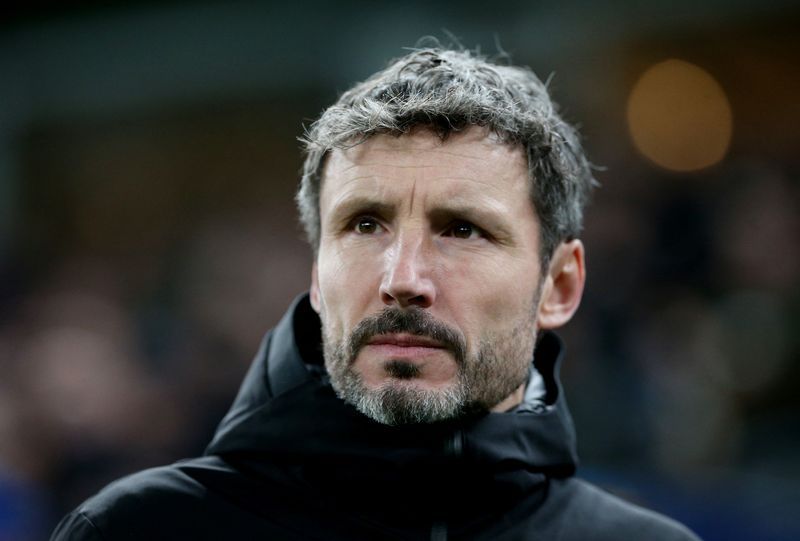
Mark van Bommel has made clear that accepting Belgium's coaching vacancy required no deliberation whatsoever, despite the lingering possibility that the Dutch national team—currently without a manager following their World Cup campaign—might have come calling. The 49-year-old former footballer, who arrived in Brussels to take over from Rudi Garcia late last month, emphasised during his inaugural press conference that the Belgian opportunity held considerably more appeal than waiting around for developments in his home country.
When pressed on whether the prospect of eventually leading the Netherlands might have influenced his decision, Van Bommel was emphatic in his rejection of that notion. The lure of international football management at the highest level superseded any strategic calculations about alternative positions. For a coach of his stature and experience, the immediate prospect of directing one of Europe's most successful football nations evidently proved irresistible. His candour reflected both confidence in his own ability and recognition of Belgium's standing within the global game.
The transition from club management to national team football represents a fundamentally different challenge, one that Van Bommel has welcomed rather than feared. He articulated a clear philosophical position: taking charge of a national team ranks among the most prestigious assignments in the sport, principally because it affords access to a country's most elite performers. However, he acknowledged the harsh reality that only a select handful of nations possess the depth and quality to realistically compete for major honours—a sobering recognition that tempers unbridled ambition with pragmatism.
Van Bommel's appointment follows Belgium's exit from the recent World Cup at the quarter-final stage, a tournament that precipitated Garcia's departure and triggered the swift search for his successor. The Belgian federation evidently identified Van Bommel as the ideal candidate to reinvigorate the squad. With credentials spanning elite European clubs—he defended for Barcelona, Bayern Munich and AC Milan during his playing career—and participation in the 2010 World Cup final with the Netherlands, Van Bommel brings both tactical acumen and deep familiarity with high-pressure competition at international level.
Regarding his coaching philosophy, Van Bommel stressed that competitive success remains his paramount concern. Yet he resisted the temptation to issue grandiose pronouncements about trophy wins, a restraint that distinguishes his approach from the occasionally hyperbolic rhetoric heard from Dutch football circles, where declarations of imminent world championship ambitions are perennial features of media discourse. Instead, he offered a measured assessment: whilst winning represents the universal objective for any serious coach, the path to major tournament success involves innumerable variables and contingencies that defy simple prediction or guarantee.
Belgium's forthcoming competitive calendar will begin with Nations League fixtures rather than championship tournaments. Van Bommel's maiden assignment comes away to Italy in Rome on September 25, with subsequent September-October international windows featuring encounters against Turkey and France. These matches represent crucial early opportunities to establish tactical identity and assess squad cohesion under his management. The Nations League, whilst not carrying the prestige of continental championships, nonetheless provides meaningful competition and serves as essential preparation for future qualifying campaigns.
One significant personnel matter occupying Van Bommel's initial weeks involves Real Madrid goalkeeper Thibaut Courtois, who indicated following the World Cup that he required respite from international football. Rather than attempting to immediately reverse this decision through persuasion or ultimatums, Van Bommel's approach emphasises dialogue and patience. His stance reflects sophisticated man-management: acknowledging Courtois's stated position without rushing to judgment, instead waiting for the goalkeeper to return to full club training before arranging substantive conversations about his future with the national team.
This measured handling of the Courtois situation illustrates Van Bommel's broader coaching philosophy. He recognises that players' perspectives evolve over time, particularly when physical and mental recovery progresses following demanding tournament campaigns. Courtois may well reconsider his position once reinstated within his club environment and some temporal distance separates him from the World Cup experience. Consequently, rather than creating unnecessary friction, Van Bommel has positioned himself to engage in good-faith negotiations that respect the player's autonomy whilst exploring possibilities for reconciliation.
For Malaysian and Southeast Asian observers, Van Bommel's appointment carries broader significance regarding football management trends in Europe. His elevation to a major national team vacancy underscores the premium placed upon managers with proven elite-level experience, whether as players or coaches. The decision to appoint rather than conduct an exhaustive search suggests Belgian football authorities possessed sufficient confidence in Van Bommel's credentials to move decisively. This approach contrasts with prolonged management vacancies that plague other federations, potentially destabilising team development during crucial qualifying periods.
Belgium's situation also illuminates the complex dynamics surrounding international football at the highest level. The nation possesses considerable talent, as evidenced by recent World Cup progression, yet faces the perpetual challenge of maintaining momentum and cohesion within squads featuring players spread across Europe's most competitive leagues. Van Bommel's task involves not merely tactical innovation but also man-management across geographic and competitive boundaries, a reality that complicates preparation and reduces training opportunities compared to club management.

