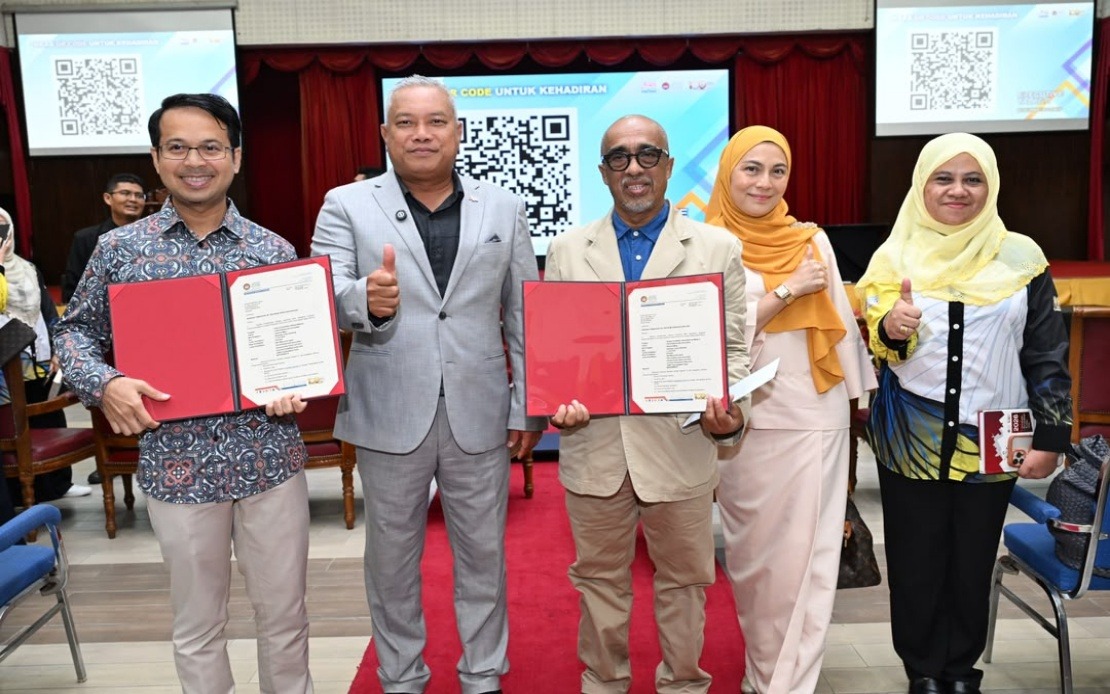
Universiti Pendidikan Sultan Idris (UPSI) has welcomed two prominent figures from Malaysia's entertainment and broadcast industries as graduate students, marking a significant moment for the institution's alternative qualification pathways. Celebrated actor and director Mohd Sabri Yunus, aged 65, and television presenter Ahmad Fedtri Yahya, 45, have both received offers to pursue specialised Master's degrees, with Sabri focusing on Malay Literature and Fedtri on Malay Language studies. Their acceptance represents a watershed moment for UPSI's Faculty of Languages and Communication, which has developed these programmes specifically to recognise the value of practical professional expertise accumulated over decades of work outside traditional university settings.
For Sabri, whose career in entertainment and cultural work spans more than four decades, this educational opportunity carries profound personal significance. The 65-year-old described the acceptance as the realisation of a long-deferred aspiration, acknowledging two previous attempts to enroll at university during the 1980s and early 1990s that fell through due to his employment obligations at Dewan Bahasa dan Pustaka (DBP). When Sabri joined the national language institution in 1982 as an illustrator, the demands of his position made it impossible to pursue formal tertiary education simultaneously. Despite this setback, he has maintained an unrelenting commitment to intellectual growth, adopting the philosophy that knowledge can be acquired from every individual one encounters throughout life, with each person serving as an informal educator.
The pathway enabling their enrolment is the Accreditation of Prior Experiential Learning for Award of Qualifications (APEL.Q), a recognition framework designed to validate professional achievement and real-world expertise as equivalent to formal academic prerequisites. This mechanism allows individuals with substantial career accomplishments to access graduate programmes without necessarily holding conventional undergraduate degrees. By positioning Sabri and Fedtri as pioneer cohort members in these newly developed curricula, UPSI is demonstrating institutional commitment to democratising access to higher education and acknowledging that valuable learning occurs outside classroom walls.
Fedtri's decision to focus on Malay Language studies reflects his conviction that linguistic patterns and usage provide a window into a society's cultural sophistication and intellectual development. The television presenter expressed enthusiasm about joining the UPSI academic community and articulated a concern increasingly voiced by education stakeholders across Southeast Asia: the erosion of formal language standards among younger generations due to digital communication platforms and social media vernacular. By pursuing formal graduate-level study in this field, Fedtri positions himself to conduct research and potentially contribute to ongoing conversations about language preservation and effective pedagogical approaches in an era of technological disruption.
Sabri's intended research direction, focusing on specific forms of traditional Malaysian poetry, promises to bridge his extensive practical engagement with Malay culture and literature with scholarly rigour. His career trajectory—encompassing work in multiple creative and cultural domains—has provided him accumulated insights into how traditional aesthetic forms resonate within contemporary Malaysian society. The APEL.Q framework enables him to formalise these experiential understandings through structured academic research, potentially producing scholarship that synthesises creative practice with theoretical analysis.
UPSI Vice-Chancellor Prof Datuk Dr Md Amin Md Taff articulated an institutional perspective emphasising the reciprocal value of their presence. Rather than viewing celebrity enrolment as novelty or public relations exercise, the university leadership highlighted how their participation enriches the broader student community and staff environment. With approximately 25,000 students—the majority training to become educators who will shape future generations—UPSI recognises that direct exposure to accomplished practitioners in arts, language, and cultural fields provides pedagogical value extending beyond formal coursework.
This appointment reflects evolving global trends in higher education, where universities increasingly recognise that professional accomplishment and experiential expertise constitute legitimate educational capital. Malaysia's emphasis on cultural identity and the strategic importance of Malay language and literature within the national education system lends particular significance to both individuals' academic pursuits. Their presence on campus signals institutional commitment to bridging creative industries and formal education sectors, two domains that have historically remained somewhat disconnected despite their interdependence.
The decision to accept entertainment industry figures into graduate programmes also speaks to deliberate institutional efforts to enhance the prestige and relevance of education degrees themselves. Teacher training institutions across Southeast Asia frequently struggle to attract high-calibre students into education specialisations, with many talented individuals preferring disciplines perceived as offering greater economic mobility. By welcoming accomplished practitioners and positioning their expertise as academically valuable, UPSI implicitly argues for the intellectual rigour and social importance of educational scholarship.
For Malaysian readers and regional observers, this development illustrates broader shifts in how educational credentials are conceptualised and validated. The APEL.Q pathway and its acceptance of Sabri and Fedtri suggest that rigid hierarchies distinguishing academic achievement from professional accomplishment are becoming more permeable. This has implications for workforce development, professional recognition, and educational accessibility throughout the region, where millions of individuals have accumulated significant expertise without formal credentials documenting their capabilities.

