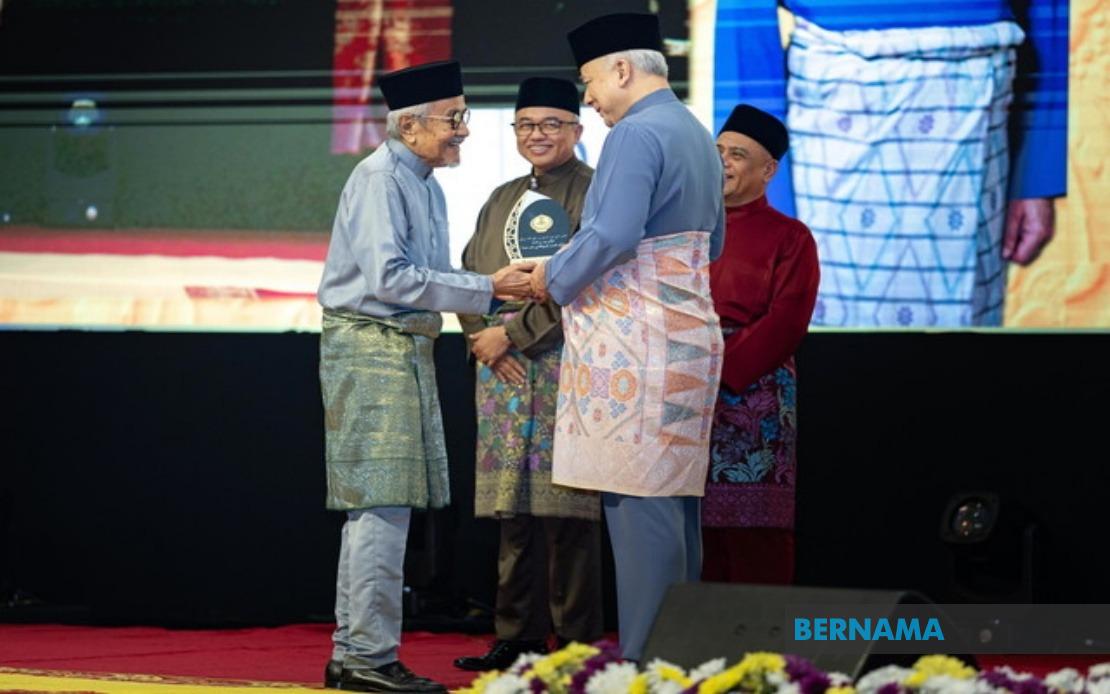
Datuk Rahim Razali, one of Malaysia's most accomplished filmmakers and broadcasters, received the 'Tokoh Zaid Bin Thabit' Media and Communications Practitioner Icon Award during the Perak state-level Maulidur Rasul celebration in Ipoh on August 25. The 87-year-old, whose full name is Abdul Rahim Mohd Razali, was presented with the honour by Sultan Nazrin Shah, along with RM5,000 and a commemorative plaque. The award recognises Razali's extraordinary influence on Malaysian media and his enduring legacy in shaping the nation's cultural and broadcast landscape over more than five decades.
Razali hails from Batu Gajah, Perak, and his career trajectory reflects the evolution of Malaysian media itself. He began his professional journey as a broadcasting assistant at Radio Televisyen Malaysia (RTM), the country's pioneering national broadcaster. Rather than remain within the institutional framework, Razali demonstrated entrepreneurial acumen by founding his own production company, Angkatan Seniman Abad XX Sdn Bhd, in 1981, during a transformative period for Malaysian independent filmmaking when opportunities for privately-produced content were beginning to expand.
The filmmaker's creative output has been remarkably prolific and diverse. He produced fifty drama productions for RTM, establishing himself as a master storyteller capable of working within the constraints and opportunities of state television. Beyond his television work, Razali ventured into feature filmmaking, creating fifteen films that achieved both commercial success and critical recognition. Among his most celebrated works are "Abang" and "Abang 92," which exemplified his ability to craft narratives resonating with Malaysian audiences while maintaining artistic integrity.
Razali's international standing is particularly noteworthy. Eight of his feature films were selected for screening at the Tokyo Film Festival, one of Asia's most prestigious film events. This international recognition demonstrates that Malaysian cinema, under the guidance of visionary directors like Razali, could compete on the global stage. During an era when Malaysian film was still developing its distinctive voice, such international exposure helped establish the country's cultural credentials and opened doors for subsequent generations of filmmakers.
Beyond his work behind the camera, Razali cultivated a second career as a respected sports commentator, bringing the same eloquence and storytelling ability to sports broadcasting. This versatility underscores his comprehensive understanding of media across multiple platforms and genres, a skill set increasingly rare among practitioners who typically specialise in narrower disciplines. His commentary work likely introduced him to millions of Malaysian households who may not have encountered his dramatic works, extending his cultural influence throughout the nation.
The Maulidur Rasul awards ceremony itself reflected broader recognition of excellence within Malaysian society. Sultan Nazrin Shah presided over the distribution of multiple honours acknowledging contributions across different sectors and roles. The recognition of Razali alongside other recipients demonstrated how Islamic calendar observances in Malaysia serve as occasions for celebrating societal contributions that extend well beyond strictly religious domains, encompassing culture, media, family values, and community service.
Yang Walat, an 82-year-old single mother of fifteen children from Kuala Kurau, received the Exemplary Family Icon Award, claiming RM10,000, an Umrah pilgrimage package, and recognition plaque. Her honour highlighted how excellence in family stewardship and maternal dedication receives formal acknowledgment within Malaysia's value system. The substantial prize package, including the religious pilgrimage opportunity, reflected the interweaving of material support with spiritual recognition in state ceremonies.
Additional awards presented during the ceremony recognised specialists across Islamic institutional life. Radhi Kamarul Hailan, 56, received the 'Ibnu Abbas' Preacher Icon Award for his contributions to religious education and guidance. The Mosque Official Award went to two recipients: Saharuddin Hassim, 74, and Yahya Man, 83, acknowledging their administrative and custodial roles. Mohd Hanafiah Idris, 56, received the Imam Award for his leadership in congregational worship. Pertubuhan Wanita Prihatin Perak secured the Non-Governmental Organisation Award, recognising community-based advocacy work by women's organisations.
Razali's recognition carries particular significance for Malaysia's cultural trajectory. As the nation continues navigating the digital revolution and globalised entertainment markets, the achievements of veteran filmmakers serve as touchstones for understanding Malaysian cinema's development. Razali's career bridged the era of state broadcasting dominance and the emergence of independent production, making him a transitional figure whose influence shaped multiple generations of broadcasters and filmmakers.
The award also underscores a broader Malaysian approach to honouring intellectual and creative contributions within formal state structures. Unlike some societies where artistic recognition remains predominantly within professional or commercial domains, Malaysia has integrated media practitioners into state honour systems, positioning cultural figures alongside religious scholars and community leaders. This positioning suggests recognition that media professionals wield significant influence over national narratives and collective identity formation.
For aspiring Malaysian filmmakers and broadcasters, Razali's recognition at 87 years old demonstrates the long-term career prospects available within the industry, provided one maintains quality and relevance across changing technological and audience landscapes. His journey from RTM assistant to celebrated director to nationally-honoured elder statesman provides a template for sustained creative engagement spanning multiple decades and platforms.

