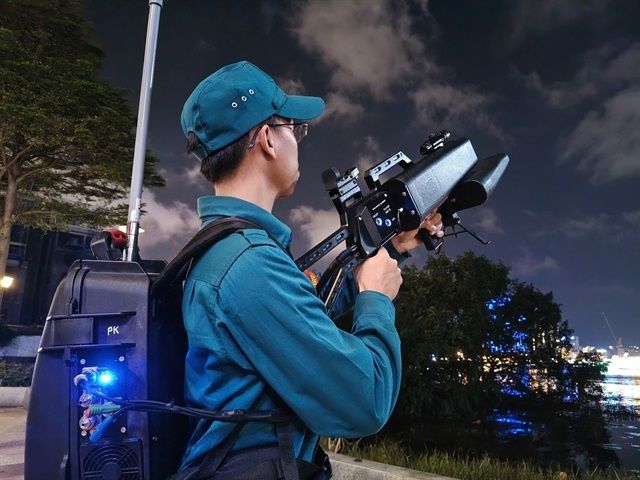
Vietnam's aviation authorities have issued an urgent public warning against flying drones near airports without proper authorisation, responding to an alarming acceleration in incidents that have disrupted air traffic, inflicted substantial financial losses on carriers and airports, and raised the spectre of serious accidents involving passenger aircraft. The Immigration Department, operating under the Ministry of Public Security, has characterised unauthorised drone incursions as an escalating and material threat to the nation's airspace integrity and flight safety standards.
The scale of the problem has become evident through official data tracking airspace violations. Vietnam documented 34 separate cases involving drones or unauthorised aircraft penetrating restricted zones around airports throughout 2025, a concerning baseline that pales beside the acceleration recorded in the first half of 2026, which saw 17 additional incursions in just six months. Each such breach compels air traffic control personnel to invoke emergency protocols, forcing controllers to ground departing aircraft, suspend incoming traffic, or redirect planes mid-route to alternative airports to eliminate collision possibilities. These cascading disruptions ripple through airline schedules and passenger itineraries with predictable severity.
The economic consequences have proven substantial enough to capture corporate attention. Vietnam Airlines quantified the impact of drone-related disruptions occurring between February 17 and 24 alone at approximately VNĐ5.6 billion (US$215,000), a sum reflecting direct operational costs and revenue losses from the approximately 9,200 passengers whose journeys experienced delays or schedule modifications during that concentrated period. Danang International Airport assessed its own direct losses exceeding VNĐ10 billion ($384,000), though airport management acknowledged this figure captures only the immediate operational cost and excludes cascading economic damage inflicted upon connected industries including freight logistics, ground handling, and traveller accommodation arrangements.
Beyond quantifiable financial damage, aviation officials have articulated concerns regarding catastrophic safety implications. A drone strike occurring during the aerodynamically vulnerable phases of takeoff or landing could precipitate a serious accident with fatal consequences for passengers and flight crews aboard. This possibility, rather than remaining theoretical, has motivated regulators to escalate enforcement postures across the regulatory framework governing unmanned aircraft operations.
Vietnam's statutory framework requires drone operators to complete aircraft registration and secure specific flight authorisation before conducting any operations, with the crucial distinction that registration alone confers no operational rights. Flight permits issued by competent authorities specify defined geographic boundaries, maximum altitude clearances, temporal windows, and operational parameters. Regulatory violations trigger administrative, civil, or criminal consequences calibrated to infraction severity. A 2025 government decree established graduated enforcement mechanisms including monetary penalties, drone confiscation, and suspension of operator privileges.
More serious breaches attract criminal prosecution without requiring that an actual aviation accident have transpired. Vietnamese law permits criminal charges where drone operations create real and immediate collision hazards along aircraft approach corridors, takeoff paths, or landing zones. Such violations carry financial penalties ranging from VNĐ10 million to VNĐ50 million ($384 to $1,920), supplemented by non-custodial correctional reform terms up to two years or custodial imprisonment ranging from three months to two years. The statute additionally permits courts to disqualify convicted individuals from specified employment categories or professional roles for periods between one and five years, creating supplementary consequences beyond financial and custodial penalties.
For Malaysian readers and operators, Vietnam's regulatory evolution reflects a regional trend toward stricter unmanned aircraft governance reflecting aviation safety prioritisation. Southeast Asian airspace continues experiencing substantial commercial aviation growth, with regional airlines and airports confronting similar drone incursion challenges that demanded regulatory responses. Vietnam's escalating enforcement framework provides instructive precedent regarding how jurisdictions address proliferating drone technology without restricting legitimate recreational or commercial applications.
The regulatory distinction Vietnam has established between administrative and criminal liability proves instructive. Operators flying within permit parameters but committing minor transgressions face administrative fines and potential equipment confiscation. However, operators deliberately violating spatial restrictions or creating genuine collision hazards face criminal exposure with imprisonment possibilities, reflecting legislative judgment that reckless conduct endangering hundreds of aircraft occupants warrants serious criminal consequences.
Vietnam's Immigration Department has appealed to operators to maintain strict compliance with permit conditions specifying authorised flight zones, altitude restrictions, and temporal windows. Simultaneously, authorities have solicited public assistance, requesting that citizens report suspected unauthorised drone activity near airports to police, military personnel, or airport security personnel. This community-engagement approach acknowledges that detection and interdiction of airspace violations requires reporting mechanisms extending beyond official aviation authority personnel.
The authorities have characterised aviation safety as a societal responsibility transcending government agency mandates alone, emphasising that irresponsible drone deployment carries consequences extending across human safety dimensions, commercial aviation operations, and national security interests. This framing positions drone regulation within broader security architectures rather than treating it as isolated technological governance question. For regional airports and aviation authorities, Vietnam's experience underscores that emerging drone technologies require regulatory frameworks balancing innovation facilitation against public safety imperatives, particularly within airspace corridors where collision consequences prove catastrophic.

