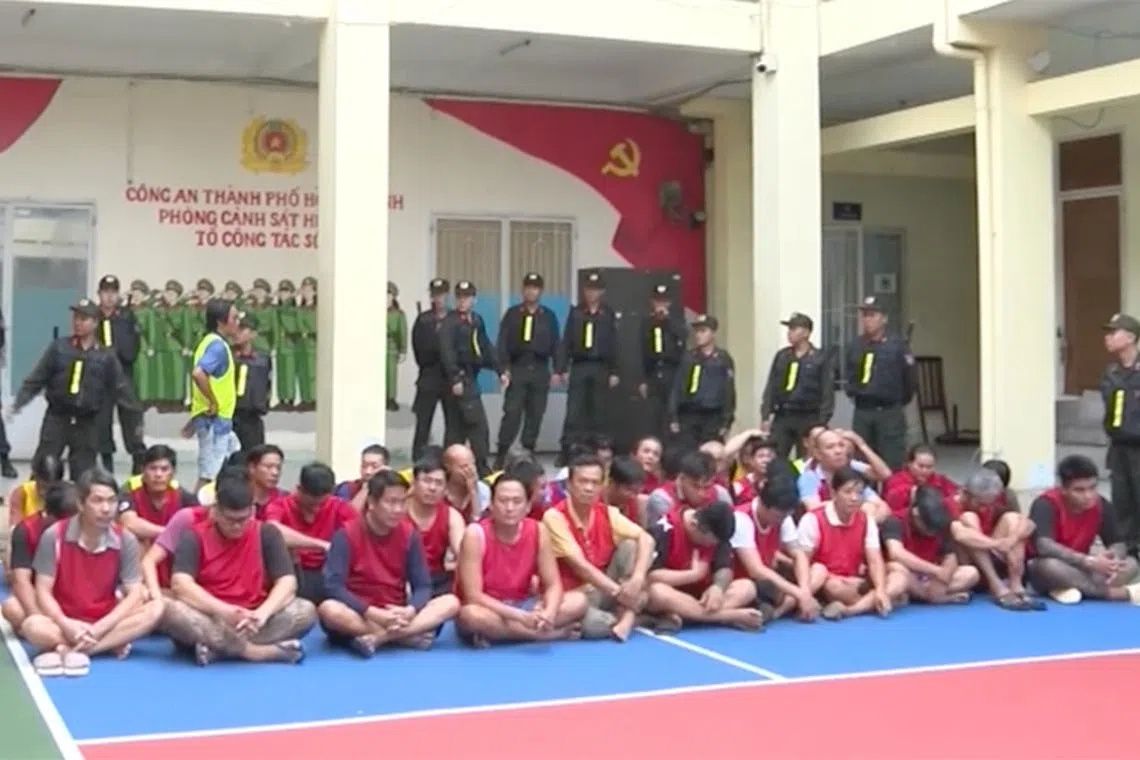
Vietnamese law enforcement has struck a significant blow against organised gambling networks, with police announcing the arrest of 85 individuals connected to two major underground betting syndicates that handled approximately US$133 million in illicit transactions. The dismantling of these operations, which police characterised as "exceptionally large-scale" in their reach and sophistication, represents part of a broader enforcement sweep targeting gambling activity surrounding the 2026 FIFA World Cup.
The two syndicates operating from Ho Chi Minh City demonstrated a complex organisational structure with hierarchical management systems and tight operational controls, according to statements released by local police authorities. Since October 2025, investigators determined that these networks had processed some US$133 million through their illegal channels, underscoring the substantial financial stakes involved in underground sports betting across Southeast Asia. The sheer scale of the operation highlights how profitable black-market gambling remains despite official prohibition, particularly during periods when international sporting events attract heightened interest and wagering activity.
The mechanics of these betting networks involved a transnational element that has become increasingly common in regional organised crime. Ring leaders confessed to obtaining premium "master-level betting accounts" supplied by individuals operating from Cambodia, then systematically subdividing these accounts into multiple layers of sub-accounts managed by agents and distributed to end-user gamblers through digital platforms. This tiered distribution structure allowed organisers to insulate themselves from direct contact with bettors while maximising their reach and revenue collection—a model that has proven resilient against conventional law enforcement approaches.
Vietnamese authorities emphasise that online gambling remains completely prohibited in the communist nation, yet the persistence of sophisticated illegal operations demonstrates the vast demand created by this blanket ban. The government's periodic enforcement campaigns, timed strategically around major international sporting events, aim to disrupt networks precisely when they generate maximum activity and profit. Such seasonal crackdowns have become routine during World Cups and other major tournaments, reflecting recognition among policymakers that these periods present both elevated law enforcement opportunities and increased criminal enterprise.
The enforcement actions extend far beyond these two major syndicates. Vietnam's public security ministry disclosed that police had dismantled 73 separate gambling operations nationwide during the opening three weeks of World Cup 2026 activity, with these combined operations resulting in 346 arrests. Colonel Bui Tuan Anh of the public security ministry characterised the cumulative financial scale of these nationwide enforcement activities as involving "thousands of billions of dong," equivalent to hundreds of millions of dollars, underscoring the systemic nature of illegal gambling across Vietnamese society.
The timing and coordination of this enforcement surge reflects how international sporting events trigger responses from regional law enforcement agencies. With the 2026 World Cup being hosted by Canada, Mexico, and the United States—with the final scheduled for July 19—Asian criminal networks have incentive to maximise operations during the tournament's duration, when global betting interest and volume reach peak levels. Vietnamese authorities appear to have anticipated this surge and allocated significant investigative resources to disrupt major operations before they accumulate larger transaction volumes.
For Malaysian observers, these developments offer perspective on the challenge of managing illegal gambling across Southeast Asia. While Malaysia maintains its own regulated betting structures through official channels like Sports Toto, the existence of parallel underground networks reflects broader regional patterns. The transnational nature of these operations—with accounts being sourced from Cambodia and distributed across multiple countries—demonstrates how geographical proximity and porous regulatory frameworks create opportunities for organised gambling enterprises that operate across borders.
The sophistication of the networks dismantled by Vietnamese police suggests that regional law enforcement agencies face an adversary that constantly adapts operational methods. The use of layered account structures, international sourcing, and digital distribution channels indicates that underground gambling syndicates employ techniques borrowed from legitimate financial services and organised crime networks. This technical sophistication means that conventional policing approaches focused solely on street-level arrests may have limited long-term impact unless paired with international cooperation and regulatory innovation.
Vietnamese authorities have signalled ongoing commitment to enforcement during the World Cup period, with the initial results suggesting they have successfully identified and disrupted significant operational nodes within the gambling underworld. However, the historical pattern suggests that while major raids generate headline-grabbing arrests and asset seizures, the underlying demand for gambling services and the profit incentives driving these networks remain essentially unchanged by enforcement actions alone. The 346 arrests and 73 operations dismantled during the World Cup's opening weeks represent substantial operational success, yet observers familiar with Southeast Asian criminal enterprises recognise that elimination of one syndicate typically creates market opportunity for competing organisations rather than eliminating illegal gambling altogether.

