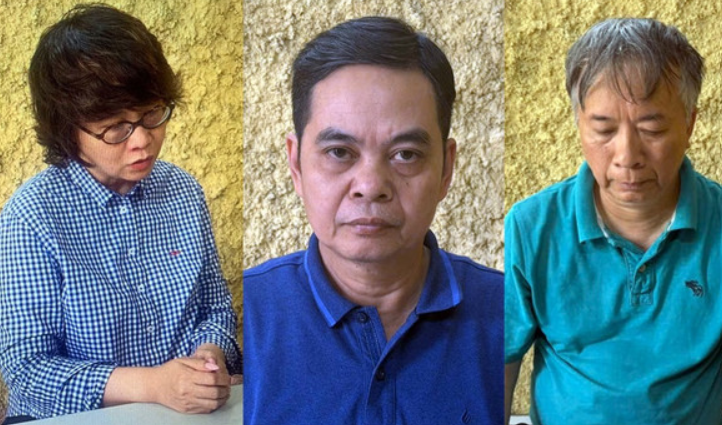
Vietnamese authorities have intensified their crackdown on independent publishing and media coverage, arresting three senior executives from the Vietnam Writers' Association Publishing House for releasing a biography of Ho Chi Minh that fell afoul of government scrutiny. The detention of the director, editor-in-chief and head of the editorial board marks an escalation in state efforts to control how the nation's revolutionary history is presented to the public.
The book in question, "Stories with Thanh -- A New Account of Light", was authored by Nguyen Thanh Nam, a former telecommunications industry executive who had previously avoided the public spotlight. Published in May, the work focused on Ho Chi Minh's formative years abroad as he developed strategies for Vietnam's independence movement. Rather than offering novel scholarly insights, the book became the focal point of a broader ideological dispute over who holds the authority to interpret Vietnam's revolutionary legacy and its founding father's historical record.
Nguyen Thanh Nam himself was taken into custody in early July on charges related to producing and distributing materials deemed hostile to the Socialist Republic of Vietnam. His arrest preceded the detentions of the three publishing executives by several days. Alongside Nam, authorities also arrested an online content creator who had used social media platforms to promote the book, suggesting the government is increasingly vigilant about controlling narrative dissemination across both traditional and digital channels.
The Vietnamese government's statement accusing the publishers revealed the specific nature of official concerns. Authorities claimed the book and those responsible for its publication, distribution and promotion had distorted revolutionary history and misrepresented Communist Party policies and leadership direction. The charge sheet specifically named President Ho Chi Minh's image as having been tarnished by the work, though the government statement provided no detailed evidence of factual inaccuracies beyond vague references to distortion.
Under pressure from state authorities, the publishing house voluntarily withdrew the book from circulation, though copies had already entered the market and circulated among readers. This recalls patterns seen throughout Southeast Asia where governments maintain tight control over historical narratives, particularly those touching on national founding figures and revolutionary movements. For Malaysian readers familiar with how sensitive historical and political topics are handled locally, Vietnam's approach reflects similar anxieties about controlling official versions of national memory.
The government's reach extended beyond the publisher and author to media organisations that had reported positively on the book's release. The culture ministry announced sanctions against twenty-three news outlets for publishing articles praising the biography. These outlets were ordered to pay fines totalling nearly US$2,500 collectively, whilst more than a dozen journalists, editors and staff members connected to the coverage faced reassignment, suspension or dismissal from their positions. The ministry's statement characterised the media organisations as having subsequently acknowledged their errors and gained understanding about proper source verification.
In a nationally televised address, Nguyen Thanh Nam offered a public apology for his work, conceding that the book contained factual errors and false claims contradicting Communist Party guidelines and state policy. He acknowledged that his publication had damaged Ho Chi Minh's reputation and sown public confusion. Such televised recantations, whilst designed to signal compliance, underscore the pressure exerted on individuals who produce content deemed ideologically problematic by the state apparatus.
These developments reflect Vietnam's persistent intolerance for any challenge to state-approved historical interpretation, particularly regarding figures of revolutionary significance. The government's sensitivity about Ho Chi Minh's legacy suggests concerns that unauthorised accounts might expose contradictions between official mythology and historical reality. By moving swiftly against publishers, media outlets and content creators simultaneously, authorities have sent a clear message about the boundaries of permissible public discourse.
Human rights observers have documented the Vietnamese state's systematic suppression of dissent. According to Human Rights Watch, more than 160 political critics and activists currently remain imprisoned in Vietnamese facilities. The treatment of this book's publishers and promoters fits within that broader pattern of state control, though it operates through charges related to publishing and historical interpretation rather than explicitly political crimes.
For regional observers, the incident demonstrates how Southeast Asian governments increasingly deploy charges of historical distortion and national image damage to suppress publishing freedom and media independence. The coordination between police, culture ministry and state media in pursuing the case reveals an integrated approach to controlling information. Malaysia, Thailand, Singapore and other nations in the region employ similar mechanisms to protect state-sanctioned narratives, making Vietnam's actions comprehensible within broader regional trends toward information control and restricted civic space.
The case raises questions about intellectual freedom in Vietnam as digital platforms make controlling information circulation increasingly difficult for authorities. The simultaneous targeting of traditional publishers, online influencers and news media suggests the government recognises that historical narratives now flow through multiple channels simultaneously. Vietnamese officials appear determined to establish that regardless of distribution method, content challenging official historical accounts will face swift suppression and those responsible will face serious legal consequences.

