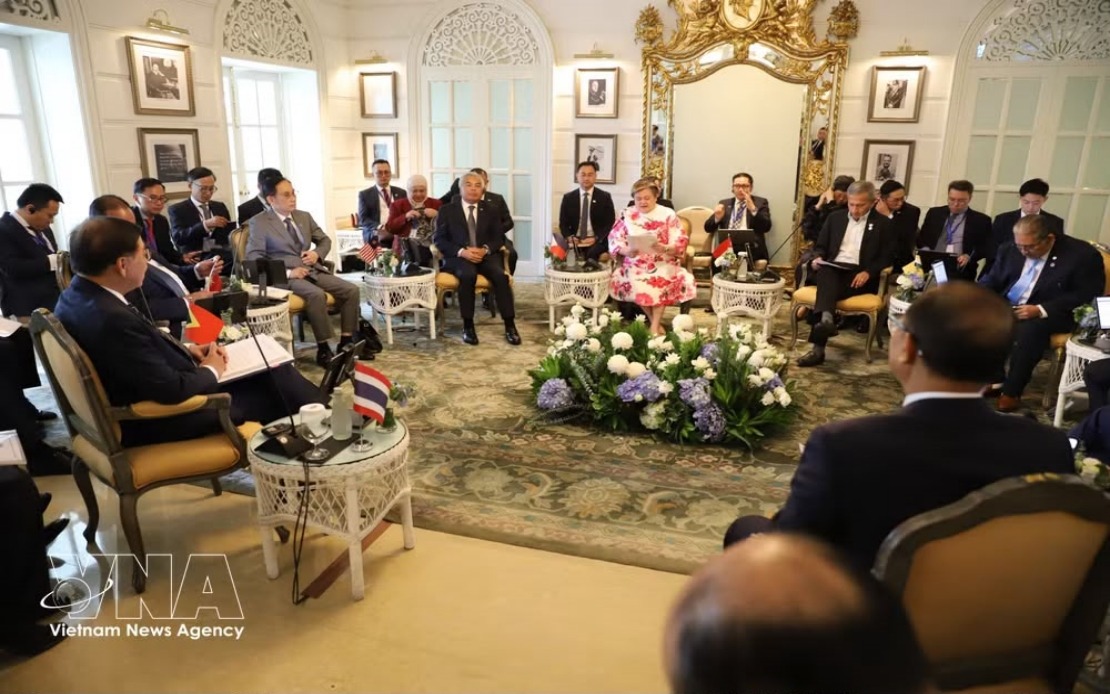
Vietnam has committed to working alongside ASEAN partners to facilitate Myanmar's long-term recovery and regional integration, Vietnamese Foreign Minister Le Hoai Trung declared during an informal meeting with other ASEAN foreign ministers in Bangkok. The high-level engagement, held on July 12 and chaired by Philippine Secretary of Foreign Affairs Maria Theresa P. Lazaro, represented the most significant direct dialogue between ASEAN and Myanmar's administration in over five years—a symbolic moment underscoring the bloc's determination to maintain its diplomatic channels despite ongoing political tensions.
Trung's statements reflect Vietnam's steady positioning as a constructive voice within ASEAN's Myanmar diplomacy. The Vietnamese minister emphasised that his nation continues to view Myanmar not as an isolated problem case but as an integral ASEAN member deserving of sustained support rather than marginalisation. This framing carries particular weight given growing international criticism of the military administration in Naypyidaw and pressure from Western nations to take a harder diplomatic line. Vietnam's approach instead emphasises engagement over isolation, a philosophy consistent with ASEAN's founding principle of non-interference in internal affairs.
The Five-Point Consensus, adopted by ASEAN leaders in 2021 following Myanmar's military coup, remains the bloc's primary mechanism for addressing the country's political crisis. This framework calls for an immediate end to violence, dialogue among stakeholders, mediation by an ASEAN special envoy, provision of humanitarian assistance, and unrestricted access to the region by the special envoy. Trung's renewed endorsement of this consensus signals Vietnam's belief that sustained incremental progress, however modest, remains preferable to abandoning the framework or escalating pressure. For Southeast Asian readers and policymakers, this reflects a broader debate about whether engagement strategies can genuinely influence Myanmar's trajectory or whether they merely provide diplomatic cover for inaction.
Trung specifically acknowledged recent initiatives undertaken by Myanmar's military-led government, including stabilisation measures, economic revival efforts, improved governance structures, and enhanced border security operations. The minister's recognition of these developments—particularly Myanmar's crackdown on transnational crimes including drug trafficking and cybercrime—suggests ASEAN believes incremental change is occurring, though international observers remain sceptical about the pace and scope of reforms. Myanmar's 100-day plan presented at the meeting by Foreign Minister Tin Maung Swe provides fresh benchmarks against which ASEAN will measure progress during the coming months.
The timing of this engagement carries significance for regional dynamics. The Philippines assumes ASEAN's rotating chairmanship in 2026, and demonstrating concrete progress on Myanmar could define Manila's tenure. Vietnam's willingness to position itself as a supporting partner enhances the Philippines' diplomatic hand while distributing responsibility for Myanmar outcomes across multiple member states. For Malaysia and other regional players, Vietnam's active engagement signals that no single ASEAN nation bears sole responsibility for managing this protracted challenge.
Trung outlined Vietnam's specific contributions to the Myanmar situation, offering to collaborate with fellow ASEAN members on economic recovery support, social problem-solving, and transnational crime suppression. These practical areas represent the kind of tangible cooperation that ASEAN can implement without directly challenging Myanmar's military administration. Economic initiatives, technical assistance, and joint security operations create space for dialogue while allowing both sides to claim progress. However, sceptics question whether such measures address underlying political divisions or merely manage symptoms while postponing fundamental reconciliation.
The minister highlighted the necessity for increased direct engagement and regular dialogue between ASEAN representatives and Myanmar officials. This emphasis on maintaining communication channels addresses concerns that without consistent contact, ASEAN loses visibility into developments within Myanmar and risks becoming blindsided by escalating violence or political shifts. Regular engagement also provides opportunities for discreet diplomacy and confidence-building outside formal multilateral settings. The contrast with earlier periods when ASEAN struggled to maintain meaningful access to Myanmar's leadership underscores how carefully the bloc has cultivated and preserved these diplomatic relationships.
Frankly assessing the regional security implications, Myanmar's situation extends beyond bilateral concerns. The country's instability creates space for transnational criminal networks, refugee movements, and cross-border complications affecting Thailand, Bangladesh, and China. ASEAN's commitment to supporting Myanmar's stability therefore serves broader regional interests in maintaining secure borders and preventing humanitarian crises that might destabilise neighbouring territories. Drug trafficking in particular affects multiple Southeast Asian nations, giving shared security interests that transcend political disagreements about Myanmar's governance structures.
The meeting's emphasis on Myanmar-owned and Myanmar-led solutions represents diplomatic language acknowledging that external actors, including ASEAN, cannot impose peace settlements. This phrase, repeated across official statements, reflects lessons learned from decades of regional conflicts where imported solutions failed without local buy-in. Yet this framework also places responsibility on Myanmar's leadership to demonstrate genuine commitment to dialogue and compromise. The challenge for ASEAN lies in maintaining this engagement while avoiding the appearance of rewarding military rule or abandoning civilian aspirations.
For Vietnam specifically, supporting Myanmar's stability aligns with broader strategic interests in maintaining a balanced, multipolar Southeast Asia where no single power dominates regional dynamics. Vietnam's history of navigating complex great-power relationships suggests an appreciation for the value of sustained regional engagement mechanisms like ASEAN. The country's willingness to invest diplomatic capital in Myanmar's recovery reflects confidence that patient multilateral approaches yield long-term benefits exceeding the costs of sustained involvement.
Moving forward, Vietnam and other ASEAN members will face mounting pressure to demonstrate that their engagement strategy produces tangible improvements in Myanmar's political situation and humanitarian conditions. Without visible progress on the Five-Point Consensus elements—particularly regarding dialogue among rival Myanmar factions and cessation of violence—ASEAN's credibility as a meaningful diplomatic actor faces erosion. The coming months will reveal whether Myanmar's 100-day plan translates into substantive changes or represents another cycle of promises followed by disappointment, testing ASEAN's resolve to maintain patient engagement with a situation that increasingly frustrates international observers seeking rapid resolution.

