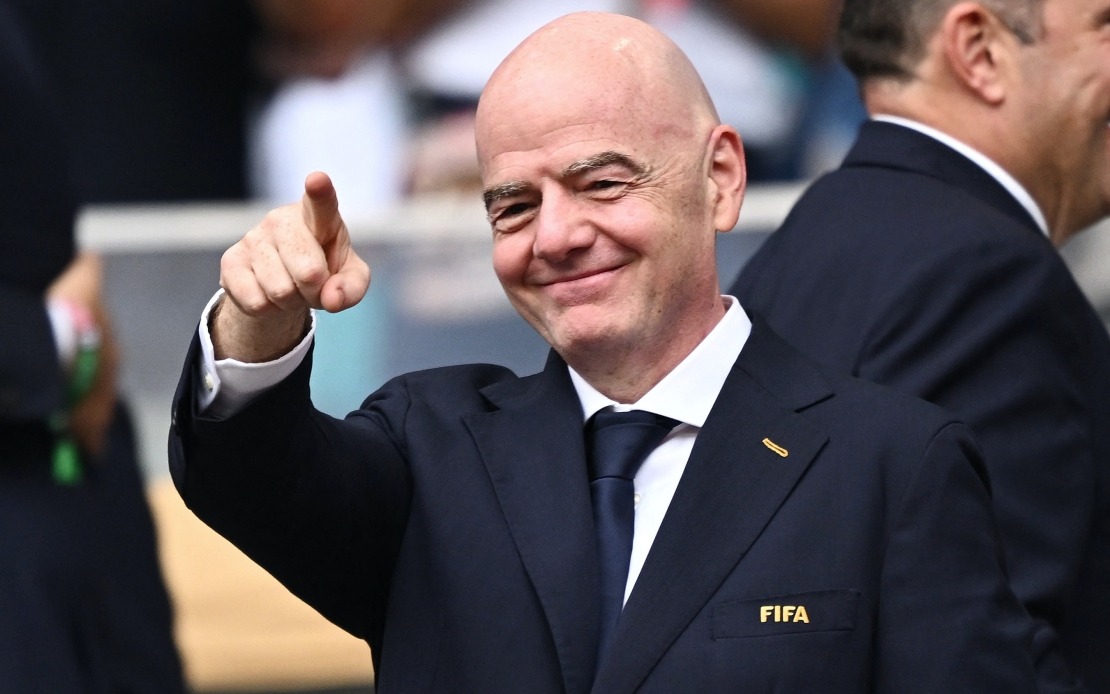
The Football Association of Wales has abandoned its backing for FIFA president Gianni Infantino's bid to secure another term at the helm of world football, marking a significant rupture in what had previously been promised support. The Welsh governing body's decision, confirmed through an official statement on Monday, stems directly from Infantino's controversial attempt to establish FIFA Forward Enterprise, a corporate vehicle designed to attract private investment into World Cup tournaments—a proposal that faced fierce resistance across the global football community before being scrapped last week.
Infantino's governance troubles have intensified beyond the FFE debacle. The FIFA president, now entering his second decade in charge, faces mounting criticism over his decision-making processes and the manner in which he has managed stakeholder communications around this transformative scheme. The FAW's withdrawal of support encapsulates a broader loss of confidence, with the Welsh body citing "failures in good governance, processes, leadership, values, stakeholder management, communications and sound judgement." This language reflects deep institutional concern that Infantino has fundamentally mishandled both the substance and presentation of his strategic vision for FIFA's financial future.
The timing of the FAW's reversal is particularly noteworthy given that the association had previously signalled willingness to support Infantino's re-election campaign scheduled for next year. That endorsement was predicated on assumptions about the FIFA president's competence and commitment to the sport's core values. The introduction of the privatization proposal fundamentally altered this calculus, demonstrating to the FAW and other confederations that Infantino's judgement regarding what serves football's interests had become suspect. The Welsh body's statement emphasised that "failing to put the best interests of football first is a failure we cannot accept," drawing a clear line between acceptable and unacceptable approaches to FIFA leadership.
British political leaders have reinforced this institutional criticism. Prime Minister Andy Burnham declared Infantino "the wrong man" to lead FIFA, while England's Football Association has called for comprehensive review mechanisms to examine his tenure more thoroughly. The English FA has also privately communicated to FIFA its withdrawal of support for Infantino, signalling that the two largest football nations in Europe have now aligned against him. Such political and institutional pressure from major footballing nations creates severe challenges for any incumbent seeking re-election in this environment.
Europe's continental governing body, UEFA, has adopted a particularly pointed stance by declaring that all options remain on the table regarding Infantino's future. This formulation carries implicit menace, suggesting that UEFA would countenance more dramatic measures if necessary. The language of UEFA's statement—that "no option should be off the table"—effectively endorses the possibility of a vote of no confidence, which would require only 43 associations from FIFA's 211 members to trigger an Extraordinary Congress. While such a dramatic intervention currently seems unlikely without confidence that sufficient votes exist to remove Infantino, UEFA's statement positions the mechanism as a live possibility rather than a hypothetical threat.
North American football's governing confederation, CONCACAF, representing 41 associations across North America, Central America and the Caribbean, has similarly demanded a comprehensive review of Infantino's leadership. Combined with UEFA's 55 associations, these two confederations alone command 96 votes—more than 45 per cent of FIFA's total membership. The significance of CONCACAF's position is further amplified by reports that its president, Victor Montagliani, currently serves as FIFA vice-president and has indicated willingness to contest the presidency should Infantino face removal. His potential candidacy suggests that the looming leadership contest may not be a simple referendum on Infantino but instead a multidirectional competition involving established rivals.
The privatization scheme that triggered this leadership crisis represented an unusual departure from FIFA's traditional revenue models. By attempting to attract private equity into World Cup operations, Infantino sought to unlock new financial streams that could be redistributed to national associations and continental confederations through FIFA Forward, the established development programme. However, three major confederations immediately rejected the proposal, recognizing that privatizing portions of football's most prestigious tournament risked compromising the sport's independence and introducing commercial pressures that could reshape competition structures in undesirable ways.
Infantino's hasty abandonment of the FFE proposal, announced just days after its introduction, created additional credibility damage beyond the substance of the scheme itself. The rapid reversal suggested insufficient consultation with key stakeholders before launching a transformative proposal, raising questions about Infantino's strategic planning and his understanding of the confederations he serves. The FAW's specific criticism of his "communications" failures directly addresses this dimension—the sense that he has pursued major initiatives without adequate groundwork or coalition-building among voting members.
Yet support for Infantino persists in certain quarters of the global football family. Several African nations, including Morocco and Egypt, alongside Qatar, have issued statements backing the FIFA president. This geographic divergence in support reflects broader global power dynamics within football, with some developing football nations viewing Infantino's FIFA Forward redistribution programmes as beneficial to their development aspirations. These associations may calculate that their long-term interests are better served by maintaining relationships with an incumbent president who has directed substantial development funds toward their regions rather than supporting an uncertain transition to new leadership.
The practical pathway to Infantino's removal remains constrained by the mathematics of FIFA's voting structures. Although 43 associations could trigger an Extraordinary Congress, successfully unseating an incumbent would require coordinating support from well over 100 associations—more than half of FIFA's membership. The current defections from Wales, England, and the mounting pressure from UEFA and CONCACAF represent serious challenges, but they do not yet constitute the overwhelming majority necessary for removal. The coming months will determine whether Infantino's authority can stabilize or whether the momentum toward change continues building.
For Southeast Asian football, these governance upheavals at FIFA carry practical consequences. The Asian Football Confederation's positioning on Infantino and the broader FIFA leadership question will influence development funding, competition structures, and the distribution of World Cup qualification slots—matters of substantial concern to Malaysian and regional football authorities. The FAW's withdrawal of support, combined with pressure from Europe's largest confederations, signals that the global football establishment increasingly views Infantino's continuation as problematic, a reality that could reshape the political landscape ahead of next year's presidential election.

