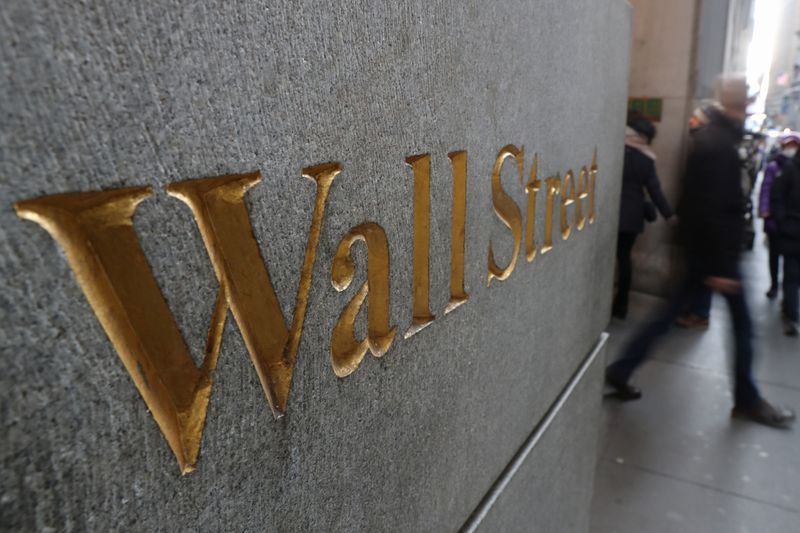
Wall Street opened August with considerable momentum, propelling the Dow Jones Industrial Average to an unprecedented closing high as investors grew more optimistic about resolving escalating tensions between the United States and Iran. The development offered a rare moment of clarity for markets that have been buffeted throughout July by concerns ranging from artificial intelligence valuations to Federal Reserve policy direction. The Dow Jones Industrial Average climbed 693.38 points, finishing at 53,178.41, while the S&P 500 advanced 110.78 points to 7,600.50 and the Nasdaq Composite surged 540.04 points to 25,913.90, representing gains of 1.32%, 1.48%, and 2.13% respectively.
The catalyst for the market's optimism stemmed from U.S. President Donald Trump's announcement that negotiations with Iran regarding the reopening of the Strait of Hormuz would commence on Monday, a pivotal signal that appeared to defuse mounting tensions. However, Iran subsequently disputed Trump's characterisation of the talks, introducing an element of uncertainty that tempered some enthusiasm. Nonetheless, the mere indication of diplomatic engagement was sufficient to trigger a significant retreat in crude oil prices, which fell approximately 5% during the session—a substantial decline that rippled through energy markets and influenced broader portfolio decisions across the institutional investment landscape.
The drop in crude oil prices cascaded into treasury markets, where yields retreated as investors reassessed inflation expectations and economic growth prospects. This dynamic created a favourable environment for equities, particularly in sectors sensitive to borrowing costs and global economic momentum. Art Hogan, chief market strategist at B. Riley Wealth in Boston, characterised the relationship between oil prices, treasury yields, and equity performance as the dominant market dynamic, noting that daily movements in these metrics overshadowed traditional earnings narratives. His observation underscores how geopolitical developments have become the primary driver of portfolio allocation, even as companies continue delivering substantial profit growth.
Communications services emerged as the strongest performing sector among the eleven major S&P divisions, gaining 4.3% as investors gravitated toward large-cap technology and digital media companies. Meta Platforms and Alphabet both contributed meaningfully to this sector's outperformance, reflecting sustained investor appetite for technology giants despite earlier summer concerns about artificial intelligence valuations and market saturation. Conversely, the energy sector declined 1.2%, representing the session's poorest performance as lower crude prices compressed valuations for oil and gas companies dependent on higher commodity prices for profitability.
Large technology and internet-related companies continued their summer momentum with significant individual gains. Amazon shares advanced 4.6% following strong earnings results, pushing the company's market capitalisation above $3 trillion for the first time in its history—a psychological threshold that underscores the dominance of mega-cap technology firms in current market valuations. SpaceX demonstrated even stronger percentage gains, jumping 5.6% as investors anticipated the company's first quarterly earnings report since its mid-June initial public offering. Notably, SpaceX shares had traded below their $135 issue price for nearly three weeks prior to the session, suggesting that investor sentiment was shifting following the broader market rally and improved risk appetite.
The earnings season itself has provided substantial support for equity valuations, with companies in the S&P 500 demonstrating remarkable profitability growth. Through Friday, 304 companies had reported results, collectively posting earnings growth of 29.3% compared with year-earlier periods, according to data from LSEG. Most remarkably, 85.2% of these reporting companies topped analyst expectations, indicating that management teams are successfully navigating a complex macroeconomic environment characterised by persistent interest rate pressures and shifting consumer behaviour. This proportion of earnings beats significantly exceeds historical averages, suggesting that either analyst expectations were conservatively calibrated or that corporate management has genuinely outperformed predictions.
Yet beneath the surface of record index levels, uncertainty about macroeconomic conditions persists among market participants. Concerns about whether the Federal Reserve will implement rate increases should the Iran conflict extend have influenced investor positioning, with some market participants adjusting exposure based on the probability of monetary policy divergence from recent trends. The CME FedWatch tool indicated that markets were pricing in a 64.5% probability of a rate increase of at least 25 basis points at the Fed's September meeting, suggesting that despite improved near-term sentiment, longer-term inflation concerns remain embedded in market expectations.
Federal Reserve communications added another layer of complexity to market dynamics. New York Federal Reserve President John Williams expressed optimism that inflation pressures would gradually moderate, providing some reassurance regarding the central bank's inflation-fighting capabilities. However, a report that U.S. Federal Reserve Chair Kevin Warsh had suggested scheduling fewer rate-setting meetings generated considerable consternation among analysts and investors, who interpreted this as potentially reducing transparency around monetary policy direction and complicating efforts to forecast future rate paths.
Merger and acquisition activity also influenced individual stock performance during the session. Bristol Myers Squibb shares edged up 0.2% following reports of preliminary discussions with AstraZeneca regarding a potential merger that would create one of the world's largest pharmaceutical companies with an estimated valuation approaching $400 billion. Such consolidation reflects industry pressures to achieve scale and justify substantial research and development expenditures in an environment of patent expirations and generic competition. Conversely, Marriott International experienced significant weakness, declining 7% after providing third-quarter profit guidance that disappointed investor expectations, highlighting the importance of management credibility in maintaining stock valuations.
Breadth indicators revealed robust participation across the broader equity market, with advancing issues outnumbering decliners by a ratio of 2.62-to-1 on the New York Stock Exchange and 3.01-to-1 on the Nasdaq—proportions indicating that gains were broadly distributed rather than concentrated in a handful of mega-cap stocks. The S&P 500 posted 15 new 52-week highs against just one new low, while the Nasdaq recorded 121 new highs and 96 new lows, demonstrating sustained upward momentum across numerous securities. Trading volume reached 19.36 billion shares across U.S. exchanges, exceeding the previous 20-day average of 17.66 billion shares, suggesting that investors were actively repositioning portfolios in response to evolving geopolitical and economic conditions.
Looking ahead, financial markets face a critical week of economic data that will inform investment decisions through the remainder of August and early September. Several readings on labour market conditions will be released, culminating in Friday's government employment report—data that carries particular significance for Federal Reserve policymakers assessing whether economic growth is sufficiently robust to accommodate tighter monetary policy. Additionally, several companies with significant artificial intelligence exposure, including Advanced Micro Devices, SanDisk, and Western Digital, are scheduled to report earnings, potentially reigniting discussions about AI valuations and competitive positioning within semiconductor and data storage industries that have experienced considerable volatility throughout the year.

