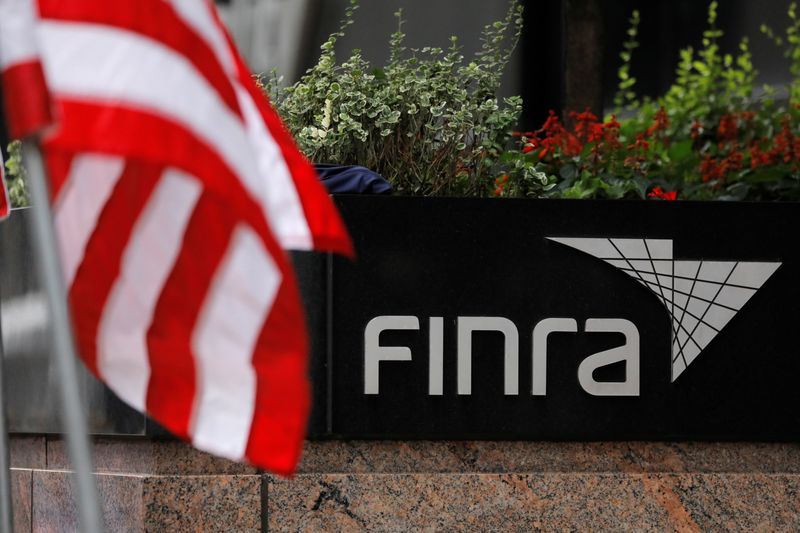
Steven Price, the senior vice president responsible for market investigations at the U.S. Financial Industry Regulatory Authority, has left his regulatory post to take on the role of chief compliance officer at Finalis, a San Francisco-based fintech platform specializing in dealmaking infrastructure. The move underscores the seismic shifts occurring within the financial services industry as technology companies increasingly carve out space alongside traditional Wall Street institutions. Finalis announced the appointment on Thursday, marking another significant crossover between government watchdogs and the private sector's burgeoning technology firms.
Price's tenure at FINRA spanned six years, during which he functioned as one of Wall Street's most influential enforcement figures. His responsibilities extended across the supervision of thousands of regulatory investigations, positioning him at the epicenter of efforts to police broker-dealers and protect market integrity. His work encompassed the full spectrum of securities law violations, from insider trading schemes to coordinated market manipulation. This enforcement background provided him with intimate knowledge of how regulators identify misconduct, the investigative methodologies employed by authorities, and the compliance infrastructure that investment firms must navigate.
Among Price's notable achievements at FINRA was his leadership role in developing the organization's National Cause Program, an initiative designed to modernize how the regulator processes and analyzes potential violations. The program's centerpiece was an artificial intelligence-driven model that consolidated complaints, tips, and referrals from across the regulatory ecosystem, then applied algorithmic analysis to identify patterns and flag suspicious activity. This innovation represented an attempt by FINRA to harness automation and machine learning to manage the overwhelming volume of data generated by modern financial markets. The technology reflected broader regulatory trends toward digitization, though it also raised questions about algorithmic accountability and oversight.
Finalis itself operates within the rapidly expanding ecosystem of fintech platforms seeking to democratize and streamline the deal-making process. Founded in 2020 by Federico Baradello, a former merger-and-acquisitions lawyer at the prestigious Kirkland & Ellis firm, the company has developed infrastructure that enables smaller boutique banks and independent dealmakers to compete with Wall Street giants. According to Finalis, the platform has facilitated approximately USD 34 billion in transactions since inception, a figure that demonstrates the commercial viability of alternative dealmaking channels. The company's value proposition centers on providing compliance and licensing frameworks that traditionally required massive back-office operations.
The fintech disruption of investment banking reflects several converging trends reshaping financial markets. Rising labor costs at established firms, combined with the availability of AI tools capable of handling analysis and administrative functions once requiring large teams, has lowered the barriers to entry for boutique operations. Talented dealmakers, frustrated by bureaucracy or compensation structures, now possess the technical infrastructure to launch independent ventures. Finalis positions itself as the enabling platform—the "pipes and plumbing"—that allows these entrepreneurs to focus on deal execution rather than regulatory compliance and operational overhead.
Price's decision to transition from government enforcement to a compliance role at a private fintech illustrates the complex dynamics surrounding regulatory expertise migration. In his own words, the opportunity appealed to him because he could apply lessons learned at FINRA about accelerating processes and ensuring information reached relevant decision-makers more efficiently. This framing presents his move not as abandoning public service for private profit, but rather as extending his impact by improving the operational backbone of dealmaking infrastructure. Yet such transitions inevitably raise questions about whether regulatory experience, once embedded in the private sector, ultimately strengthens or weakens market oversight.
For Malaysian and Southeast Asian observers, Price's departure carries broader implications about financial governance and the competition between traditional and technology-driven models. As fintech companies proliferate across Asia-Pacific—from cryptocurrency platforms to remittance services to alternative lending—the question of how regulatory expertise flows between public and private spheres becomes increasingly urgent. The movement of experienced compliance officers from government agencies to technology firms could accelerate innovation and market accessibility. Conversely, it might create a two-tiered system where well-resourced fintechs enjoy superior regulatory intelligence while smaller operators struggle with compliance complexity.
FINRA's apparent non-response to inquiries about Price's departure suggests the regulator viewed his exit as routine personnel movement rather than cause for concern. This reflected confidence in institutional continuity and suggests that no single individual, regardless of seniority, had become indispensable to market surveillance operations. Nevertheless, the loss of investigative leadership at a self-regulatory organization overseeing hundreds of thousands of registered representatives warrants closer scrutiny in regulatory circles.
The broader context involves intensifying competition in the investment banking sector, where traditional hierarchy and consolidation are giving way to more fragmented, technology-enabled structures. Large firms that once dominated dealmaking now compete with boutiques and platform-based operators that combine human expertise with algorithmic efficiency. This fragmentation potentially benefits deal clients through greater competition and innovation. Simultaneously, it complicates regulatory oversight, as watchdogs struggle to monitor increasingly distributed networks of market participants.
Price's move encapsulates a pivotal moment for financial regulation globally. As artificial intelligence and distributed platforms reshape market structure, regulators face the challenge of maintaining oversight effectiveness while expertise drains toward the private sector. The question confronting authorities worldwide—from Malaysia's Securities Commission to Singapore's Monetary Authority—involves how to retain talent and institutional knowledge while acknowledging the legitimate appeal of fintech opportunities. The answer likely involves creating career pathways that value public service and ensuring that regulatory mission remains competitive with private sector compensation and influence.

