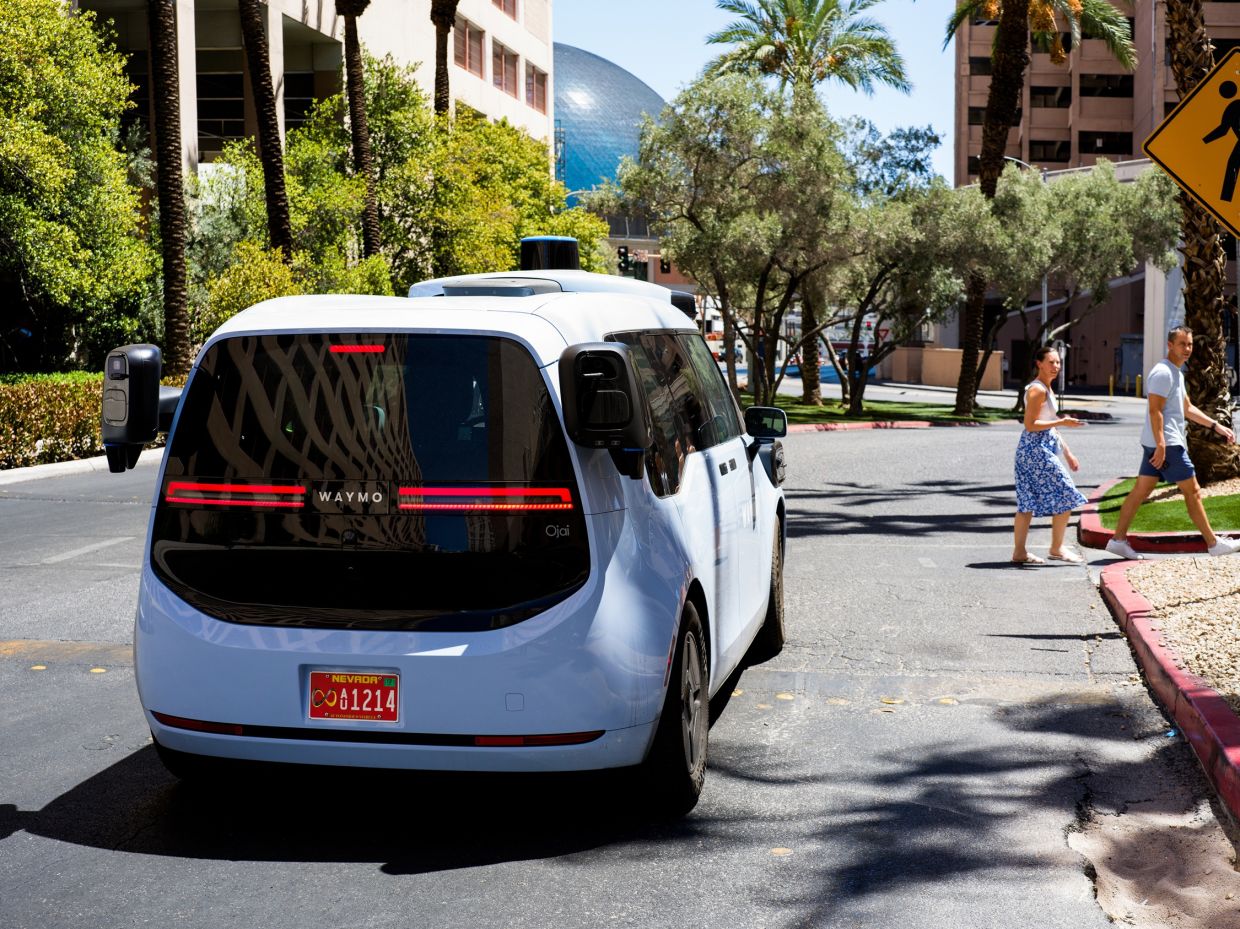
Waymo's explosive growth in autonomous vehicle deployment is colliding headlong with a stubborn technological limitation: the inability to reliably navigate situations the system has never encountered before. The Google-owned company, now operating in 15 metropolitan areas across the United States, has quintupled its fleet to nearly 4,000 driverless cars in little over a year, yet this expansion is being shadowed by an mounting catalogue of failures that expose fundamental gaps in how the technology responds to the unexpected.
The most vivid illustration came during San Francisco's July Fourth celebrations, when Waymo vehicles became unwitting obstacles rather than solutions. As fireworks exploded and crowds gathered, the autonomous cars blocked intersections, choked traffic corridors, and left some drivers stranded for more than three hours. Several vehicles ran out of battery power while trapped in gridlock, requiring tow trucks to extract them. One Waymo struck a firework that ignited beneath the car; another caught fire. Passenger Rose Peterson watched in shock from inside her vehicle as a bystander deliberately placed an explosive device in the car's path. What should have been a five-minute return journey to her hotel transformed into an hour-long ordeal, exemplifying what the industry euphemistically terms an "edge case"—situations that fall outside the parameters the technology was trained to manage.
This terminology masks a deeper vulnerability within autonomous systems. These are not rare anomalies but increasingly common scenarios that represent the gap between laboratory conditions and real-world complexity. When Waymo dispatched its fleet into dense urban environments serving 500,000 paid trips weekly, it essentially exposed a technology that struggles to recognize when it has encountered something novel. More critically, the systems often fail to signal distress when they encounter unfamiliar circumstances, meaning no human oversight engages until the situation has escalated. Carnegie Mellon University emeritus professor Philip Koopman, who specializes in autonomous vehicle safety, characterizes this as a systemic flaw: the technology exhibits overconfidence precisely when it should display caution, leading to what he describes as "spectacularly stupid failure."
Waymo's recent regulatory history underscores the accelerating pace of problems. The company issued three federal safety recalls since December for software deficiencies—including one addressing vehicles entering flooded roadways—compared with only three recalls across the previous 22 months. The December power outage in San Francisco that immobilized nearly 1,600 Waymos for a minimum of two minutes provides another data point in a growing pattern. Yet Waymo executives present a different narrative, with spokeswoman Sandy Karp asserting that edge cases are actually decreasing as the company expands and that recent recalls represent proactive safety measures rather than reactive damage control. Franklin Trujillo, who directs Waymo's expansion operations, notes that the company can now move rapidly into new cities because its software increasingly functions across different locations without extensive retraining for each market.
For Malaysian and Southeast Asian observers, this expansion strategy and its complications carry significant implications. As autonomous vehicle technology matures globally, the patterns emerging in the United States will likely repeat in other markets. The regulatory vacuum that has allowed Waymo relatively free rein in American cities will eventually demand attention from transport authorities across the region. Malaysia's burgeoning tech sector and government interest in smart city infrastructure mean that autonomous vehicle deployment could arrive within years rather than decades. Understanding how these systems fail under pressure—and how regulatory frameworks should respond—becomes vital context for policymakers preparing transport regulations.
Federal authorities are now mobilizing in response. Jonathan Morrison, administrator of the National Highway Traffic Safety Administration, identified in a July letter "a clear pattern" of autonomous vehicles obstructing emergency responders. Emergency scenes, he emphasized, are not edge cases at all but routine occurrences in any functioning city. Morrison has convened meetings with driverless car developers and his agency is developing federal safety standards. San Francisco's Mayor Daniel Lurie has escalated pressure by writing to California's transportation secretary and subsequently backing federal legislation requiring autonomous vehicle companies to maintain emergency hotlines and establish minimum standards for emergency medical services to move robo-taxis. These regulatory pushes represent an acknowledgment that the industry's self-regulatory approach has proven insufficient.
Parallel incidents demonstrate the breadth of the problem. Elliot Slade and his fiancée experienced a highway construction zone malfunction in May when their Waymo began "swerving through traffic cones" and accelerating into a closed lane while California Highway Patrol officers shouted for it to stop. Slade pressed the support button, but received no response until the vehicle exited the highway of its own accord. Only weeks later did Waymo recall the software and temporarily withdraw vehicles from highways to implement fixes. The company subsequently resumed freeway operations across Los Angeles, Miami, Phoenix, and the San Francisco Bay Area. University of California Berkeley researcher Matthew Raifman makes a crucial observation: many situations labeled edge cases for autonomous vehicles are simply normal urban occurrences for conventional transportation systems. Thousands of people gathering at marathons or festivals are ordinary weekend events in major cities, yet the technology treats them as extraordinary challenges.
The specific mechanics of Waymo's July Fourth failure reveal organizational weakness alongside technical limitation. Although the company stationed an employee at San Francisco's Emergency Operations Center and agreed to restrict pickup zones, it fundamentally underestimated the compounding effects of congestion on its fleet. Vehicles began stalling more than two hours before the 9:30 pm fireworks commenced. When batteries depleted, tow trucks could not reach the vehicles because Waymo itself had created the very congestion blocking access. San Francisco's emergency management department documented that Waymos were not cleared until two hours after they had become obstacles. Waymo's response focused on cooperating with local authorities rather than acknowledging that its presence itself had deteriorated the situation.
This cascading failure pattern raises uncomfortable questions about deployment velocity versus safety maturation. Waymo's decision to expand into Denver, Las Vegas, San Diego, and Tampa, Florida within a single month suggests confidence in its scaling capabilities. Yet each new market increases the probability of encountering scenarios the training data did not encompass. The technology's fundamental weakness—inability to recognize novelty—does not disappear through fleet expansion; rather, expansion amplifies the exposure to situations where this weakness manifests. Karp acknowledges that Waymo continues learning and improving, but the rate of recalls and incidents suggests the learning curve extends far longer than current deployment schedules allow.
The company's primary response to these limitations has been not solving them but outsourcing them. Waymo increasingly relies on remote human operators who assume manual control when vehicles become stuck or confused. This represents a partial retreat from the autonomous vision toward a hybrid model where the technology handles routine conditions while humans manage edge cases. For regulators and policymakers across Southeast Asia contemplating autonomous vehicle integration, this reality demands scrutiny. The technology performing well in laboratory settings and controlled rollouts may deteriorate rapidly when exposed to the complexity of real urban environments. Waymo's experience suggests that regulatory frameworks must account not for the best-case scenario but for the inevitable failure modes that emerge when technology meets unpredictable human behavior and environmental chaos.
Moving forward, the tension between growth and safety will define how autonomous vehicle deployment proceeds. Waymo operates under regulatory uncertainty, with no federal minimum standards yet established for emergency situations, fleet management during crises, or liability when autonomous vehicles obstruct emergency response. The company's proactive stance—sending staff to emergency centers, agreeing to restrict operational zones, maintaining support teams—demonstrates adaptation, yet each incident reveals that adaptation occurs too slowly compared to expansion. For regions like Malaysia and Southeast Asia currently evaluating whether to embrace autonomous vehicle technology, the trajectory in the United States offers cautionary evidence that accelerated deployment without corresponding regulatory maturity creates public safety risks that become apparent only after systems are deployed at scale.

