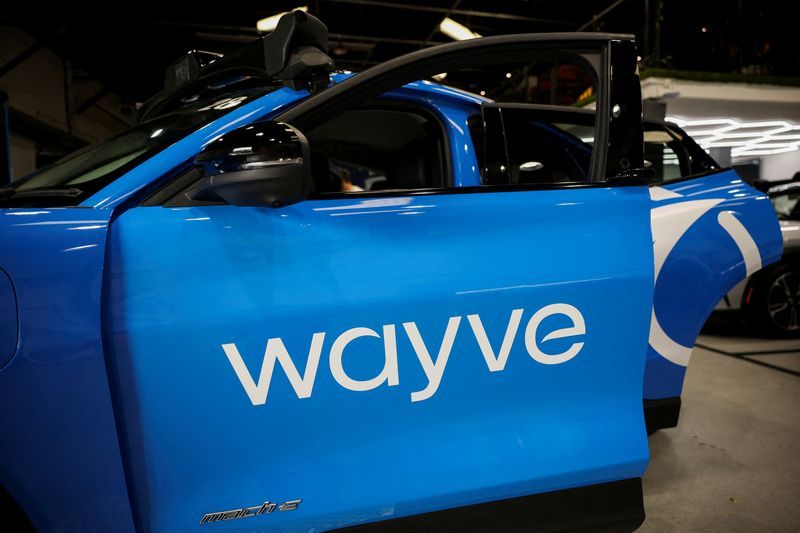
Wayve, a London-based autonomous vehicle startup, is consolidating its position in an increasingly competitive driverless car sector after mobilising $2.8 billion from a constellation of strategic investors spanning technology and automotive domains. The funding syndicate encompasses heavyweight names such as Nvidia, Mercedes-Benz, and Nissan, signalling broad confidence in the company's technological direction. In a significant commercial milestone announced last month, Wayve revealed plans to integrate its autonomous driving system into Stellantis-manufactured Jeep vehicles destined for Uber's ride-hailing operations, marking a tangible step towards real-world deployment of its platform.
The technical foundation underlying Wayve's appeal centres on its adoption of end-to-end machine learning, an artificial intelligence methodology that processes sensor data and translates it directly into driving decisions in a manner conceptually similar to human cognition. This architectural choice fundamentally diverges from more entrenched approaches that combine conventional AI with software coding protocols and detailed mapping data to establish predetermined behavioural responses across various driving scenarios. Wayve's methodology represents a departure from the incremental refinement of rule-based systems, instead embracing adaptive learning mechanisms that promise greater flexibility in navigating unpredictable road conditions.
The philosophical kinship between Wayve's approach and Tesla's autonomous driving architecture is evident, yet critical distinctions separate these contenders. Tesla's system relies exclusively on camera-based perception to feed its end-to-end neural networks, whereas Wayve deliberately engineered its platform for compatibility with diverse sensor suites and computing hardware configurations. This sensor-agnostic design philosophy carries profound strategic implications, enabling Wayve to position itself as a technology vendor accessible to virtually any automotive manufacturer rather than requiring bespoke vehicle architectures. CEO Alex Kendall, a 33-year-old New Zealand-born entrepreneur who founded Wayve in 2017 following completion of his doctorate in AI deep learning from Cambridge University, articulated this universalist ambition clearly: the company aspires to democratise full autonomous capability across vehicle categories, brands, and geographical markets globally.
The autonomous driving landscape has undergone notable transformation following years marked by deferred timelines and aspirational pronouncements that frequently outpaced technical reality. Alphabet's Waymo subsidiary has catalysed renewed investor enthusiasm through its measurable expansion trajectory over the preceding two years, now conducting paid autonomous ride services across approximately a dozen metropolitan areas after navigating more than a decade of development and refinement. This demonstrated progress, achieved through methodical testing and iterative improvement, has reinvigorated capital flows into the autonomous vehicle ecosystem at large. What once constituted esoteric academic research conducted by a handful of specialists like Kendall has evolved into mainstream industry practice, with numerous autonomous driving developers now incorporating elements of end-to-end learning within their technological stacks.
However, this technological transition introduces a thorny epistemological challenge that continues troubling engineers and regulators alike. End-to-end learning systems operate according to opaque decision-making processes often characterised as "black boxes," complicating efforts to understand precisely why autonomous vehicles execute particular driving manoeuvres. Earlier generation driverless systems, grounded in explicit software coding and predetermined rules, offered greater interpretability—engineers could trace specific environmental stimuli to corresponding vehicle responses. Wayve's methodology counters this concern by generating safety maps that delineate the traffic dynamics unfolding before the vehicle whilst identifying secure driving trajectories through identified scenarios. The company's technical leadership contends that conventional programming-intensive safety frameworks inherently handicap autonomous systems when encountering genuinely anomalous situations that defy prior rule specification. When unforeseen circumstances emerge, Vijay Badrinarayanan, Wayve's Vice President of Artificial Intelligence, explains that rigid pre-programmed logic becomes brittle and unreliable, whereas human operators navigate such uncertainty through conservative adaptation based on learned patterns rather than explicit instructions.
Yet Waymo, despite adopting end-to-end AI components, maintains that this methodology alone proves insufficient for large-scale safety assurance, continuing to layer conventional rules-based systems derived from software engineering and cartographic data atop its neural network architecture. This hedged approach reflects lingering institutional caution regarding the adequacy of purely learning-based paradigms for mission-critical applications. Nissan, amongst Wayve's prospective deployment partners, exemplifies this manufacturer wariness. Eiichi Akashi, Nissan's Chief Technology Officer, publicly acknowledged Wayve's system as the "most advanced" currently available, yet expressed discomfort with the opacity surrounding its decision-making processes. Nissan's deployment timeline envisions integration into its Elgrand people-mover variant for Japanese markets during the fiscal year concluding March 2028, pending successful navigation of safety validation protocols and internal comfort assessments regarding the technology's trustworthiness.
Wayve's geographical expansion strategy exploits a crucial advantage embedded within its architectural philosophy. Because the platform requires neither exhaustive pre-deployment road mapping nor painstaking localised code customisation, the company potentially accelerates entry into nascent markets relative to competitors pursuing traditional development methodologies. Kendall has emphasised that Wayve maintains substantial operational footprints in Tokyo, Stuttgart, and Vancouver, positioning these hubs as springboards for rapid geographic proliferation. The company reports successful autonomous testing across hundreds of global cities without performing the preliminary infrastructure preparation that conventional approaches demand, suggesting that its learning-centric methodology could dramatically compress time-to-market across jurisdictions.
The academic and technical communities remain fractionally divided regarding whether end-to-end machine learning actually confers safety advantages over alternative methodologies. Siddartha Khastgir, a University of Warwick professor specialising in autonomous vehicle safety, acknowledges that end-to-end approaches likely accelerate commercial development and deployment timelines relative to rule-based alternatives, yet explicitly resists declaring one methodology categorically safer than its competitors. Phil Koopman, a Carnegie Mellon University computer engineering professor and respected autonomous systems analyst, similarly contends that Wayve's approach for managing unexpected traffic scenarios represents merely one viable strategy amongst multiple potentially viable alternatives. Koopman's assessment suggests that comprehensive safe deployment of fully autonomous vehicles across United States roadways likely requires a minimum ten-year horizon for maturation, potentially necessitating technological innovations beyond currently visible development trajectories.
For Malaysian and Southeast Asian stakeholders, Wayve's rise carries significance across multiple dimensions. The region's rapid urbanisation, expanding middle-class automotive demand, and increasing regulatory openness to mobility innovation position Southeast Asia as an attractive market for autonomous vehicle deployment. Wayve's minimal mapping and customisation requirements could enable relatively expeditious market entry compared to competitors requiring exhaustive localisation. Furthermore, the competitive dynamics between Wayve, Tesla, Waymo, and other international contenders will likely determine which technological and business models ultimately dominate the region's autonomous future. The choice between end-to-end learning and rule-based approaches will shape infrastructure requirements, regulatory frameworks, and ultimately consumer adoption patterns across the Association of Southeast Asian Nations. As Wayve secures partnerships with global manufacturers and expands its operational footprint, the pathway toward autonomous vehicle integration in regional markets becomes increasingly concrete, though substantial technical and governance obstacles remain before this vision materialises at meaningful scale.

