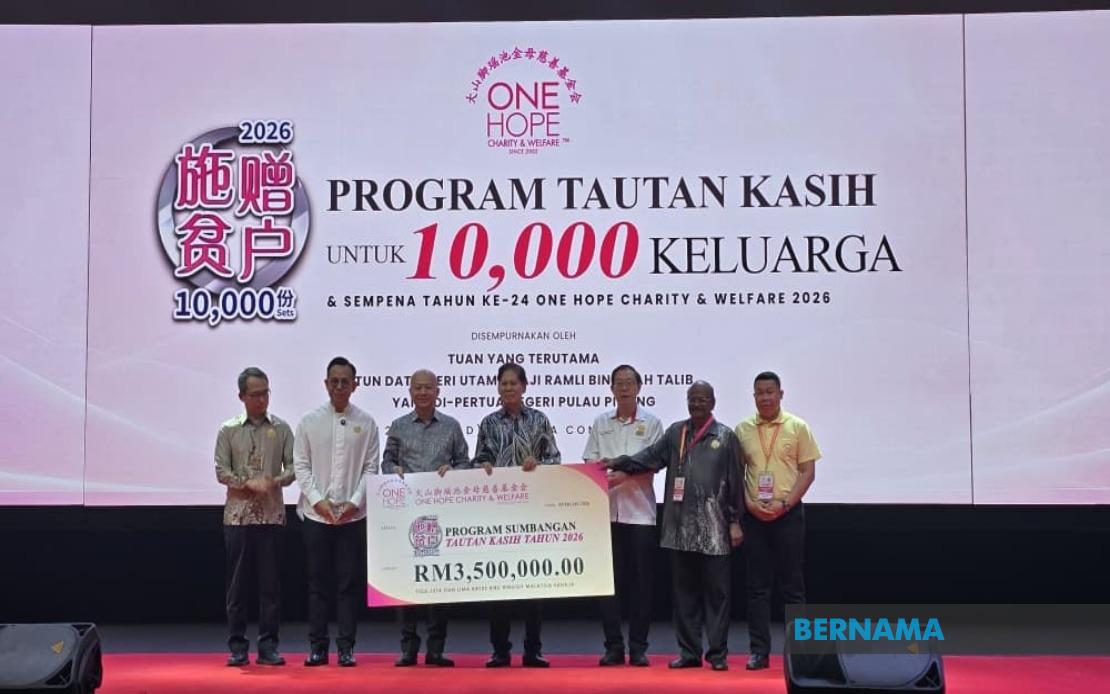
During an event in Butterworth, Minister of Entrepreneur Development and Cooperatives Steven Sim Chee Keong underscored the critical importance of robust welfare frameworks for protecting citizens experiencing hardship. He stressed that as nations advance economically and socially, policymakers must simultaneously invest in comprehensive support systems that reach those most affected by misfortune or challenging life circumstances. The remarks reflect a broader policy discussion across Malaysia about balancing development with social protection.
Simon articulated a fundamental principle underlying welfare governance: that prosperity and progress hold limited meaning if significant segments of the population lack adequate protection during periods of vulnerability. He acknowledged that life experiences differ markedly across Malaysian society, with some households navigating considerably greater obstacles than others. This recognition forms the philosophical foundation for policies that extend targeted assistance rather than relying solely on universal approaches that may not address specific needs effectively.
The minister identified welfare initiatives as instrumental mechanisms for fostering compassion within society while simultaneously strengthening interethnic and interfaith cohesion. In a diverse nation such as Malaysia, welfare programmes that transcend communal boundaries can reinforce national unity by demonstrating shared responsibility for collective wellbeing. This perspective positions social protection not merely as poverty alleviation but as a nation-building tool that reinforces social fabric across traditionally distinct communities.
One Hope Charity exemplified the model that Sim highlighted as worthy of emulation and support. The organisation has expanded substantially from its modest origins in Bukit Mertajam, evolving into one of Penang and Malaysia's most significant welfare bodies. Its annual distribution exceeding RM20 million underscores the scale of assistance channelled through private charitable mechanisms, raising questions about the complementary roles of government welfare systems and community-based organisations.
The charity's operational approach emphasises comprehensive support combining material assistance with cash transfers, recognising that vulnerable households require flexibility to address their specific priorities. During the current year, more than 10,000 families benefited from the programme, with each household receiving goods and necessities valued at approximately RM320 alongside RM200 in unrestricted cash. This dual-component structure reflects contemporary welfare thinking that combines targeted commodity provision with cash-based assistance granting recipients agency in allocation decisions.
Between 2021 and 2025, One Hope Charity channelled over RM100 million across diverse welfare interventions, including medical treatment subsidies, hospital support, medical equipment procurement, and broader community assistance programmes. This diversified portfolio demonstrates how charitable organisations can address multiple vulnerability dimensions simultaneously, from acute health crises to chronic poverty conditions. The medical focus particularly addresses gaps in healthcare accessibility for lower-income populations.
Charity founder and chairman Datuk Chua Sui Hau announced ambitious expansion plans coinciding with the organisation's upcoming 25th anniversary celebration next year. The intended RM30 million investment programme will prioritise enlarging existing medical assistance initiatives alongside launching new welfare services. Such planned growth suggests confidence in the charitable model's sustainability and effectiveness, though it also raises questions about resource mobilisation strategies and the extent to which philanthropic channels can substitute for government welfare expansion.
The event included prominent attendance from Penang state leadership, with Penang Governor Tun Ramli Ngah Talib and his wife Toh Puan Raja Noora Ashikin Raja Abdullah present alongside the minister. This high-level participation underscores official recognition of charitable organisations' contributions to state welfare objectives and reflects potential collaboration between government and private welfare actors.
The emphasis on welfare strengthening resonates particularly in Malaysian context given persistent income inequality, urban-rural disparities, and vulnerabilities exposed by global economic disruptions. While One Hope Charity's scale is impressive, its annual RM20 million distribution represents targeted assistance rather than systemic poverty reduction, pointing toward ongoing government responsibility. The complementary nature of charitable and governmental welfare systems suggests that sustainability requires institutional commitment across both sectors to reach populations facing persistent disadvantage.

