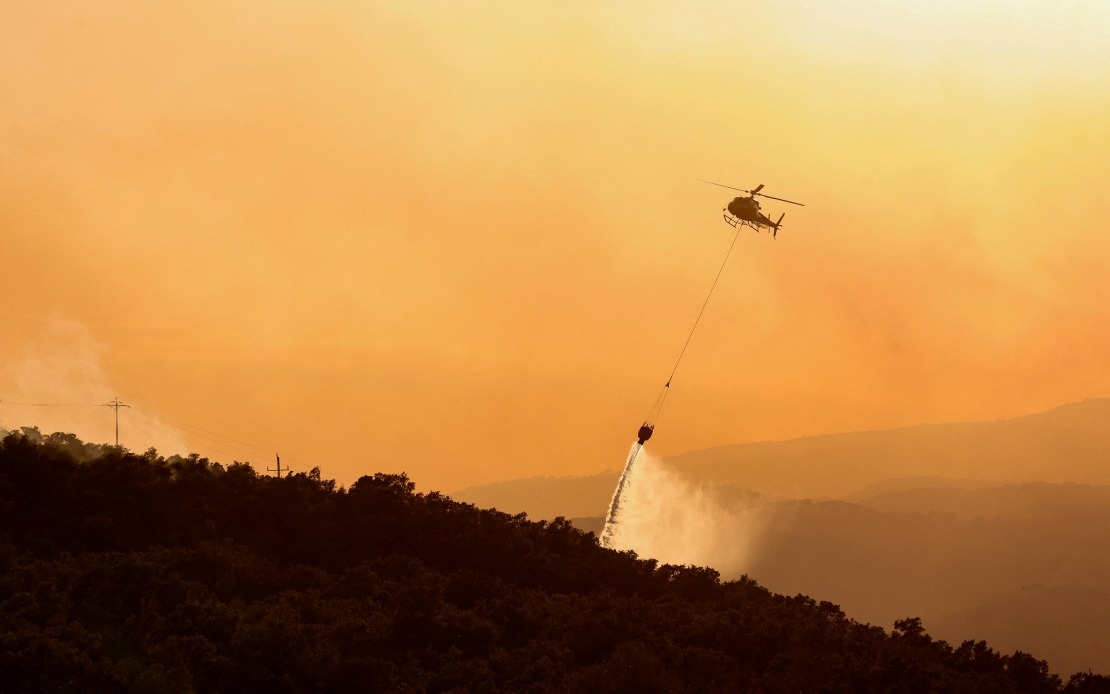
The western United States is confronting an unprecedented wildfire crisis that has forced numerous communities to abandon their Independence Day celebrations. As the nation marks its 250th founding anniversary, drought-stricken states from Utah to Colorado are scaling back or eliminating Fourth of July fireworks displays, reflecting the severity of fire conditions gripping the region. A national incident report released on Friday documented 41 large uncontained fires burning across the country, placing the nation at its second-highest level of wildfire preparedness alert.
Utah faces the most dire circumstances, with state data revealing that 94 percent of the state languishes under severe or extreme drought conditions. Governor Spencer Cox responded by instituting a temporary statewide fireworks restriction, allowing local authorities to designate only limited zones where fireworks may be discharged through July 5. Utah State Forester Jamie Barnes characterised the current wildfire situation as unprecedented in living memory, noting that flames are spreading at accelerated speeds compared to previous years. The impact is staggering: Utah has already consumed more acreage to fire in 2024 than during the preceding four years combined, underscoring the escalating nature of the crisis.
Colorado is similarly affected, with the state's Division of Fire Prevention and Control reporting more than a dozen active wildfires consuming vegetation across its landscape this week. Several major municipalities, including Durango, Vail, and Pueblo, have scrapped their fireworks celebrations entirely. Vail's decision represents particularly notable significance—the community has cancelled its display only six times since 1998, with the most recent cancellation occurring in 2021. This year's fire activity across Colorado demonstrates an unusually expansive geographic distribution compared to historical patterns.
Colorado Springs, the state's second-largest metropolitan area, made the difficult determination to eliminate all Fourth of July fireworks shows this week. The city's fire department cited extreme fire danger as the decisive factor, noting that current risk conditions mirror those preceding the 2012 Waldo Canyon Fire, which destroyed over 300 residences. Mayor Yemi Mobolade acknowledged the disappointment in a public statement, recognising the particular significance of cancelling celebrations during the nation's bicentennial anniversary year.
The geographical scope of restrictions extends well beyond the hardest-hit states. Wyoming, Nebraska, and New Mexico have implemented fireworks limitations driven by persistent drought and wildfire hazards. Despite these regional restrictions, most professional fireworks displays—typically conducted by skilled operators using controlled conditions—are proceeding as scheduled across the nation.
Meteorological conditions are intensifying fire danger substantially. Friday's national incident report warned that strong wind systems combined with exceptionally low humidity would elevate fire risk across southwestern territories significantly. The eastern and central United States experienced dangerously elevated temperatures simultaneously, with the National Weather Service documenting heat indexes surpassing 46 degrees Celsius in various locations. These climatic dynamics create conditions where fire ignition becomes increasingly likely and fire behaviour becomes more erratic and destructive.
Scientific research demonstrates a direct connection between Independence Day celebrations and wildfire occurrence. Philip Higuera, a fire ecology specialist at the University of Montana, explained to the Durango Herald that fireworks substantially contribute to increased wildfire incidence on Fourth of July specifically. He noted that a single day's celebrations introduce numerous potential ignition sources across the landscape simultaneously. This concentrated risk period occurs precisely when weather conditions are often most favourable for rapid fire spread.
Historical data reinforces the severity of this phenomenon. Research compiled by Lauren Lowman, an associate professor at Wake Forest University, documents that nearly half of all acreage burned across western territories since 2001 occurred during or immediately following heat wave episodes. Lowman's analysis of national wildfire records identified approximately 15,000 wildfires ignited on July 4 across the United States between 1992 and 2020. More disturbingly, fireworks-related incidents generated an estimated 32,000 fires nationwide during 2023 alone, demonstrating the substantial fire risk these celebrations pose.
For Malaysian and Southeast Asian observers, this situation illuminates the intersection of environmental degradation and public safety that transcends national borders. The western US wildfire crisis reflects broader climate change patterns affecting fire regimes globally. Malaysia and neighbouring regions experience comparable challenges during dry seasons, where human activities can trigger catastrophic fires with immediate consequences for air quality, public health, and ecosystem services. The US example demonstrates how climate-driven drought creates cascading effects requiring difficult policy choices and community sacrifices, even when celebrating significant national occasions.
The cancellations represent tangible evidence of climate change's mounting impacts on daily life. Rather than abstract statistics about temperature increases or precipitation patterns, these decisions affect millions of citizens directly. Communities must weigh cultural traditions against imminent safety concerns, revealing the practical constraints imposed by a changing climate. This tension between heritage and survival will likely intensify globally as climate disruption accelerates.
Looking forward, the western US wildfire situation suggests that future Independence Day celebrations may require fundamental reimagining. Communities may increasingly adopt modified celebration formats emphasising lower-risk alternatives, such as daytime events or fireworks displays conducted during seasons with reduced fire danger. The 2024 cancellations may establish a precedent, normalising the concept that traditional summer fireworks celebrations cannot proceed when environmental conditions render them hazardous. As climate patterns shift toward more frequent and severe drought conditions, such constraints may become routine rather than exceptional.

