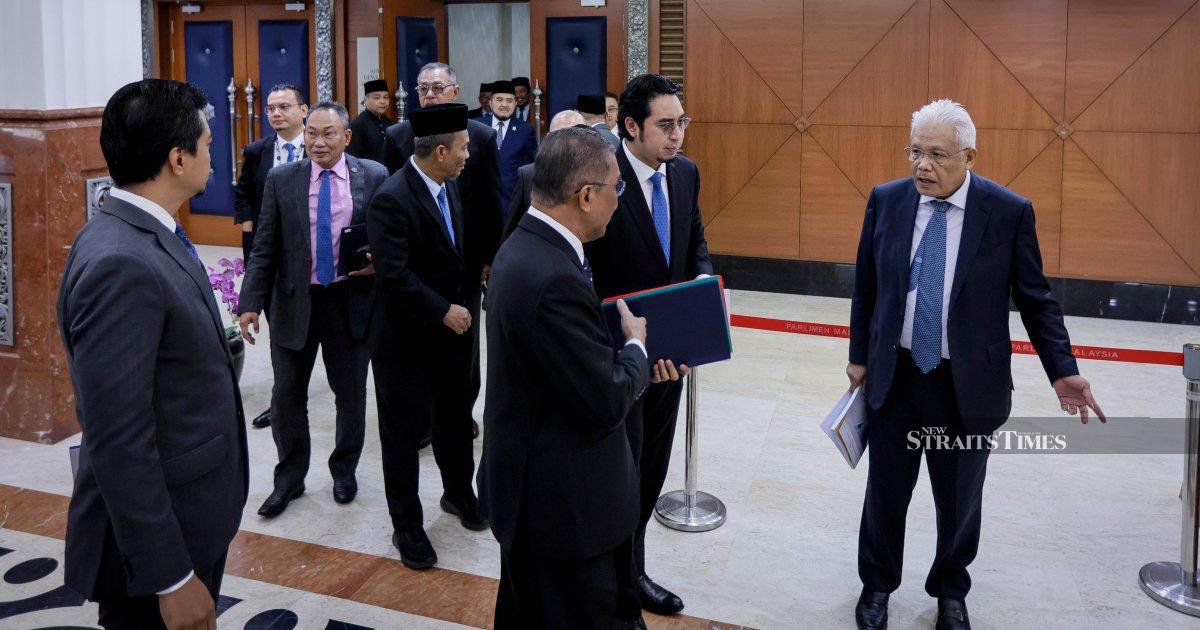
The opposition's departure from Parliament during proceedings on the Tabung Haji Royal Commission of Inquiry report has once again thrust the question of acceptable dissent into the spotlight. The incident underscores a fundamental asymmetry in Malaysian parliamentary discourse, where the legitimacy of any given protest tactic seems to depend less on principle and more on which political faction wields it. This recurring pattern exposes deeper fractures in how different sides of the political divide conceptualise their roles in a democratic legislature.
The Tabung Haji matter carries particular significance for Malaysian voters, touching as it does on the management of the pilgrimage fund that serves millions of Muslim Malaysians. The Royal Commission's findings and recommendations would naturally invite scrutiny and debate. Yet rather than allowing substantive discussion to dominate proceedings, the walkout shifted focus to the question of parliamentary decorum itself. Observers were left discussing method rather than content — precisely the outcome critics of such tactics suggest was intended.
This recurring phenomenon suggests that walkouts have become a reflexive response in Malaysian politics, deployed across party lines but consistently portrayed through opposed lenses depending on partisan perspective. When the government employed similar tactics in previous parliaments, opposition voices decried them as examples of institutional contempt and democratic backsliding. Now that the opposition has adopted the strategy, government supporters echo identical criticisms while opposition defenders invoke principles of legitimate protest. The circularity is striking and speaks to a broader erosion of shared standards for parliamentary conduct.
Understanding why walkouts persist despite their limited practical utility requires acknowledging their symbolic value to base supporters. A dramatic parliamentary exit generates headlines, mobilises the party's social media apparatus, and provides narrative ammunition for campaigning. For opposition figures facing an unfavourable parliamentary arithmetic, such theatrics can feel like one of few available tools. When you lack the numbers to block legislation or win votes, disruption becomes a substitute for influence. This logic, while comprehensible, ultimately corrodes the institution itself by signalling that engagement on substantive grounds has become futile.
The Malaysian parliament's architecture and procedural rules evolved to manage dissent while preserving institutional function. Speaker rulings, standing orders, and conventions on parliamentary language exist precisely to accommodate strong disagreement within a framework of mutual respect. When these mechanisms are bypassed through mass walkouts, it suggests either that the mechanisms have failed their purpose or that actors no longer believe the institution worth preserving through orderly means. Either conclusion should concern those invested in parliamentary democracy.
From a Southeast Asian perspective, Malaysia occupies a precarious position. Its parliament remains relatively vigorous compared to some regional counterparts, yet it faces increasing pressure from those who view institutions as merely instruments to be deployed against opponents rather than shared frameworks requiring protection. Thailand's experience offers a cautionary tale: when parliamentary norms deteriorate, even elected chambers struggle to survive. Singapore's parliament functions with high institutional discipline but at the cost of genuine contestation. Indonesia's Dewan Rakyat, by contrast, manages considerable disruption while maintaining basic legitimacy. Malaysia's challenge lies in preserving substantive opposition while protecting procedural norms.
The Tabung Haji walkout also reflects broader questions about what opposition means in a functioning parliamentary system. Is the role of the opposition primarily to block, obstruct, and dramatise dissent, or to offer coherent counter-proposals and engage in genuine policy debate? Malaysian opposition politics has historically tended toward the former model, partly because the government's supermajority has traditionally made substantive blocking impossible. Yet this calculus has shifted as parliamentary mathematics have tightened. When opposition numbers approach parity with government, a shift toward constructive engagement might paradoxically become more effective than perpetual walkouts.
The partisan double standard also masks a troubling consensus: both sides accept that parliament serves primarily as a theatre for external audiences rather than a deliberative body for internal problem-solving. A truly functional parliament would see walkouts as deeply embarrassing failure points — moments when members have given up persuasion in favour of performance. Instead, walkouts generate celebratory coverage among supportive media outlets and contemptuous dismissal from hostile ones. No one seems genuinely ashamed that parliamentary discourse has deteriorated to this point.
Moving forward, Malaysian political leaders might consider whether preserving parliamentary dignity offers net benefits even when it constrains short-term tactical options. A parliament that maintains procedural integrity creates space for future effectiveness. A parliament consumed by performative protest becomes vulnerable to those arguing, with increasing persuasiveness, that electoral politics has become exhausted. This is not an abstract concern — it directly threatens the legitimacy of democratic institutions that Malaysia requires for long-term stability.
The contradiction exposed by recent walkouts ultimately reflects a failure of imagination among Malaysian political classes. Both government and opposition operate within constraining zero-sum frameworks where compromise appears weakness and engagement means vulnerability. Yet democracies survive precisely through participants' willingness to accept procedural losses while maintaining commitment to institutional continuity. Until Malaysian politicians rediscover this principle, parliamentary walkouts will remain less a form of protest than a symptom of deeper institutional decay.

