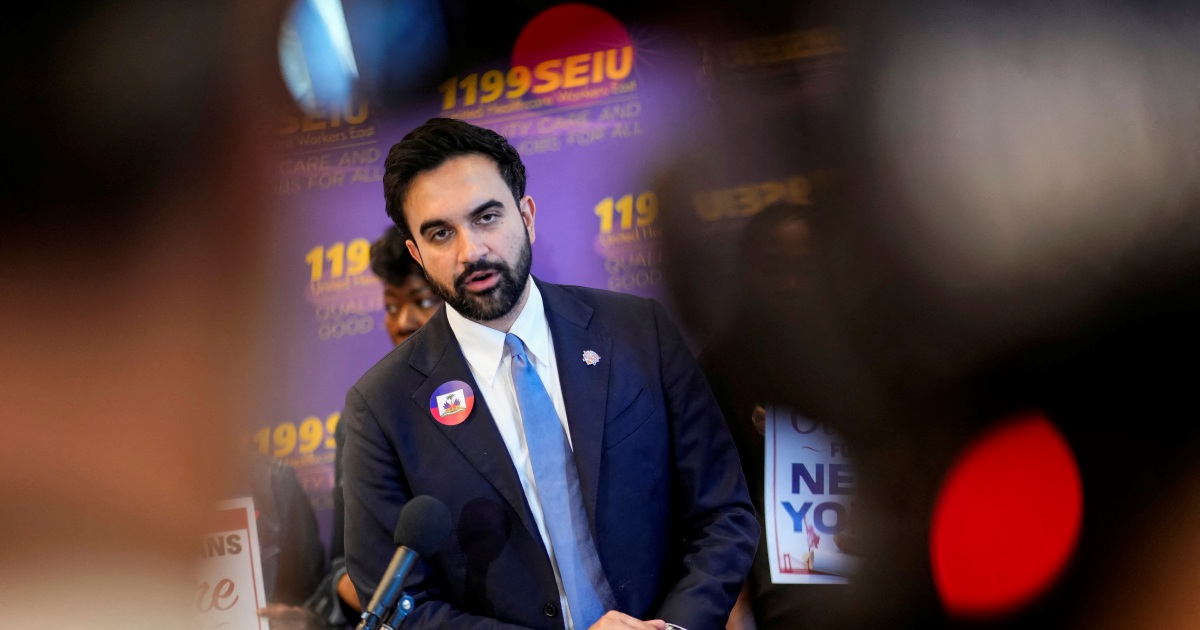
New York Mayor Zohran Mamdani announced this week that he had determined his office possesses no legal grounds to arrest Israeli Prime Minister Benjamin Netanyahu on war crimes charges, reversing his earlier public consideration of such action. The clarification came after the mayor faced scrutiny over the feasibility of his stated position, prompting a review of municipal and federal jurisdictional boundaries.
Mamdani's initial remarks suggesting he might pursue Netanyahu's arrest had captured attention among constituencies concerned about alleged Israeli military conduct, particularly regarding civilian casualties in Gaza. However, as legal experts and city officials examined the proposal more closely, the practical and constitutional impediments became apparent. The mayor's reversal underscores the complex layers of authority that govern law enforcement in the United States, where municipal leaders operate within constraints established by state and federal systems.
The core issue revolves around the separation of powers and jurisdictional limitations inherent to municipal governance. A city mayor, regardless of the size of his municipality, cannot unilaterally pursue international war crimes prosecutions or override federal authority in matters involving foreign dignitaries and international relations. The United States federal government maintains exclusive jurisdiction over foreign policy matters and the treatment of heads of state, particularly regarding diplomatic immunity and international law enforcement.
Netanyahu, as a sitting head of government, would be protected by official immunity under both American law and international conventions. The Vienna Convention on Diplomatic Relations, to which the United States is a signatory, grants sitting heads of state immunity from legal process while they are in the country. This protection exists to facilitate international relations and prevent the weaponization of domestic legal systems against foreign leaders. While the protocol has been controversial among some international law advocates, it remains binding on United States courts and municipal authorities.
The International Criminal Court has issued arrest warrants for Netanyahu and other Israeli officials related to alleged war crimes, but the ICC's jurisdiction does not extend to the United States, which is not a signatory to the Rome Statute that established the court. This fundamental disconnect means that prosecution of Netanyahu would require either direct United States federal involvement or cooperation from countries that recognize ICC authority. A New York City mayor simply cannot bridge this gap through municipal action.
Mamdani's situation reflects a broader tension within American democracy between local officials' desire to respond to constituent concerns and the constitutional architecture that restricts municipal action on matters of national and international significance. Many progressive mayors and city leaders have sought to position themselves as moral authorities on global issues, particularly in cities with large and engaged activist communities. However, the legal framework consistently reasserts federal primacy in foreign relations and diplomatic matters.
The episode also illustrates the complicated politics surrounding Gaza and Israel in American cities. Mamdani, who represents a heavily diverse district in Brooklyn, operates within a constituency with substantial Palestinian solidarity movements. His initial comments aligned with demands from activist segments, yet the subsequent walk-back reveals the gap between rhetorical positioning and executable governance. This dynamic has become increasingly common in contemporary American municipal politics, where symbolic positions often precede practical feasibility assessments.
For Malaysian and Southeast Asian observers, Mamdani's predicament offers insight into how democratic governments navigate pressure from advocacy communities while respecting legal constraints. It also demonstrates that even in the world's largest economy, with its most prominent cities, local authorities operate within defined jurisdictional boundaries. This principle carries implications for how smaller nations and cities approach similar questions about arresting foreign officials or respecting international legal instruments.
The situation underscores the distinction between having political authority and possessing legal power. Mamdani certainly has political standing within New York City and can advocate for his positions, support ICC investigations, or use his platform to criticize Israeli government actions. What he cannot do is transform municipal police authority into international law enforcement capability. That distinction, while sometimes frustrating to activists demanding immediate action, reflects foundational principles of governance in federal systems.
Federal authorities in the United States similarly face constraints when it comes to enforcing ICC warrants, given American non-membership in the court and the principle of official immunity for sitting leaders. Only through legislative action, fundamental changes to American posture toward international law, or comprehensive shifts in how the United States treats diplomatic immunity could the legal landscape change substantially. These are decisions for Congress and the federal government, not for individual mayors.
Mamdani's clarification, while potentially disappointing to those who took his initial remarks at face value, represents an important moment of legal clarity. It demonstrates that American municipal systems do function within constitutional bounds, even when political pressures suggest otherwise. For regional observers wondering how American federalism operates, the case illustrates that cities, despite their size and influence, remain subordinate to both state and federal authorities in matters transcending purely local concerns.
The reversal also highlights how international law, diplomatic immunity, and constitutional jurisdiction create multiple barriers to any individual's prosecution across borders, regardless of the alleged offenses. These barriers exist partly to protect all nations' leaders and partly to maintain international stability. Understanding these constraints helps explain why accountability for alleged international crimes typically requires either international court jurisdiction, home-country prosecution, or extraordinary circumstances involving regime change and loss of official status.

