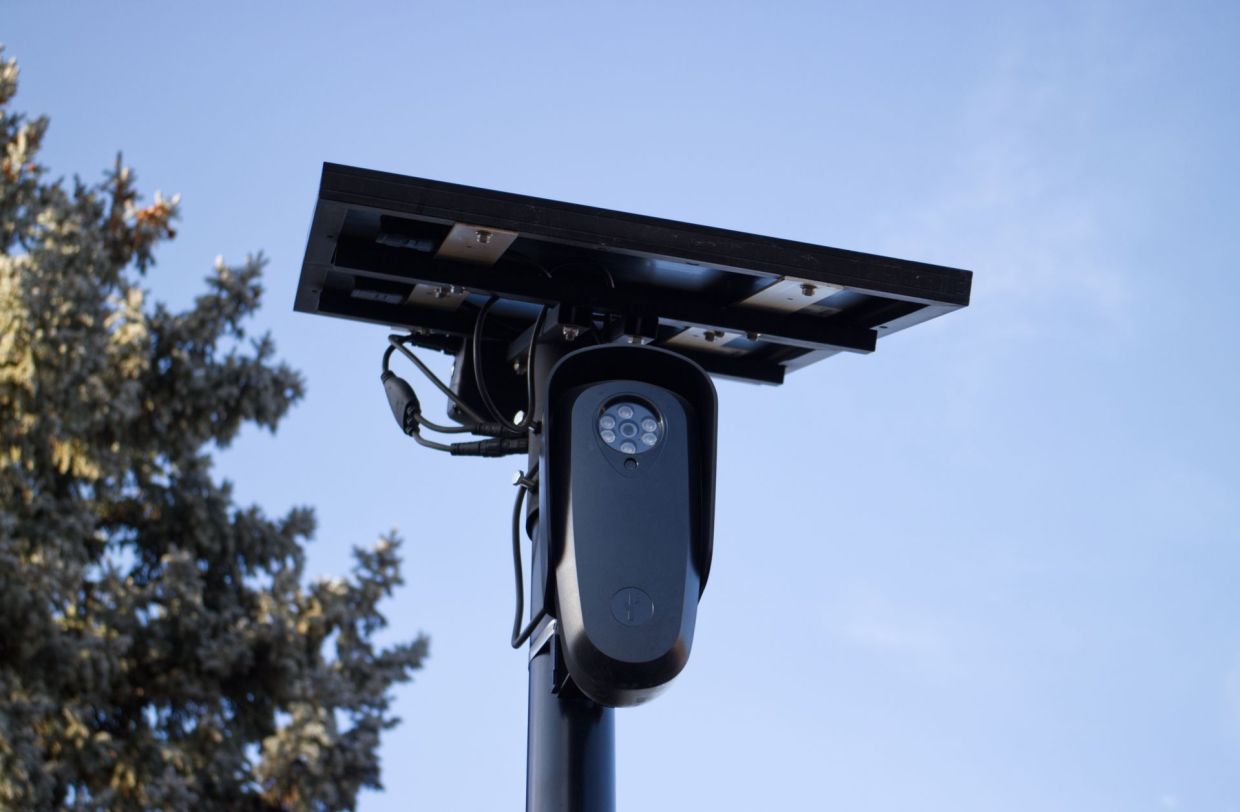
A sprawling civil liberties backlash is reshaping the landscape of American surveillance policy as grassroots activists across the United States wage an increasingly coordinated campaign against Flock Safety's network of automated license plate readers. The movement, which has united political opponents ranging from progressive privacy advocates to libertarian conservatives, is proving remarkably effective at both the street level through deliberate vandalism and through legitimate municipal governance channels, with more than 70 cities and towns dismantling their contracts with the surveillance company in recent months.
The technological system at the centre of the controversy operates fundamentally differently from traditional surveillance cameras. Rather than recording continuous video footage, Flock's devices capture still images of vehicles, extracting and cataloguing licence plate numbers along with vehicle specifications including make, model, colour and distinctive markings such as bumper stickers. This data is then uploaded to Flock's cloud infrastructure, where it remains accessible for approximately one month and can be shared across jurisdictional boundaries—a capability that transforms the technology from a localised tool into a networked database with far-reaching implications for vehicle tracking and movement profiling.
The legal and philosophical opposition to Flock has coalesced around concerns that law enforcement can access and query this database without warrant requirements, effectively enabling warrantless tracking of law-abiding citizens' movements and associations. According to an investigation by The Washington Post, at least 50 police officers have been documented misusing the system, predominantly to surveil their romantic partners or former spouses. Beyond these personal abuses, documented cases reveal that officers have utilised the data to track women who obtained abortions in states where the procedure is illegal, and some have improperly shared information with immigration enforcement agencies—instances that crystallise the fears of civil libertarians who argue the system is fundamentally vulnerable to authoritarian misuse.
The practical capabilities of the technology have nonetheless impressed law enforcement agencies like Richmond, Virginia's police department, which has deployed Flock cameras since 2023. Richmond police official Jon Bridges articulated the appeal of the system by recounting how officers rapidly identified and apprehended a suspect in a May domestic-related double homicide by retrieving licence plate data from cameras and coordinating with neighbouring jurisdictions. This operational efficiency in serious criminal investigations represents the genuine security argument that proponents advance, creating genuine tension between public safety imperatives and privacy protection that extends beyond ideological posturing.
Yet the anti-Flock movement has transcended the typically polarised landscape of American political debate by attracting support from constituencies that rarely align. Conservative media figures including former Fox News personality Tucker Carlson have publicly praised those vandalising the cameras as "decent, patriotic Americans" exercising justified resistance against surveillance overreach. This cross-ideological coalition reflects how surveillance and privacy concerns operate orthogonally to traditional left-right political divisions in ways that resonate across the spectrum—a phenomenon often observed in Southeast Asian democracies where surveillance anxieties similarly unite otherwise opposed political movements.
The movement's activism extends across both illegal and legal channels. A 20-year-old activist operating under the pseudonym Nomark has developed a substantial online following of 500,000 Instagram adherents, whom he instructs on disabling camera equipment. Nomark has disabled approximately 30 devices near his Minneapolis residence and acknowledges that his apprehension has diminished as his activities have continued—a reflection of how movements develop their own momentum and normalisation dynamics. While Nomark's actions clearly constitute criminal vandalism and destruction of property, the broader movement has organised sophisticated digital coordination mechanisms, including the Facebook group DeFlock America, which has attracted over 600,000 members and continues expanding by thousands daily.
These online communities have created crowdsourced maps identifying camera locations, compiled and shared techniques for obscuring lenses, and engaged in what the movement characterises as celebrating those arrested for property destruction. This infrastructure of collective action and information-sharing demonstrates the sophisticated organising capacity of contemporary grassroots movements that operate simultaneously through illegal direct action and legitimate political mobilisation. For Malaysian observers particularly interested in civil society dynamics in democracies, the American anti-Flock movement illustrates how surveillance concerns can activate publics and create pressure that authorities cannot easily suppress through legal prosecution alone.
The American Civil Liberties Union's senior policy counsel Chad Marlow has characterised the movement's expansion as "stunning," reflecting surprise at how rapidly what began as scattered opposition has consolidated into a genuinely significant political force. This recognition from established civil liberties organisations has lent institutional credibility to grassroots activism, creating a virtuous cycle wherein media attention, institutional support and network effects have amplified the movement's reach and political impact. The combination of moral clarity—concerns about warrantless surveillance resonate intuitively across ideological divides—with accessible actionable steps has generated unusually successful grassroots political organising in an era when such efforts frequently fragment or dissipate.
Municipal governments have increasingly responded to constituent pressure by terminating Flock contracts, with documented contract cancellations occurring from Los Angeles to smaller Virginia municipalities. This pattern demonstrates how grassroots organising targeting local governance structures can produce material policy changes that circumvent national-level political gridlock. Steven Keener, a criminology professor at Christopher Newport University in Virginia, has advised residents that engagement with city councils and mayors represents the most effective pathway for constraining surveillance expansion, and the empirical record of over 70 municipalities withdrawing from Flock validates this assessment of local political leverage.
Flock CEO Garrett Langley's characterisation of movement opponents as "terrorists" has amplified rather than dampened the backlash, illustrating how corporate leadership communications can accelerate oppositional mobilisation. The inflammatory rhetoric functioned as a recruiting device rather than a deterrent, signalling to wavering participants that genuine stakes exist regarding surveillance expansion. This dynamic mirrors patterns observed in other technology controversies where corporate defensiveness hardens public opposition rather than persuading sceptics.
For Southeast Asian analysts monitoring democratic resilience and civil society capacity, the American anti-Flock movement offers instructive lessons about the conditions under which grassroots resistance to surveillance can achieve meaningful scale and political effect. The combination of cross-ideological appeal, accessible organising mechanisms, targeting of local governance structures rather than national-level institutions, institutional legitimacy from established advocacy organisations, and clear narrative framing around privacy and autonomy created conditions wherein what might have remained marginal fringe activism achieved mainstream political significance and policy impact.

