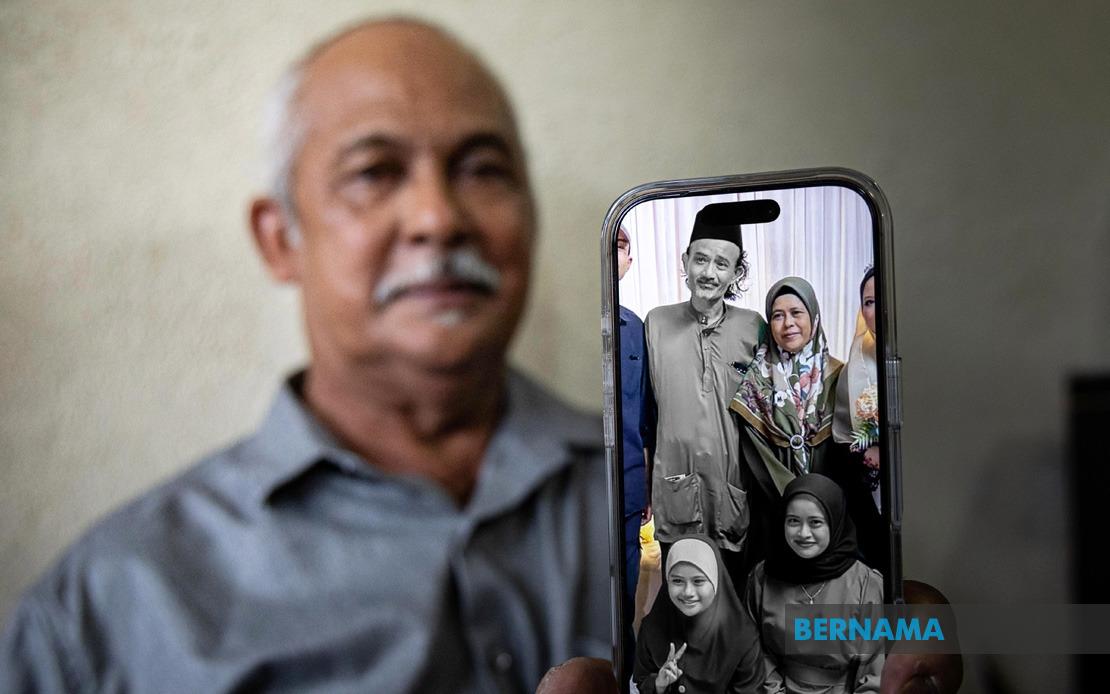
Norhayati Razali, 55, remains in a state of cognitive distress following the devastating traffic collision that killed her spouse and two offspring on Jalan Sultan Ismail in Kuala Lumpur last Wednesday. Though she has progressed sufficiently to leave the Intensive Care Unit at Kuala Lumpur Hospital and move to a general ward, with medical staff reporting she can now consume food and fluids independently, her mental condition presents a more troubling picture than her physical recovery might suggest.
The psychological toll of the incident manifests most visibly in significant memory impairment stemming from her head injuries sustained during the accident. Her brother, Mohd Nadzri Razali, explained that family members faced the agonising task of informing her of her family's deaths after she regained consciousness. They even brought her to view the bodies and attempt to explain the circumstances, yet her response was muted—she merely nodded without verbal acknowledgement.
Most concerning is the cyclical nature of her confusion. The following day, she inquired about the whereabouts of her husband and children, raising serious questions about whether information has been retained. Mohd Nadzri expressed uncertainty as to whether his sister's apparent understanding was genuine or merely a momentary recognition that failed to establish itself in her memory. This repetitive questioning represents a psychological burden compounding the family's grief, forcing them to relive the tragedy anew each time she asks.
Beyond the neurological injuries affecting her cognition, Norhayati sustained multiple physical traumas requiring ongoing hospitalisation. Fractures and lacerations across her hands, waist, knees, and legs combine with the serious head injury to create a complex medical situation. Her treatment timeline remains indeterminate, with attending physicians yet to determine whether she can be transferred to a facility nearer her home in Perak, where family support networks would be more readily available. Such transfer could materially improve her recovery prospects by enabling consistent family involvement in her care regimen.
The family's circumstances highlight the practical challenges facing trauma survivors from provincial areas. Mohd Nadzri, unable to undertake the journey to Kuala Lumpur independently due to unfamiliarity with the capital's road network and lack of transportation, depends upon others' availability to visit his sister. His planned visit this weekend represents the first opportunity for familial presence since the incident, underscoring how geographical distance compounds emotional suffering during medical crises.
The collision itself arose from a sequence of events suggesting systemic operational failures within the immigration enforcement apparatus. A Malaysian Immigration Department Black Maria truck, ostensibly responding to an illegal immigrant operation in the Chow Kit district, allegedly proceeded through an intersection while the traffic signal displayed red. Equipped with both beacon and siren activated, the vehicle appeared to operate under the assumption of right-of-way, despite conflicting traffic signals. This operational practice warrants scrutiny, as the activation of emergency lights does not absolve drivers of responsibility to ensure intersection safety before proceeding.
The truck's trajectory after the initial collision demonstrates the catastrophic consequences of the sequence. Upon striking a Proton Saga that was lawfully proceeding through the intersection on a green light, the heavier vehicle lost directional stability and veered across the roadway. This uncontrolled trajectory allowed the truck to strike pedestrians, subsequently colliding with an Inokom Matrix vehicle. The compounding nature of the impacts, involving multiple vehicles and pedestrians, transformed what might have been a manageable two-vehicle accident into a mass casualty event.
Three family members from the pedestrian group lost their lives in the incident, whilst another individual sustained serious injuries. From the surviving family's perspective, the loss represents an irreplaceable rupture in their social fabric, compounded by the prospect that one member's cognitive impairment may render her unable to process the tragedy or maintain continuity of family relationships. The cascading impacts—death, permanent injury, psychological trauma, and cognitive disruption—illustrate how a single moment of vehicular negligence can obliterate family structures.
Mohd Nadzri's appeals for investigative transparency speak to broader concerns about accountability within government operations. His specific reference to traffic light recordings reflects awareness that electronic evidence could definitively establish which signal state applied at the moment of intersection entry. Such documentary evidence becomes crucial not merely for legal determination of culpability, but for preventing similar incidents through identification of systemic failures. Whether the truck was operating under emergency protocols inappropriately, whether driver training was deficient, or whether vehicle maintenance contributed to the loss of control—each requires thorough examination.
The Malaysian Immigration Department, as a sovereign institution, bears institutional responsibility for ensuring that its operational vehicles and personnel conduct themselves with safety consciousness equal to or exceeding civilian standards. The deployment of emergency equipment does not negate the fundamental obligation to protect public safety. This incident, occurring in a metropolitan area during normal traffic flow, raises questions about risk assessment procedures governing enforcement operations and whether alternative approaches to the Chow Kit operation might have avoided civilian exposure.
For Southeast Asian contexts more broadly, this tragedy underscores persistent challenges in road safety governance and government institutional accountability. Many regional nations operate with similar patterns of emergency vehicle operations that prioritise operational dispatch over intersection safety verification. The incident provides practical evidence that such approaches impose measurable human costs. For Malaysian policymakers, implementation of mandatory intersection verification protocols for emergency vehicles, enhanced driver training specifically addressing intersection procedures, and transparent accident investigation mechanisms could prevent recurrence.
Norhayati's ongoing struggle with memory and grief represents an individual dimension of broader systemic failure. Her eventual cognitive recovery, if possible, will require sustained medical intervention and family support. Whether she ultimately regains full memory of her husband and children, or whether that trauma remains mercifully suppressed by neurological injury, remains medically uncertain. The family's pursuit of transparent investigation reflects not merely personal grief but a broader social demand that government institutions be held accountable when their operations impose fatal consequences on ordinary citizens.

