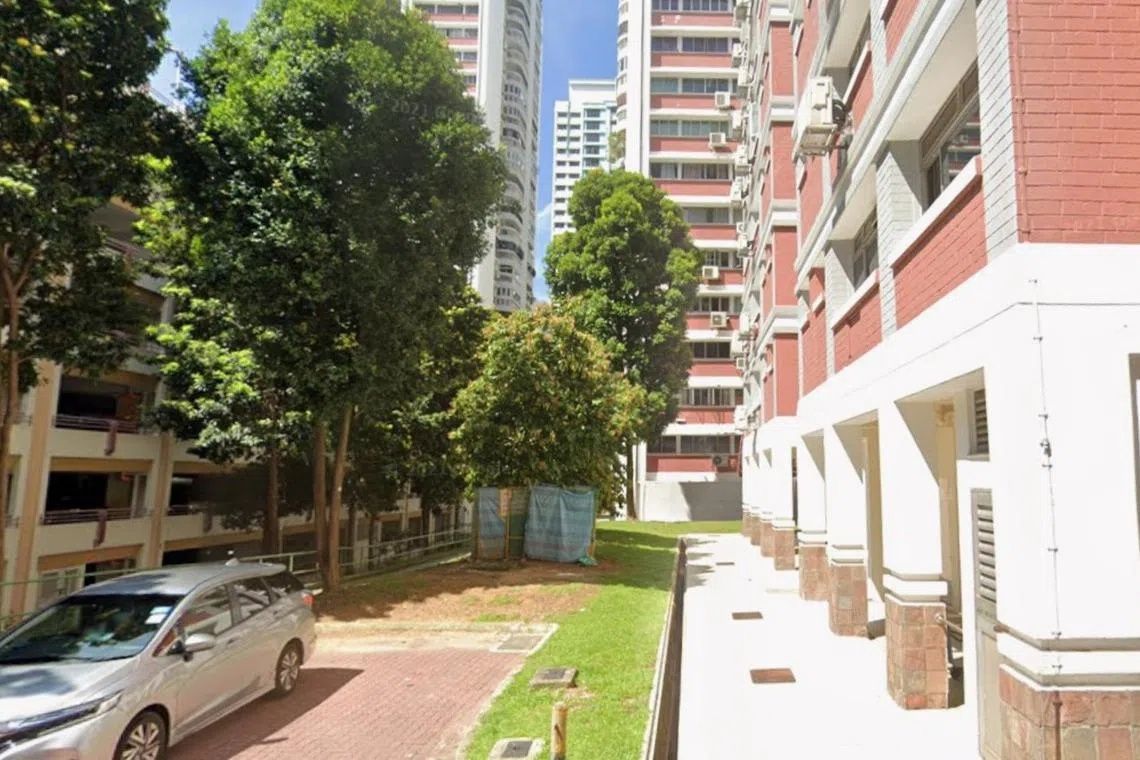
Singapore authorities arrested a 46-year-old woman following a violent knife assault on an acquaintance at a Housing Board residential block in the Bukit Merah estate on Saturday evening, marking another incident of interpersonal violence within the city-state's densely populated public housing sector. The confrontation occurred at 7 Kim Tian Place, with police receiving emergency calls around 7.40pm as the situation escalated to a point requiring immediate intervention by first responders.
The victim, a 43-year-old woman, sustained injuries from the knife-wielding attack but was transported to Singapore General Hospital in conscious condition, indicating the severity of harm, though the precise nature and extent of her wounds remain undisclosed by authorities. Her hospitalisation underscores the physical toll of the altercation, though her conscious state upon arrival at the medical facility suggests survival prospects without apparent life-threatening emergency circumstances at that point.
Police swiftly apprehended the suspect and initiated formal charges of causing grievous hurt through use of a weapon, a serious criminal designation under Singapore law that reflects the deliberate nature of the assault. The weapon itself—the knife employed in the attack—was seized as evidence, constituting a critical component of the investigative process. This charge category, reserved for injuries that cause permanent disfigurement or incapacity, indicates that prosecutors consider the attack sufficiently severe to warrant more substantial penalties than standard assault convictions.
Visual evidence of the violence was reported by Chinese-language publication Shin Min Daily, which documented bloodstains visible at the void deck of the residential block. The presence of blood at this communal ground-level area suggests the assault either occurred there or that the victim fled to that location after the initial attack, painting a picture of a chaotic incident within shared residential space that would have disturbed residents and potentially exposed other occupants to an ongoing threat.
The incident reflects ongoing concerns about community safety within Singapore's high-density public housing estates, where thousands of residents live in close proximity within individual blocks. Housing Board developments like Bukit Merah accommodate diverse populations with varying socioeconomic backgrounds and circumstances, and episodes of domestic or acquaintance violence periodically surface despite the city-state's reputation for general public safety. The fact that the attacker and victim were already acquainted suggests the assault emerged from an existing relationship rather than random criminal activity, a distinction that influences both investigative approaches and broader public safety implications.
Singapore's police force maintains relatively rapid response times and investigation protocols for violent crime, leveraging the nation's comprehensive surveillance infrastructure and witness-gathering capabilities. The quick apprehension in this case demonstrates these operational efficiencies, though investigators continue examining circumstances surrounding the initial confrontation to establish motive and the precise sequence of events. Police have disclosed minimal additional detail beyond basic incident parameters, maintaining investigative confidentiality during the ongoing examination phase.
The case occurs within a broader context of domestic and acquaintance violence in Singapore, a phenomenon that authorities and social services have increasingly scrutinised in recent years. While aggregate violent crime statistics in Singapore remain comparatively low by international standards, official acknowledgement of family violence issues has prompted enhanced preventive initiatives and support mechanisms for potential victims. The involvement of an existing relationship between perpetrator and victim aligns with broader criminological patterns observed in developed Asian societies, where violence frequently emerges from personal or domestic contexts rather than stranger interactions.
For Malaysian observers, the incident provides perspective on enforcement approaches in a neighbouring jurisdiction with distinct regulatory frameworks and policing capabilities. Singapore's rapid response and investigation model contrasts with Malaysia's more geographically dispersed and varied policing structures across multiple state jurisdictions. The emphasis on prosecuting weapon-related assault through serious criminal charges reflects Singapore's consistently stringent stance on armed violence and weapons possession, positioning such incidents as particularly grave threats to public order.
The Housing Board setting carries particular significance in Singapore's urban context, as public residential blocks house the overwhelming majority of the population and constitute central nodes of community life. Violent incidents within these spaces generate heightened concern precisely because they occur in environments where families, children, and elderly residents congregate regularly. This distinguishes such attacks from isolated incidents occurring in commercial or industrial zones, elevating perceived threat levels and community anxiety despite statistical rarity of such occurrences.
As investigations progress, authorities will likely examine whether the prior acquaintance between the women involved potential disputes, tensions, or triggering circumstances that precipitated the assault. Understanding motivational factors assists police in determining whether the incident represents an isolated eruption or part of a pattern of escalating conflict. Such contextualisation proves essential for both criminal prosecution and any subsequent support interventions that social services might extend to affected parties, particularly if vulnerability factors or cycles of harm are identified through investigation.

