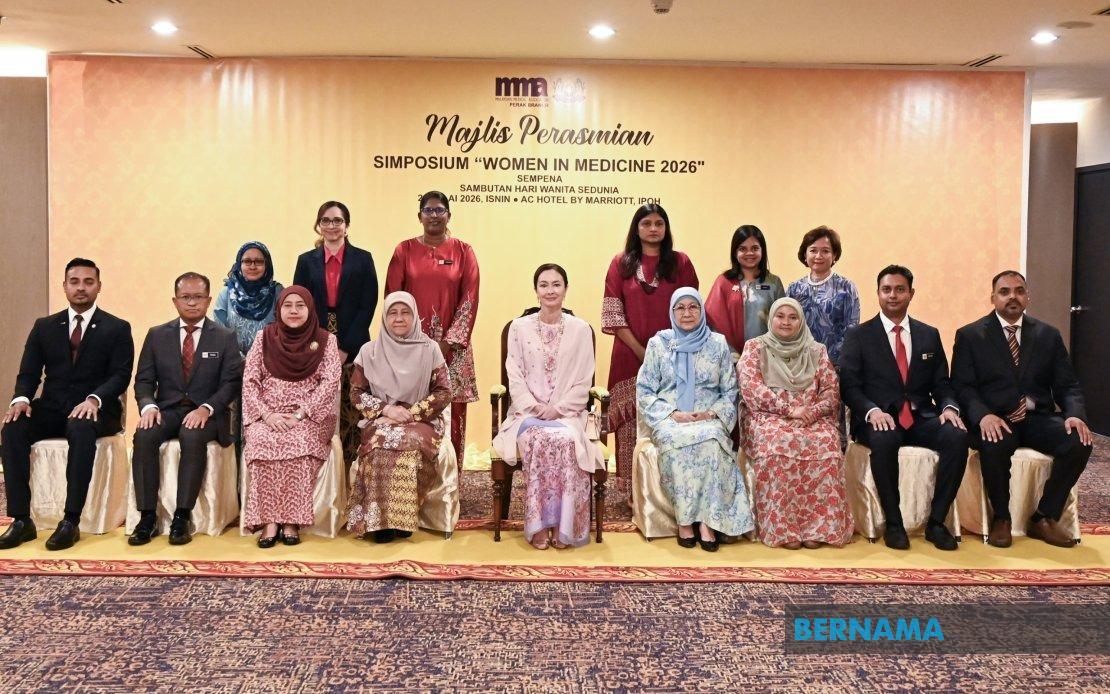
Healthcare leaders in Perak are making a compelling case for greater female representation in medical decision-making roles, contending that women's participation at leadership tables is not simply a matter of equality but a practical necessity for the profession's future. The argument was articulated during the opening of the Women in Medicine 2026 Symposium in Ipoh, where industry figures gathered to recognise female achievements in healthcare and discuss pathways for advancing women into positions of influence across the sector.
Dr Monesh Pillai, who chairs the Perak branch of the Malaysian Medical Association, framed the discussion around contemporary healthcare complexities that demand fresh thinking and collaborative approaches. The region faces mounting pressure from mental health crises, the proliferation of lifestyle-related illnesses, demographic shifts toward an older population, and the twin forces of technological integration and artificial intelligence disruption. According to Pillai, these interconnected pressures cannot be adequately addressed through conventional hierarchies or homogeneous leadership structures. Instead, he argued, healthcare institutions require the intellectual diversity and nuanced decision-making that women bring to senior roles.
The symposium, held with official patronage from the Raja Permaisuri of Perak Tuanku Zara Salim, highlighted how women's involvement in medicine extends far beyond the traditional conception of female doctors in clinical practice. As healthcare systems become increasingly complex, women are assuming roles as administrators managing institutions, researchers investigating disease mechanisms, educators training the next generation of medical professionals, and advocates pushing for systemic reform. This broadening of women's professional identity within medicine reflects structural changes in how health services are organised and delivered across modern economies.
Dr John Emmanuel, who chaired the symposium organising committee, emphasised that empowerment of women professionals yields tangible benefits beyond symbolic representation. His remarks suggested that healthcare quality itself improves when women occupy decision-making positions, as their contributions shape protocols, policies, and resource allocation in ways that tend toward greater inclusivity and patient-centredness. This connection between gender diversity and service quality has gained traction in international healthcare governance discussions, where research increasingly demonstrates correlations between diverse leadership teams and improved clinical outcomes.
The timing of the symposium around International Women's Day provided a platform to examine the current theme of rights, equality and empowerment within Malaysia's healthcare context. That framework pushes beyond the provision of mere opportunities—the historical focus of earlier women's advancement initiatives—toward ensuring systemic conditions that allow women to actualise their professional potential. For healthcare systems, this distinction carries significant weight, as it requires examining not only recruitment practices but also mentorship structures, work environment design, and institutional cultures that either facilitate or impede female career progression.
Malaysia's healthcare sector faces particular pressure points that female leadership might address distinctly. The country's rising burden of non-communicable diseases such as diabetes and hypertension demands preventative, community-focused strategies that research suggests women leaders often prioritise. Mental health challenges, which have escalated since the pandemic, similarly benefit from approaches emphasising holistic care and psychological safety—dimensions that diverse leadership teams typically emphasise. For a nation grappling with these epidemiological transitions, the availability of varied leadership perspectives becomes strategically important rather than merely aspirational.
The digital transformation of healthcare, increasingly urgent across Southeast Asia, presents another arena where gender diversity in leadership may prove consequential. As hospitals adopt electronic health records, telemedicine platforms, and AI diagnostic tools, decisions about implementation affect patient experience, staff workflows, and data security. Women leaders, research suggests, often bring attention to implementation challenges that primarily male leadership might overlook, particularly regarding how technologies impact vulnerable populations or create unintended access barriers.
International speakers brought case studies illustrating these dynamics. Datuk Dr Adeeba Kamarulzaman, president of Monash University Malaysia, addressed how women navigate pathways from clinical practice into policy influence—a critical juncture where many talented female practitioners plateau. Her presentation likely underscored that intentional career development support remains necessary even as barriers to initial entry have diminished. Similarly, Dr Sangeetha Siniah's focus on women's and children's health conditions reflected how women's healthcare needs and perspectives remain underrepresented in medical research agendas, with female practitioners often bringing attention to these gaps.
The Perak initiative occurs within a broader regional conversation. Across Southeast Asia, healthcare systems are simultaneously confronting workforce shortages, technological disruption, and demographic ageing. Countries including Thailand, Vietnam, and Indonesia face similar pressures to engage women more fully in healthcare leadership. Malaysia's explicit articulation of this imperative positions the nation as part of a regional movement recognising that healthcare transformation requires the full talent pool rather than a subset defined by traditional gender distributions.
Yet significant structural obstacles remain. Women in Malaysian medicine still face obstacles including unequal domestic responsibilities, limited mentorship networks, and workplace cultures that may inadvertently disadvantage caregiving professionals. The symposium's emphasis on spaces for women to lead suggests organisers recognise these barriers require deliberate dismantling rather than assumption that removing formal restrictions suffices. This understanding reflects matured thinking about advancement, acknowledging that equality requires active institutional change.
For Malaysian healthcare administrators and policymakers, the Perak MMA's advocacy carries practical implications. Healthcare institutions increasingly recognise that talent development and retention directly affect service capacity and quality. By creating pathways for women to advance into leadership, hospitals and health authorities access a substantial reservoir of motivated professionals while simultaneously building organisations better equipped to address the complex, multidimensional health challenges facing populations. The symposium thus operates not merely as recognition of women's achievements but as articulation of systemic imperatives driving healthcare evolution.

