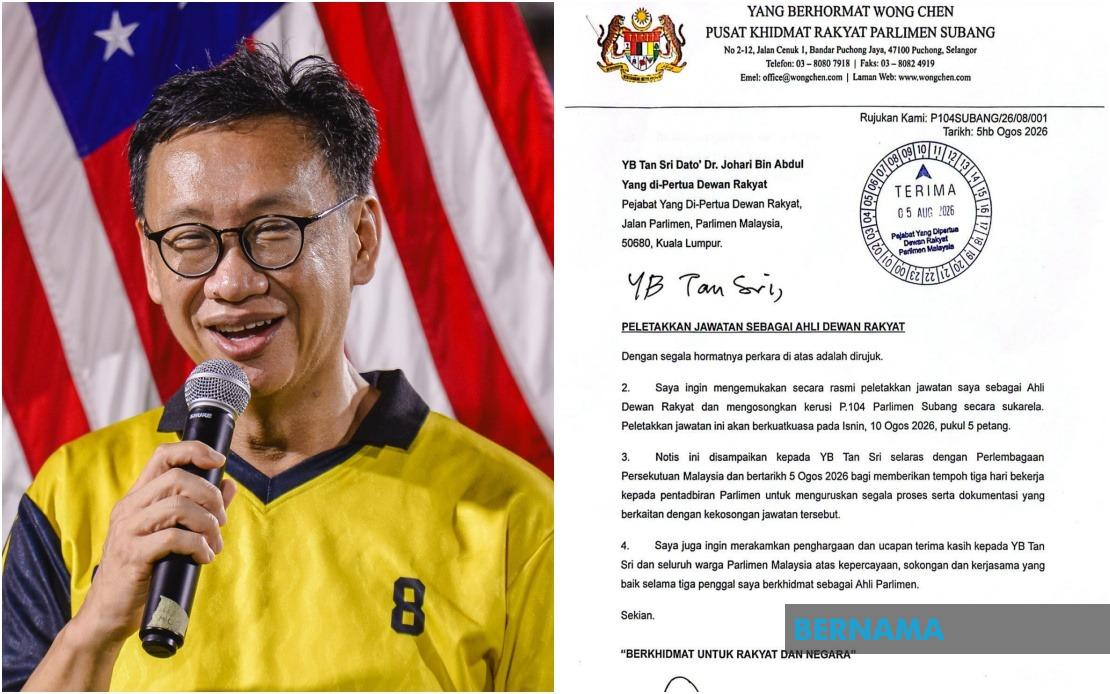
Wong Chen, the Member of Parliament for Subang, has formally stepped down from his parliamentary seat, marking the end of a three-term tenure in the Dewan Rakyat. The resignation took effect at 5:00 pm today, concluding a career spanning multiple electoral cycles representing one of Kuala Lumpur's key constituencies. The move comes after Wong submitted his official resignation letter to Dewan Rakyat Speaker Tan Sri Johari Abdul on August 5, with advance notice provided to allow Parliament's administrative machinery adequate time to process the vacancy and prepare for necessary procedures.
Wong's decision to give early warning reflects a deliberate approach to managing the transition. By notifying Parliament five days before the effective date, he ensured that the Speaker's office and supporting staff could initiate the groundwork for filling the constituency's vacant seat without disruption. This procedural courtesy is particularly relevant in Malaysia's parliamentary system, where by-elections must be held within 60 days of a seat becoming vacant. The advance notice thus allows the Election Commission, political parties, and electoral authorities in Selangor to coordinate their activities and prepare for the campaign season that will inevitably follow.
In his formal letter dated August 5, 2026, Wong Chen explicitly stated that his resignation and the vacation of the Subang parliamentary seat were undertaken voluntarily and in strict accordance with the Federal Constitution. This constitutional language carries legal significance, as it clarifies that the departure is undertaken through proper channels and free of any external coercion or irregular circumstances. Such clarity is important in Malaysian politics, where parliamentary transitions occasionally generate speculation about the motivations and circumstances driving resignations.
Wong's gratitude expressed toward Speaker Tan Sri Johari Abdul and Parliament's administrative staff underscores the professional relationships built during his legislative career. His acknowledgment of the institution's support throughout three separate terms suggests a respectful conclusion to his parliamentary service rather than an acrimonious departure. The formal tone of the letter reflects Wong's apparent commitment to leaving office in a manner that preserves institutional goodwill and maintains parliamentary decorum.
The removal of the honorific title "Yang Berhormat" from Wong's billboards, signboards, and official correspondence beginning next month represents the practical administrative consequences of his resignation. This shift in nomenclature is not merely symbolic; it reflects the formal cessation of parliamentary privileges and standing that accompanies the vacation of a Dewan Rakyat seat. Malaysian MPs use the Yang Berhormat designation in all official communications and public materials, so the phased removal of this title across Wong's materials signals a clean break from parliamentary office.
Wong has scheduled a special press conference for 11:00 am the following morning to elaborate on his resignation. This planned public statement suggests that Wong intends to provide detailed explanation of his decision beyond what the formal resignation letter conveys. Such press conferences often address personal, professional, or political motivations behind parliamentary resignations and may preview any future political or professional activities. For Malaysian media and political observers, the press conference represents an opportunity to clarify questions about timing, future plans, and any broader implications of his departure for Selangor politics or the Subang constituency's representation.
Subang represents a significant constituency within Selangor, historically characterized by urban, educated voters in and around Subang Jaya. The seat's vacancy will inevitably attract considerable attention from political parties seeking to contest the ensuing by-election. Wong's three-term tenure suggests he had established considerable local support and a functioning constituency apparatus. His departure opens the seat for fresh political competition and represents a notable change in Selangor's parliamentary composition.
The three-term span of Wong's parliamentary service places him within the category of moderately experienced legislators, neither newcomers nor veteran long-termers. This tenure allowed him to develop parliamentary expertise and constituency relationships while not positioning him as an entrenched power broker. His decision to resign before completing a potential fourth term suggests a deliberate choice about the timing and nature of his political career's next phase, whether through retirement from electoral politics entirely or transition to other professional or public service activities.
For Malaysian parliamentary observers, Wong's resignation exemplifies the formal procedures governing the voluntary departure of sitting MPs. His adherence to constitutional protocols, advance notice to parliamentary leadership, and planned public explanation demonstrate the institutional mechanisms that manage such transitions. The process illustrates how Malaysia's Westminster-based parliamentary system accommodates member departures while ensuring continuity and allowing ample time for electoral replacement procedures. His exit demonstrates that even departures initiated by the MPs themselves operate within established legal frameworks and administrative processes that preserve institutional integrity.

