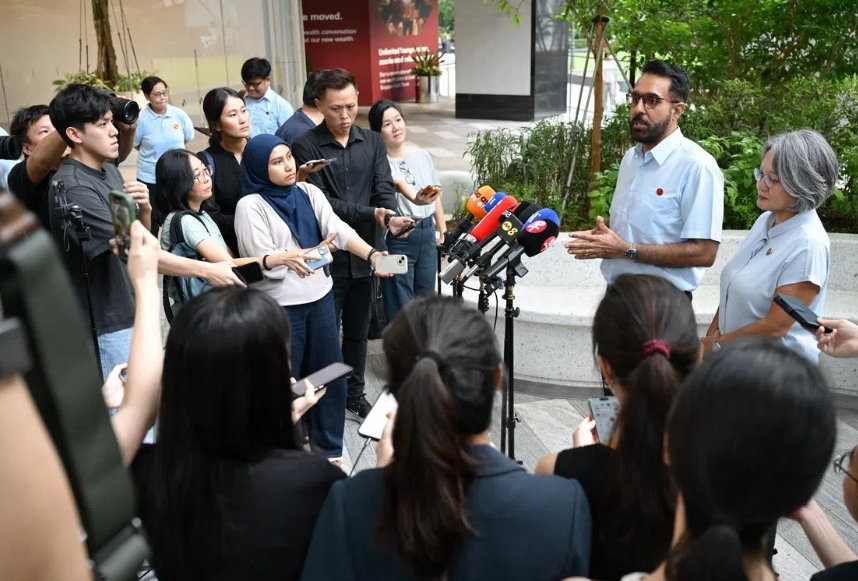
Singapore's Workers Party has consolidated its internal leadership after a contentious six-hour assembly where cadres voted decisively to retain Pritam Singh as secretary-general, ending months of uncertainty that threatened to undermine the main opposition group. Emerging from consecutive meetings on June 28 with a composed demeanour, Singh declared the party "pretty united" following the cadre conference, where 82 of 106 members voted to keep him in the role—effectively concluding a challenge that had tested his authority more severely than any ballot since his 2018 election to the post.
The genesis of this confrontation lay in the Raeesah Khan affair, a scandal that has haunted the party since 2021 when the then-Sengkang GRC MP fabricated testimony before Parliament regarding police conduct toward a sexual assault victim. Singh's conviction in late 2024 for his role in prolonging Khan's deception—later upheld on appeal by the High Court in December 2025—created the immediate political crisis. The parliamentary response was swift: lawmakers voted to deem Singh unsuitable as Leader of the Opposition, and Prime Minister Lawrence Wong subsequently removed him from that ceremonial post, leaving the Workers Party to decide whether its membership would accept his continued leadership of the party machinery itself.
The cadre vote represents a striking show of collective will within the party's membership structure. Those who had initiated the special conference—unhappy members seeking to hold Singh accountable—had apparently hoped for a more rigorous interrogation of his actions. While Singh did face questioning during the assembly, the dynamic proved more complex than a simple inquisition. Party sources indicate that several speakers who took the floor actually defended Singh rather than prosecuting a sustained case against him, undermining the momentum of the dissident faction. Their attempt to recruit a rival candidate to challenge for the leadership position ultimately failed, leaving Singh unopposed in the formal election that followed.
The survival of Singh's leadership bears comparison with how opposition parties elsewhere in Southeast Asia have navigated internal crises. Unlike some regional counterparts that have been ravaged by public feuding and sudden leadership collapses, the Workers Party has maintained a facade of institutional discipline. The involvement of veteran party chief Low Thia Khiew—who constructed much of the modern party apparatus—proved particularly influential; his explicit public endorsement of Singh before the voting carried symbolic weight within a party that venerates its institutional history. This continuity messaging has allowed the party to argue that its cadres represent an informed judgment rather than a reflexive closing of ranks.
Yet the internal management of Singh's conviction raises pointed questions about whether political expediency has displaced principle as the driving force in the party's calculations. When asked directly whether the Workers Party was being "run by a convicted liar," Singh deflected to his website rather than engaging substantively with the question—a non-answer that itself communicates something about the party's comfort level with the subject. The Workers Party's disciplinary machinery, when it did function, issued Singh a formal letter of reprimand for breaching the party constitution, a sanction that independent observers and several media analysts characterised as remarkably lenient given the gravity of parliamentary dishonesty.
For Malaysian observers, the Workers Party's internal dynamics carry specific relevance in considering how opposition movements in developed democracies with entrenched ruling parties navigate between principle and pragmatism. The party leadership's refusal to nominate an alternative Leader of the Opposition candidate despite being given the opportunity—effectively forcing Parliament to declare the position vacant—demonstrated a strategic calculation that backing Singh was preferable to fragmenting the party through internal competition. This calculus presumes that party unity yields higher electoral returns than does projecting an image of principled opposition to misconduct within its own ranks.
The Workers Party has already tested this assumption in electoral terms. May 2025's general election, conducted while Singh faced his lower court conviction, saw the party not merely retain its existing parliamentary seats but expand its presence through capturing two Non-Constituency MP positions—a result that party strategists cite as evidence that voters have already rendered judgment on the scandal. This interpretation assumes that the electoral marketplace can distinguish between Singapore's dominant People's Action Party and a challenger that maintains internal discipline and can point to electoral growth. The Workers Party's underdog status and the scrutiny imbalance favouring the ruling party may indeed provide some cover for its leadership vulnerabilities.
However, the question that Sunday's cadre vote does not definitively settle concerns the party's capacity to expand beyond its current base into the middle-ground voter segments that determine electoral outcomes in developed systems. The Workers Party's growth has been measurable but incremental; capturing two additional uncontested seats in May 2025 represented progress, yet the party remains substantially weaker than its ruling counterpart. Whether middle-income, swing voters—particularly professionals and business owners concerned with stability and institutional competence—will accept a party led by someone convicted of parliamentary dishonesty remains an open question that electoral results have not yet fully clarified.
The party chair Sylvia Lim's comments about leadership renewal also merit scrutiny in this context. Acknowledging her 23-year tenure and noting that "hopefully in the next media conferences you will see someone else here," Lim gestured toward succession planning even as the party solidified Singh's position. This dual message—support for the current leader combined with acknowledgment that generational change looms—suggests internal recognition that Singh's long-term viability as a vehicle for expansion may be constrained. The absence of any credible internal challenger capable of threatening Singh also indicates a leadership development deficit that could hamper the party's medium-term prospects.
The Workers Party's internal consolidation around Singh does resolve the immediate crisis and eliminates the damaging spectacle of public internal conflict that has derailed opposition parties elsewhere in the region. Yet the resolution has been accomplished partly through demonstrating that the party prioritizes institutional survival over the kind of moral clarity that typically appeals to educated, affluent voters whom opposition parties need to convert to achieve systemic electoral change. The cadres have voted, the party has moved forward, and parliamentary work beckons. Whether this pragmatism proves strategically astute or merely postpones a reckoning with the party's broader electoral ceiling remains perhaps the most significant question the Sunday votes have left unresolved for the Workers Party's future trajectory.

