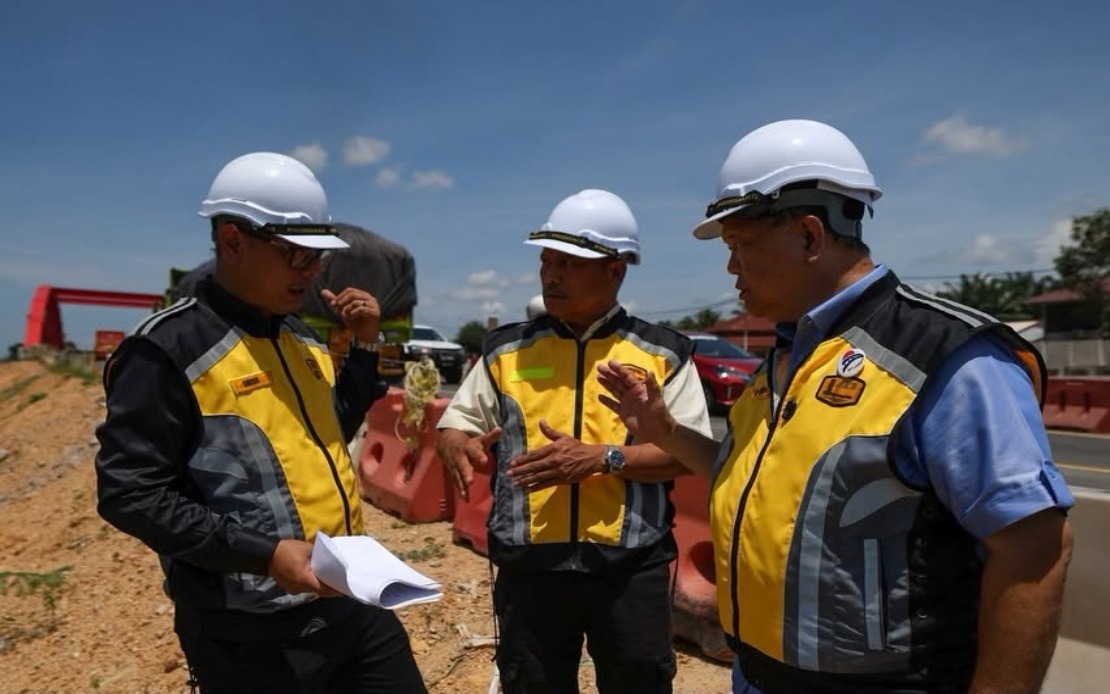
Works Minister Datuk Seri Alexander Nanta Linggi has issued a firm directive to accelerate completion of the Sungai Durian Bridge Replacement Project in Kuala Krai, signalling his frustration with persistent delays that have already consumed six Extensions of Time. The minister made the declaration following an unannounced inspection of the project site on July 17, where he assessed conditions firsthand and conveyed his expectations to the contractor team.
The replacement bridge initiative has become emblematic of infrastructure implementation challenges in Malaysia, where ambitious timelines frequently encounter real-world obstacles. Despite originally scheduled completion dates, the project has required successive extensions, each one pushing the anticipated handover further into the future. This pattern reflects broader concerns about project management efficiency within major public works initiatives across Southeast Asia, where complex urban and regional infrastructure faces mounting pressure to deliver on promise.
According to Nanta's assessment, multiple technical factors have contributed to the setback. Installation of borepiles—deep foundation elements essential for the bridge structure—has been complicated by pre-existing utility pipelines running beneath or near the construction zone. Coordinating with existing underground infrastructure without disruption requires careful planning and sometimes substantial redesign work. Additionally, complications surrounding the temporary support structures needed during steel bridge construction have created further impediments to workflow.
The minister's visit carried symbolic weight, demonstrating ministerial engagement with problem projects rather than accepting explanations at bureaucratic levels. In his statement posted on social media, Nanta emphasised that further delays would prove unacceptable, effectively drawing a line regarding contractor performance. His willingness to publicly acknowledge setbacks while simultaneously demanding resolution suggests a recognition that transparency about implementation challenges, paired with decisive action, may restore public confidence in infrastructure delivery.
Nanta instructed the contractor to immediately deploy additional personnel and equipment to the site, streamline construction methodology, and collaborate intensively with the Public Works Department to resolve technical impediments. This multi-pronged approach targets both resource constraints and coordination difficulties. By mandating closer cooperation between the contractor and government authorities, the minister signalled that solutions require integrated problem-solving rather than isolated contractor efforts.
The minister's rhetoric centred on public expectation and patience exhaustion. He stated plainly that citizens had already waited considerably for this infrastructure to materialise and that further postponement would prove unacceptable. This framing acknowledges the legitimate frustration of communities depending on improved bridge infrastructure, particularly in Kuala Krai, where transportation links directly affect economic activity and daily mobility. The bridge replacement addresses critical transport needs within Kelantan state.
Nanta's public commitment to close ministerial oversight sends important signals to contractors and project teams throughout Malaysia's infrastructure sector. By asserting that the Works Ministry would not tolerate implementation weaknesses and would maintain vigilant monitoring, the minister reinforced accountability expectations. This stance reflects growing political pressure to demonstrate competent governance through timely project completion, a concern increasingly prominent across the region as development initiatives face mounting scrutiny from electorates.
The situation illuminates persistent tensions within major infrastructure programmes. Contractors often inherit complex sites where pre-existing conditions—utility networks, geological surprises, or environmental constraints—weren't fully characterised during initial planning phases. Yet from a public perspective, such obstacles, while real, represent implementation challenges that professional teams should anticipate and manage within contracted timeframes. The accumulation of six separate time extensions suggests either inadequate initial assessment or persistent underestimation of project complexity.
For Malaysian readers and regional observers, the Sungai Durian project exemplifies infrastructure delivery challenges common across Southeast Asia. Similar patterns emerge in highway, railway, and bridge projects throughout the region, where ambitious development goals collide with implementation realities. The minister's decisive intervention demonstrates how political pressure can accelerate problem-solving, though it also underscores systemic issues regarding project planning rigour and contractor capacity assessment that persist across multiple jurisdictions.
Looking forward, completion of the Sungai Durian Bridge Replacement Project will likely depend on whether the contractor successfully mobilises additional resources and whether technical obstacles prove resolvable within the current timeline. The minister's stated commitment to close monitoring suggests that any further delays will prompt escalated intervention, potentially including contractor penalties or management changes. For communities in Kuala Krai awaiting improved transport connectivity, the bridge represents more than infrastructure—it symbolises government capacity to deliver public goods reliably.
The project's trajectory will offer important lessons for future infrastructure planning within Malaysia and potentially across Southeast Asia. Success would demonstrate that ministerial engagement and public accountability can overcome implementation obstacles; failure would reinforce perceptions that infrastructure timelines consistently slip despite political commitment. Either outcome carries implications for public confidence in large-scale development initiatives and government credibility regarding delivery of promised amenities to Malaysian citizens.

