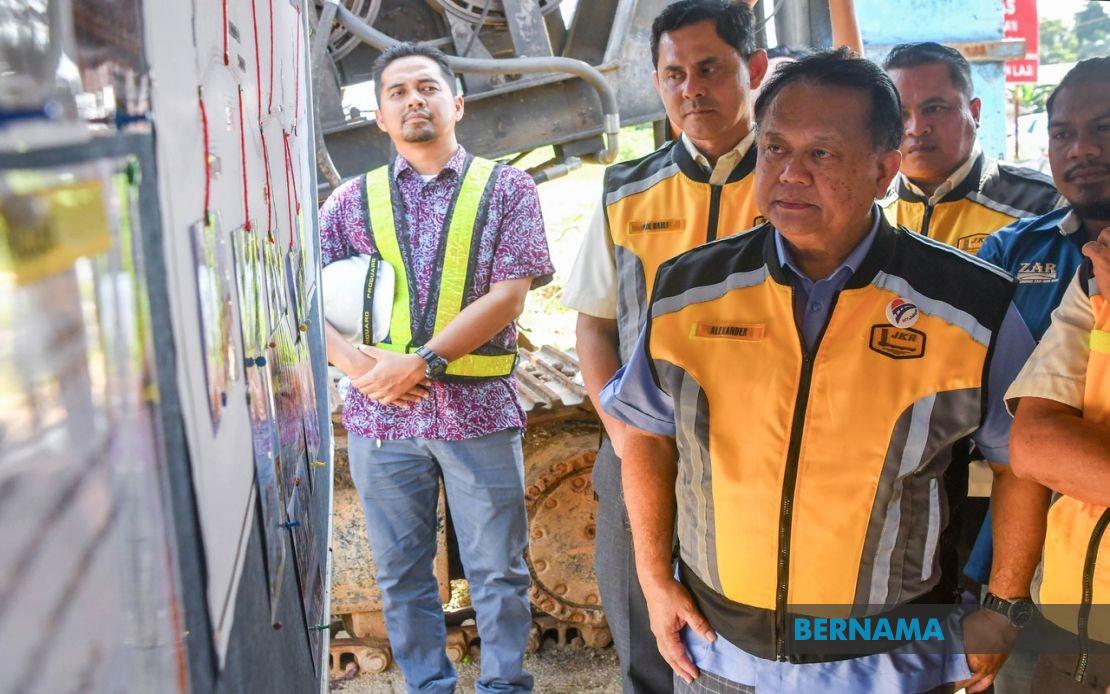
The Works Ministry has flagged 50 projects across Malaysia as requiring intensive supervision to bring them back within schedule, according to Works Minister Datuk Seri Alexander Nanta Linggi. These problem projects represent a small but significant portion of the 865 developments falling under the ministry's responsibility. The identification of these "sick" projects reflects growing concerns about implementation timelines and cost management in public infrastructure, issues that have repeatedly drawn scrutiny from parliamentary committees and development observers in recent years.
Kelantan accounts for only seven of the troubled projects, despite the state hosting a substantial portion of the ministry's portfolio. This concentration of delays in other regions underscores the varied nature of implementation challenges across Malaysia's diverse geographical and administrative contexts. The wide geographic spread of problematic projects suggests systemic issues rather than isolated regional difficulties, pointing to broader challenges in project governance and contractor management across different development environments and market conditions.
Delays stem from multiple interconnected sources, creating a complex web of obstacles that the ministry must navigate. Contractor financial instability and weak management practices top the list, compounded by protracted land acquisition processes that frequently extend beyond original timelines. Utility relocation—moving water pipes, electrical cables, and telecommunications infrastructure—has emerged as another consistent bottleneck in urban and peri-urban developments. Perhaps most vexing are unforeseen underground conditions, including concealed obstructions not identified during the planning phase, which can force costly design modifications and schedule revisions mid-project.
The ministry has instituted a structured review mechanism to address these challenges. Every week, following post-Cabinet deliberations, project teams conduct detailed assessments of progress across all flagged developments. This frequent monitoring cycle represents an intensification of oversight compared to earlier practices, reflecting recognition that passive management of troubled projects simply allows problems to compound. By maintaining weekly touchpoints, the ministry aims to identify emerging issues quickly and implement corrective measures before situations become unrecoverable.
When deciding the fate of stalled projects, the ministry weighs completion prospects against financial implications. Projects nearing completion—with only ten to fifteen percent of work remaining—may receive time extensions rather than contract termination. This pragmatic approach acknowledges that hiring new contractors and restarting work often costs substantially more than granting reasonable deadline extensions. However, this discretion must be exercised judiciously to prevent abuse and ensure public funds are not squandered on perpetually delayed initiatives that never actually finish.
For underperforming projects showing no improvement trajectory, the ministry has signalled willingness to take decisive action. Deputy Minister supervision of the nationwide monitoring process adds administrative weight to follow-up initiatives. The minister explicitly warned that persistent poor performance will trigger contractor removal or contract termination. Yet any termination decision must proceed carefully and methodically, respecting legal protocols and contractual obligations. Rushed or arbitrary terminations expose the ministry to costly litigation and potential damages claims from contractors, creating additional financial exposure for taxpayers.
In Kelantan, the minister visited the FT209 and FT131 road upgrading project, a RM191 million initiative stretching six kilometres from the Pasir Hor interchange to Panchor. This development exemplifies both the scale of public investment and the genuine implementation challenges confronting the ministry. The project targets chronic traffic congestion plaguing Federal Road FT131, particularly between Kubang Kerian and Sabak, with onward connections to Pengkalan Chepa. Such congestion represents genuine quality-of-life concerns for commuters and economic drag on the surrounding region.
As of the minister's visit, the project had achieved 71.61 percent physical progress, positioning it for completion by September next year. However, land acquisition alone—affecting 300 individual lots—has consumed over RM200 million, illustrating how real estate costs can dominate infrastructure project budgets in Malaysia. This expenditure underscores why rushed terminations prove counterproductive; the acquisition investment is already sunk and cannot be recovered regardless of implementation speed.
An unanticipated complication has emerged from the road project itself: flooding affecting nearby residents. Rather than dismissing this secondary concern, the minister responded pragmatically by instructing the contractor to immediately construct a temporary 40-metre drainage channel to mitigate flooding until final project completion. This solution demonstrates how infrastructure projects generate ripple effects requiring adaptive management. The intervention, requested by Pengkalan Chepa Member of Parliament Datuk Dr Ahmad Marzuk Shaary, reflects the political dimensions of infrastructure delivery, where elected representatives naturally champion their constituents' immediate concerns.
The ministry's approach to project management reveals tensions inherent in Malaysia's development landscape. Balancing accountability for timely delivery against practical recognition that unforeseen complications inevitably arise requires judgment and flexibility. Weekly reviews and structured oversight represent necessary improvements over previous management regimes. Yet preventing delays ultimately requires addressing root causes: strengthening contractor selection processes, improving project planning and site investigation, and managing stakeholder expectations realistically during implementation.
For Malaysian infrastructure stakeholders and citizens, these 50 troubled projects symbolise broader questions about the efficiency of public investment. While identifying problems is essential, converting that identification into genuine project recovery demands sustained political will and adequate resources for problem-solving. The ministry's willingness to make difficult decisions about contractor removal suggests some hardening of governance standards. Success will ultimately be measured not by the number of projects monitored, but by how many actually reach completion within acceptable timelines and budgets.

