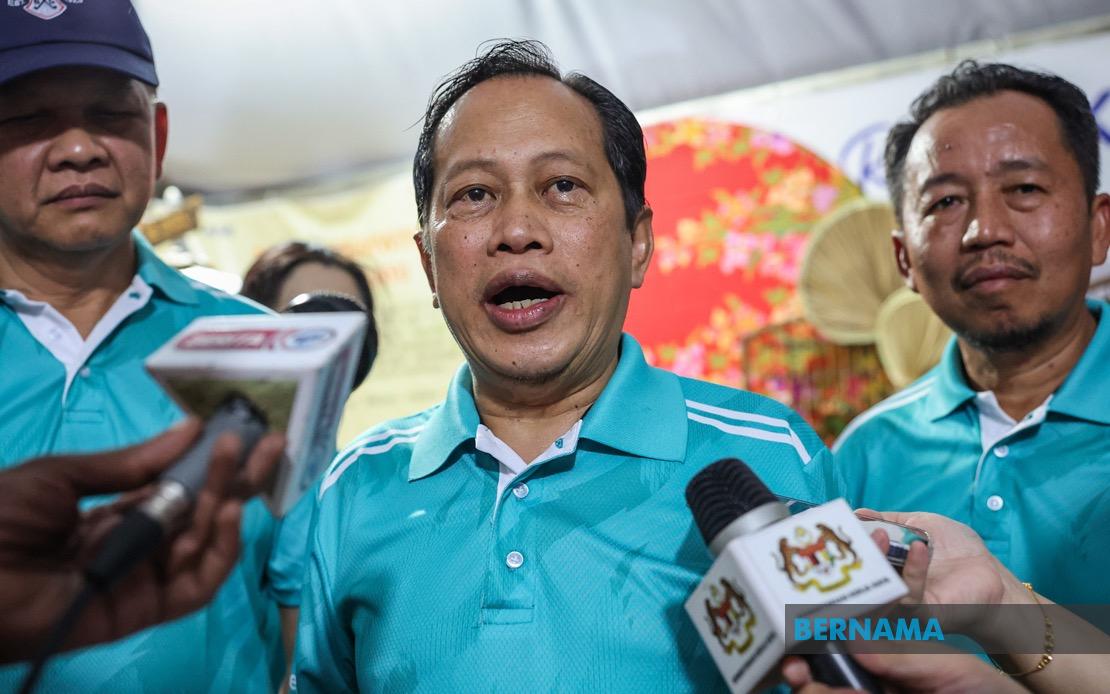
The Ministry of Works is making an ambitious pitch to secure the nation's largest development allocation in the 2027 federal budget, signalling the government's continued commitment to infrastructure modernisation across Malaysia. Deputy Works Minister Datuk Seri Dr Ahmad Maslan revealed the ministry's strategy while speaking at the Cultural Night Run event in Batu Kawan, where he outlined plans to coordinate with the Finance Minister II on August 28 to present the ministry's spending case. The timing is strategic, coming as Malaysia grapples with ageing highway systems and growing demand for smarter, more efficient transport infrastructure.
In the previous budget cycle, the ministry received approximately RM10 billion in overall allocation, of which RM9 billion was earmarked for development projects. Maslan's remarks suggest the ministry is seeking a substantial increase from that baseline to fund an expanding portfolio of projects. This aspiration reflects broader governmental priorities to maintain and upgrade Malaysia's vast network of roads and bridges while introducing digital innovations that enhance user experience and safety. The pitch also arrives at a time when infrastructure maintenance backlogs have become increasingly visible, with deteriorating road conditions affecting commuters across peninsula and east Malaysia.
To prepare for these negotiations with the Finance Ministry, the Works Ministry has directed its constituent agencies to compile detailed input and funding requirements. Key organisations participating in this process include the Malaysian Highway Authority (LLM), the Construction Industry Development Board Malaysia (CIDB), and the Public Works Department (JKR). These agencies were instructed to prepare comprehensive submissions last week, laying the groundwork for substantive discussions with Finance Minister II. The coordinated approach signals that the ministry is treating the budget preparation as a priority exercise, with multiple stakeholders contributing to a consolidated position on resource requirements.
Crucially, the Works Ministry is positioning itself as a driver of technological advancement in Malaysian infrastructure, moving beyond traditional road construction and maintenance. Through the Malaysian Highway Authority, the ministry is actively developing what it terms smart highways, incorporating digital technology and artificial intelligence to improve traffic management and user safety. This modernisation agenda includes widespread deployment of closed-circuit television systems, intelligent lane management, and integration with navigation platforms. These upgrades represent a significant shift toward data-driven infrastructure management, aligning Malaysia with international best practices in highway operations.
A centrepiece of the ministry's innovation strategy is TuJu, a domestically developed navigation application that positions itself as Malaysia's third major navigation platform alongside Waze and Google Maps. Developed by the Malaysian Highway Authority, TuJu offers highway-specific functionality that differentiates it from international competitors. The application provides real-time closed-circuit television feeds from monitored highways, current toll rates, locations of rest and recreation areas, emergency assistance details, and up-to-date traffic information connected directly to the LLM Traffic Control Centre. By aggregating this highway-specific information in a single platform, TuJu gives Malaysian drivers tangible tools to make informed travel decisions and avoid congestion.
The infrastructure supporting TuJu demonstrates the scale of the ministry's existing technological investment. The LLM Traffic Control Centre currently monitors hundreds of closed-circuit television cameras distributed across Malaysia's 34 highways, including surveillance systems on both Penang bridges. The application is also integrated with other government platforms including the KKR and MYJalan applications, enabling highway users to report road hazards and service complaints directly to the control centre. This interconnected ecosystem represents an early stage of smart infrastructure development, where technology enables more responsive and user-centric highway management. Maslan's public encouragement for Malaysians to adopt TuJu reflects official recognition that technological infrastructure requires user adoption to realise its full potential.
Malaysia's highway network presents both opportunity and challenge for the ministry's investment case. Across the country, 34 highways totalling more than 2,000 kilometres are operated by 28 different concessionaires, with PLUS Malaysia Berhad managing the largest portion at over 1,000 kilometres. This fragmented operational structure complicates coordinated development but also offers flexibility in implementing innovations such as Multi Lane Free Flow tolling systems. Maslan indicated that MLFF technology, which enables toll collection without vehicles stopping at toll plazas, remains in the proof-of-concept stage and will be rolled out through business-to-business arrangements between concessionaires without requiring direct government funding.
The Multi Lane Free Flow initiative represents an important shift in how the ministry approaches infrastructure modernisation. Rather than mandating uniform solutions across all concessionaires, the ministry is enabling individual highway operators to choose their implementation partners, whether subsidiaries or external vendors. PLUS Malaysia Berhad has already commenced MLFF operations using the JustGo system, demonstrating practical viability and providing a template for other concessionaires. This market-based approach reduces government expenditure while accelerating adoption of modernisation technologies, an important consideration given fiscal constraints and competing budgetary demands across government.
For Malaysian commuters and businesses, the Works Ministry's budget strategy carries tangible implications. Enhanced development allocation would translate into faster highway maintenance cycles, reduced congestion through intelligent traffic management, and improved emergency response capabilities. The adoption of smart highway technologies promises to reduce travel times and enhance safety for the millions of Malaysians who depend on the highway network daily. For commercial transport operators, real-time traffic information and more efficient toll collection systems lower operational costs and improve scheduling reliability. These improvements carry spillover benefits for e-commerce logistics and national supply chain efficiency.
The ministry's push for increased budget allocation also reflects regional competitive pressures. Southeast Asian neighbours including Thailand, Singapore, and Indonesia are pursuing similar smart infrastructure initiatives, and Malaysia risks falling behind if investment in highway modernisation lags. The development of homegrown solutions like TuJu demonstrates Malaysian technical capability and serves as a foundation for potential export of transport technology expertise within the region. Budget decisions made in 2027 will influence Malaysia's competitive positioning in the broader ASEAN infrastructure landscape for years to come.
Beyond highways, the Works Ministry's budget request encompasses broader infrastructure maintenance and development responsibilities spanning the country. The involvement of multiple agencies in the budget preparation process reflects the complexity of managing national infrastructure assets. Public Works Department requirements for building and facilities maintenance, CIDB's role in construction industry development, and Malaysian Highway Authority's operational needs must all be balanced within a single budget envelope. This comprehensive approach suggests the ministry views itself not merely as a highway operator but as the custodian of national infrastructure quality, a positioning that justifies seeking the largest development allocation among government ministries.
The Cultural Night Run event where Maslan made these announcements itself illustrated the Works Ministry's coordination capabilities, bringing together multiple government agencies, state governments, and private sector partners. The event drew 5,000 participants including 114 international visitors, demonstrating Malaysia's capacity to host and promote events across its infrastructure assets. Such events serve dual purposes of showcasing infrastructure quality to both domestic and international audiences while building public awareness of government initiatives. For a ministry seeking substantial budget increases, such visibility and stakeholder engagement proves valuable in building political support for enhanced allocations.

