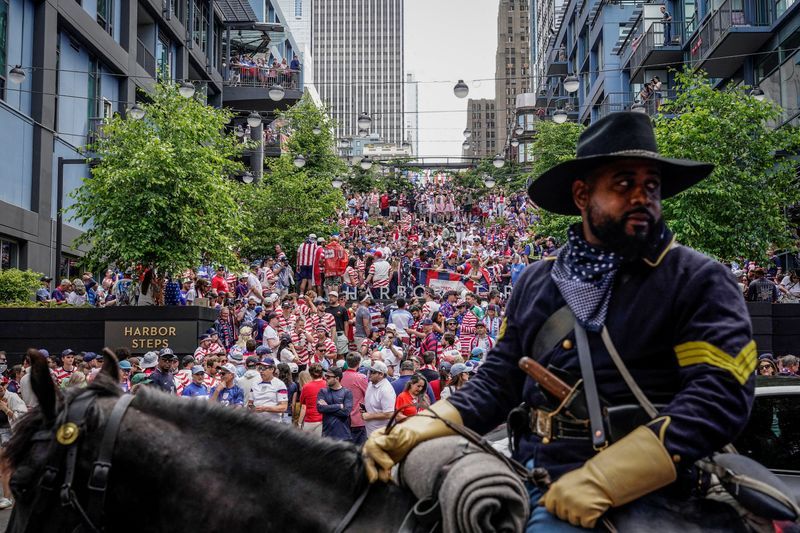
The 2026 FIFA World Cup has brought the world's most watched sport to 16 cities spread across North America, creating a sprawling festival of football that extends far beyond the pitch. Reuters photographers embedded in every training camp and match venue have documented how the tournament is reshaping communities, fostering unexpected friendships, and bringing dormant sports culture to life in cities where soccer once remained on the margins.
Mexico City's relationship with the World Cup runs deeper than mere hosting duties. The legendary Estadio Azteca has witnessed some of football's greatest moments, including two World Cup finals, yet the tournament's true spirit emerges in the city's neighbourhoods, where residents have fundamentally restructured their urban geography to create spaces for the beautiful game. Photography reveals that passion for football permeates not just the famous stadium but the entire metropolitan fabric, with communities large and small treating soccer as an essential element of their identity.
Westbound from the capital, Guadalajara carries its own World Cup mythology. The city's older residents still speak of Pelé's 1970 visit with reverence, and the recent unveiling of a statue honouring the Brazilian legend has reinforced that connection. During the tournament, something remarkable occurred in the streets and fan zones: Colombian and Mexican supporters transcended national rivalry. What began as cordial exchanges between rival fan bases evolved into genuine camaraderie, with supporters attending each other's celebrations and matches, demonstrating that football's deeper power lies in its ability to unite rather than divide.
Monterrey exemplifies how Mexican cities have woven soccer into their everyday culture. The tournament merely amplified what already existed—backyard gatherings where families grill meat and share cold beers while debating tactics, or crowded bars where strangers become momentary teammates through their collective passion. The World Cup arrived to find fertile ground already prepared by generations of devotion.
Miami presents a different narrative. With its substantial Latin American population, the tournament feels less like an invasion of international football culture and more like a natural continuation of the city's existing identity. The oppressive Florida heat and humidity have tested visiting fans accustomed to different climates, yet the enthusiasm remains undimmed. The city's pre-existing multicultural fabric means World Cup supporters find themselves among communities already fluent in their languages and traditions.
Texas has embraced the tournament with the characteristic expansiveness its reputation suggests. Everything operates on a grander scale—from the towering stadiums and sprawling highways to the generous portions of barbecue that sustain fans through long days of matches. Mexican-shirted supporters have become ubiquitous, yet importantly, they express willingness to support visiting nations when Mexico is not playing, revealing a sophistication about international sport that defies stereotypes about tribal sports loyalty. In Austin, Argentina's matches drew packed, emotionally invested crowds. The presence of Lionel Messi attempting to break the men's World Cup scoring record created moments of electric atmosphere that will linger in memory long after final whistles have blown.
Atlanta's Mercedes-Benz Stadium, with its engineering marvel of a retractable roof and unconventional set-back seating, might seem architecturally at odds with traditional football stadiums, yet the atmosphere generated within its walls has proven intensely palpable. The dedicated fan zone remains perpetually crowded, neighbourhood restaurants have become informal viewing centres, and local businesses report thriving commerce as the tournament pumps money through the local economy. This economic dimension often receives less attention than sporting drama, yet it represents how World Cups reshape urban prosperity.
Los Angeles, a city perpetually fragmented by sprawl and automobile culture, has experienced an unexpected transformation. The World Cup has drawn residents and visitors from their isolated cars and climate-controlled homes into shared street spaces. The various diaspora communities—Iranians, South Koreans, Mexicans and others—have used football as a vehicle for public cultural expression, creating visible celebrations of heritage in ways that contrast sharply with the often guarded, invisible existence of immigrant communities during periods of restrictive migration rhetoric. This cultural exchange represents football at its most democratically vital.
San Francisco has witnessed similar patterns. The city's immigrant communities have seized the tournament as an opportunity to celebrate their ancestral nations with flags, traditional food, and native languages displayed proudly. Photographer Carlos Barria observes that these public celebrations carry particular significance given recent shifts in U.S. immigration policy that have created anxious climates in many communities. Simultaneously, American citizens encounter cultures they might never otherwise experience, a mutual education that football uniquely facilitates by removing the barriers between observer and participant.
Kansas City, straddling the border between Kansas and Missouri, demonstrates how soccer has claimed its place alongside America's traditional sports trinity of baseball and American football. The city's sports-saturated culture welcomes the World Cup not as an outsider but as another chapter in its sporting narrative. The overwhelmingly positive atmosphere reflects a population enjoying the simple pleasure of gathering together, transcending the everyday and celebrating athletic excellence regardless of its national origin.
Philadelphia presents a curious counterpoint. Unlike many host cities where the tournament pervades public consciousness continuously, Philadelphia's World Cup atmosphere concentrates geographically and temporally—primarily on match days and in stadium environs. This difference highlights how American sports culture compartmentalises major events, contrasting sharply with nations where football tournaments saturate daily conversation and public space for months. For photographers accustomed to football-dominated atmospheres in other continents, this American restraint offers an intriguing cultural observation.
New York amplified its characteristic chaos during the tournament, with Norwegian fans performing their legendary Viking row and Latin American supporters staging elaborate pre-match processions through Times Square. Coincidentally, the Knicks captured their first NBA championship in over five decades during the same window, colliding two major sporting narratives in a city that genuinely never surrenders its appetite for celebration and spectacle. The city's infinite capacity for simultaneous major events reveals how deeply sports culture permeates its identity.
Boston presented a homecoming opportunity for photographer Brian Snyder, who worked the last American World Cup in 1994. The difference across three decades is striking—the 2026 tournament has drawn exponentially larger crowds than its predecessor. Beyond the well-publicised embrace of Scotland's Tartan Army, Boston's diaspora communities—Haitians, Moroccans, Cape Verdeans—have emerged from the background to support their nations publicly. This generational shift suggests changing comfort levels among immigrant communities in expressing their heritage, potentially reflecting both demographic changes and evolving attitudes toward multiculturalism.
Toronto offered unexpected wildlife drama when photographer Bernadett Szabo encountered a family of falcons nesting at the stadium, a reminder that sports events unfold within ecosystems that operate according to their own logic. Vancouver, conversely, has declined to fully surrender itself to World Cup atmosphere. The Pacific Northwest city maintains a measured distance from tournament enthusiasm, with visible signs of football remaining scarce despite the venue's official status. This resistance to what has become expected behaviour in other North American cities underscores how differently communities can experience the same global event, shaped by local culture and values.
Seattle completes the photographic tour with festive streets near the stadium. The Pacific Northwest city embraced the tournament as a comprehensive entertainment experience, with spectators dressing in national colours and abundant concession infrastructure ensuring physical comfort during extended outdoor celebration. This approach reflects broader American cultural attitudes toward sport as entertainment product requiring complete sensory engagement. From Mexico City's passionate neighbourhoods to Vancouver's measured restraint, the 2026 World Cup has revealed how a single global event manifests differently across geographies shaped by history, migration patterns, and local values.

