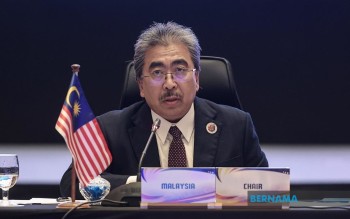
The World Trade Organization stands at a crossroads and must fundamentally reimagine its role to avoid becoming obsolete in an era dominated by strategic competition and supply chain vulnerabilities, according to Investment, Trade and Industry Minister Datuk Seri Johari Abdul Ghani. Speaking at the 39th Asia-Pacific Roundtable in Kuala Lumpur on June 30, Johari outlined how the multilateral institution was designed for a bygone era of trade liberalisation but now faces pressure to address an entirely different set of global economic concerns that occupy policymakers' minds.
The WTO's original mandate emerged during a period when conventional economic wisdom held that progressively dismantling trade barriers and opening market access would reliably generate prosperity and foster international peace through commercial interdependence. That foundational philosophy shaped the organisation's architecture and priorities for decades. However, Johari emphasised that the contemporary international environment has shifted so dramatically that the WTO's core frameworks no longer adequately capture what governments now consider essential to their economic wellbeing and national interests.
In his keynote address to the conference, Johari articulated how modern economic policymaking has become dominated by entirely different preoccupations than those that motivated trade liberalisation advocates in previous generations. Today's strategic calculations increasingly revolve around building resilience into economic systems, achieving technological leadership in critical sectors, securing supply chains from geopolitical disruption, and maintaining strategic autonomy in decision-making. These concerns often pull policymakers in directions contrary to the unrestricted market access paradigm that the WTO was established to promote.
The shift in priority from market opening to strategic protection represents a fundamental reframing of how nations approach international trade. Johari pointed out that the contemporary policy debate no longer centers on whether countries should lower tariffs and quotas, but rather on how governments ought to safeguard capabilities and technologies deemed strategically vital to national security and economic independence. This doctrinal realignment has profound implications for an institution structured around the principle of non-discriminatory trade rules and dispute resolution mechanisms designed for conventional commercial conflicts.
Without meaningful evolution, Johari warned, the WTO faces a genuine risk of declining relevance as nations pursue alternative frameworks and bilateral arrangements that better accommodate their strategic objectives. The proliferation of regional agreements, sectoral partnerships, and supply chain diversification initiatives already suggests that countries are working around the multilateral system rather than through it. This fragmentation threatens to undermine the rules-based order that the WTO represents.
Yet Johari simultaneously argued that credible multilateral rules have become more critical than ever, not less. In an era of intensifying geopolitical rivalry and competition between major powers, international institutions capable of managing disputes, reducing uncertainty, and establishing transparent frameworks become essential mechanisms for preventing economic tensions from metastasising into broader conflicts. The challenge therefore lies not in diminishing the WTO's importance but in fundamentally reconceiving its architecture to encompass contemporary concerns while preserving its capacity to maintain order.
The minister articulated a vision in which the WTO evolves to address discriminatory trade practices wherever they emerge, regardless of whether those practices manifest as traditional protectionism or newer forms of strategic economic leverage. Such adaptation would require the organisation to develop frameworks for managing competition over supply chain dominance, technological standards, and critical infrastructure without abandoning the principle of rules-based multilateralism that distinguishes it from purely bilateral power politics.
Malaysia's position reflects the particular vulnerabilities of Southeast Asian nations to major power competition and supply chain disruption. As a trading nation deeply integrated into regional and global value chains, Malaysia has strong incentives to maintain a functioning multilateral system while simultaneously securing its economic resilience against external shocks. This balancing act mirrors the challenge facing the WTO itself: how to adapt to contemporary realities without losing its foundational purpose of providing stable, predictable rules for international commerce.
Johari reiterated Malaysia's commitment to the multilateral trading system whilst asserting that the system itself must transform to remain fit for contemporary purposes. This formulation acknowledges both the costs of abandoning multilateralism and the inadequacy of preserving it in its current form. The challenge for the WTO in coming years will be translating such calls for reform into concrete institutional changes that member states can actually agree upon, particularly as major powers pursue divergent strategic objectives.
The 39th Asia-Pacific Roundtable, organised by the Institute of Strategic and International Studies Malaysia and themed "Accelerating Agency and Action", brought together policymakers, diplomats, military officials, academics, and business leaders from June 30 to July 2, 2026, to examine pressing geopolitical, economic and security issues confronting the Asia-Pacific region. Johari's remarks at this premier forum underscored how trade governance has become inseparable from broader strategic considerations that will shape regional stability and prosperity.

