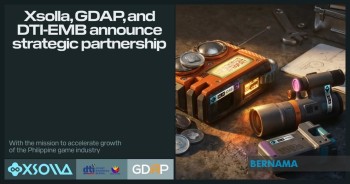
The Philippine video game development industry is gaining momentum on the global stage, with international players recognising the nation's potential as a creative and commercial hub. Xsolla, a leading global platform for video game commerce and monetisation, has formalised this commitment by signing a strategic memorandum of understanding with the Game Developers Association of the Philippines (GDAP) and the Department of Trade and Industry's Export Marketing Bureau (DTI-EMB). The three-way partnership represents a significant convergence of private sector expertise, industry representation and government support—a combination increasingly viewed as essential for emerging markets seeking to compete internationally in the gaming sector.
The collaboration reflects a broader regional trend where Southeast Asian nations are investing heavily in their creative industries as engines for economic growth and technological advancement. The Philippines, in particular, possesses several attributes that have caught the attention of global investors: a young, tech-savvy population with strong gaming engagement, a substantial pool of creative talent, and government policies increasingly supportive of digital export industries. Xsolla's presence in the partnership brings access to a global payment and monetisation infrastructure that many Filipino developers currently lack, addressing a critical gap between creative capability and commercial viability.
Xsolla President Chris Hewish's statement emphasising the Philippines as one of Southeast Asia's most promising game development markets underscores a shift in industry perception. Historically, markets like South Korea, Japan and Thailand have dominated Southeast Asian game development narratives. The Philippines' emergence signals that regional leadership in gaming is becoming more distributed, with countries like the Philippines developing competitive advantages through lower development costs, English-language proficiency and a culturally diverse talent base capable of creating games with global appeal.
The structured approach outlined in the partnership—including mentorship programmes, capability-building workshops and one-on-one coaching—addresses a critical need in the Philippine market. Many aspiring game developers possess technical skills and creative vision but lack knowledge of international publishing pathways, monetisation strategies and the business frameworks necessary for commercial success. By providing this institutional knowledge, the partnership effectively shortens the learning curve that Filipino studios would otherwise navigate independently, accelerating their time to market competitiveness.
The mentorship initiatives are designed with deliberate inclusivity, targeting developers across the entire spectrum of maturity—from solo indie creators to established studios seeking international expansion. This multi-tier approach recognises that the Philippine gaming ecosystem's strength depends not only on producing standout commercial successes but on building a broad base of sustainable, growing studios that can collectively establish the country as a reliable source of quality game development. Such ecosystem-building efforts typically yield stronger long-term outcomes than initiatives focusing solely on high-profile projects.
International visibility represents another crucial element of the partnership. Xsolla's participation means Philippine-developed games gain exposure through a platform already embedded in the workflows of global publishers and distribution networks. Meanwhile, coordinated marketing activities and industry events promoted through GDAP and DTI-EMB channels position the Philippines itself as a gaming destination—attracting not only overseas investment but also opportunities for knowledge transfer and talent recruitment from other markets. This positioning matters significantly in sectors like game development, where perception directly influences investment flows and business partnerships.
The role of DTI-EMB in this partnership deserves particular attention. Government agencies responsible for export promotion have historically focused on manufacturing and agricultural sectors. The inclusion of DTI-EMB signals official recognition that the digital creative industries merit the same policy support and export promotion resources as traditional exportable goods. For Malaysia and other Southeast Asian nations monitoring competitive dynamics, the Philippines' move underscores the importance of dedicated government support for creative economy sectors—support that extends beyond rhetoric to concrete institutional involvement.
The commerce infrastructure component addresses a frequently overlooked but essential dimension of game industry development. Without access to payment processing systems, anti-fraud mechanisms, regional currency support and localisation tools, even technically excellent games struggle in global markets. Xsolla's contribution fills this infrastructure gap, enabling Filipino developers to launch games with the same commercial sophistication as studios in more developed markets. This capability-levelling effect is precisely why such partnerships attract international platforms willing to invest effort in emerging markets.
Regional implications warrant consideration. As the Philippines strengthens its gaming ecosystem, neighbouring markets including Malaysia may experience increased competition for game development talent and investment capital. However, the partnership also creates opportunities for cross-border collaboration, outsourcing relationships and regional specialisation. Malaysian studios might partner with Filipino counterparts for development work, or vice versa, leveraging each nation's comparative advantages. The rising tide of Southeast Asian game industry growth—driven by initiatives like this partnership—potentially benefits the entire region through expanded investment, better infrastructure and increased international attention.
The timing of this announcement reflects broader post-pandemic trends in the gaming industry. Global game publishers and investors are actively seeking to diversify their development pipelines and reduce geographical concentration risk. Southeast Asia's combination of growing creative talent, lower costs and expanding digital infrastructure makes the region increasingly attractive. The Philippines' deliberate positioning through the Xsolla partnership ensures it captures a meaningful share of this diversification movement.
Looking forward, the success of this initiative will depend on sustained commitment from all three parties and measurable outcomes. Key performance indicators might include the number of developers trained, games successfully published through Xsolla's platform, export revenues generated, and international recognition gained by Philippine studios. If the partnership delivers on these fronts, it could serve as a template for similar arrangements in other Southeast Asian countries seeking to accelerate their gaming sector development. The model—combining platform access, industry association coordination and government export support—addresses fundamental challenges that virtually every emerging market gaming ecosystem faces.

