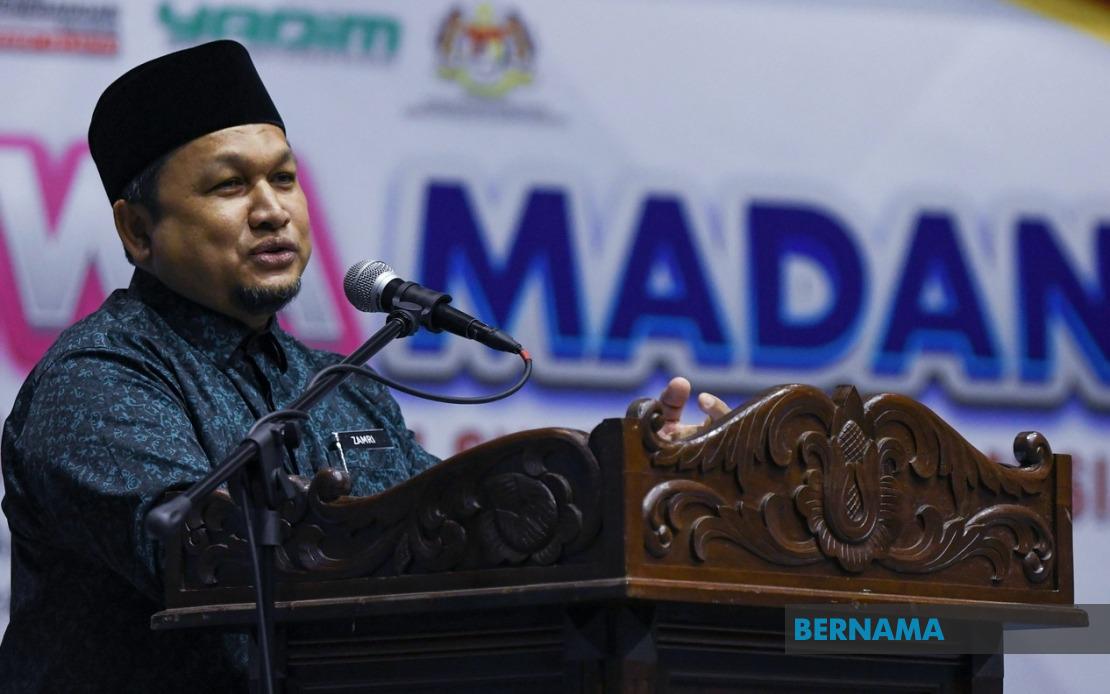
The Islamic Dakwah Foundation of Malaysia (YADIM) has expressed strong backing for the government's initiative to establish a formal accreditation framework governing religious teachers and speakers who operate across online platforms and social media. The proposal, which was recently unveiled by the Minister in the Prime Minister's Department (Religious Affairs) Dr Zulkifli Hasan, represents an effort to safeguard the integrity of Islamic instruction in the digital realm, where millions of Malaysians now turn for religious guidance and knowledge.
According to YADIM's chief executive officer Zamri Zainal Abidin, the measure should be understood as a protective step rather than a restrictive one. The foundation contends that establishing clear credibility standards would strengthen public confidence in religious messaging while simultaneously protecting young people and other vulnerable audiences from exposure to unverified or distorted religious information. Digital platforms have become the primary channel through which many Malaysians, particularly those in younger demographics, encounter religious content, making the quality and accuracy of such material increasingly consequential.
The core challenge that the accreditation framework seeks to address reflects a fundamental problem in the digital age: the democratization of religious instruction has created an environment where virtually anyone can present themselves as a qualified preacher or religious scholar without demonstrating formal training, theological grounding, or institutional accountability. This situation has proliferated across Facebook, Instagram, TikTok, YouTube, and other platforms where religious content circulates rapidly and reaches vast audiences with minimal verification mechanisms. The absence of quality control mechanisms has created opportunities for misinformation, theological distortion, and the exploitation of believers who place trust in these self-proclaimed authorities.
Zamri emphasized that YADIM's endorsement stems from the organization's own institutional experience with credentialing religious personnel. The foundation has long maintained its own accreditation processes for preachers trained through its programs, including those participating in its Daie Muda scheme, which receives formal recognition from the Federal Territories Mufti Department. This existing infrastructure positions YADIM as a natural institutional partner for implementing any nationwide accreditation system, leveraging expertise already embedded within its operations and networks.
The timing of this initiative reflects broader regional concerns about religious misinformation and the vulnerability of digital audiences to unverified teachings. Across Southeast Asia, governments and religious institutions have grappled with similar challenges as social media has disrupted traditional gatekeeping mechanisms within religious communities. Malaysia's proposal represents a relatively structured approach to this problem, emphasizing credentialing rather than censorship, though the practical implementation will likely prove complex given the borderless nature of digital content and the technical challenges of monitoring compliance.
For Malaysian readers and policymakers, the initiative carries implications beyond religious affairs. The question of how governments can establish quality standards for professional expertise in the digital sphere—whether in religious instruction, health advice, or other sensitive domains—has become increasingly urgent. Malaysia's approach could offer lessons or cautionary examples for other jurisdictions wrestling with similar concerns about misinformation and professional credibility in the digital age.
Zamri's statement carefully framed the accreditation proposal as complementary to, rather than obstructive of, genuine dakwah activities. He argued that sincere individuals motivated by authentic religious knowledge would not face barriers from such a framework, suggesting that the policy targets those lacking proper theological foundation rather than suppressing legitimate religious expression. This framing attempts to preempt concerns from religious educators and activists who might perceive accreditation as government overreach into religious spaces.
The proposal also addresses generational concerns about religious literacy. As older institutional structures like mosque-based Islamic education have been supplemented or sometimes supplanted by digital alternatives, questions have arisen about whether younger Malaysians are receiving instruction from qualified sources. By establishing credibility standards for online preachers, the government aims to ensure that this critical knowledge transmission occurs under comparable quality standards to more traditional institutional frameworks.
Implementation challenges will likely be substantial. Defining which speakers require accreditation, establishing transparent evaluation criteria, determining which bodies will conduct assessments, and ensuring cross-border coordination remain open questions. The proposal will also need to balance religious freedom considerations with consumer protection concerns, a tension that has animated similar debates in multiple democracies.
YADIM's proactive backing suggests at least one major Islamic institution views the accreditation framework as aligned with institutional interests and broader religious objectives. The foundation's willingness to position itself as a implementing partner indicates confidence that the framework will not fundamentally undermine existing institutions or create competitive disadvantages for formally credentialed religious teachers. However, reception from independent preachers, smaller Islamic groups, and civil society organizations monitoring religious freedom may prove more complex and contested.

