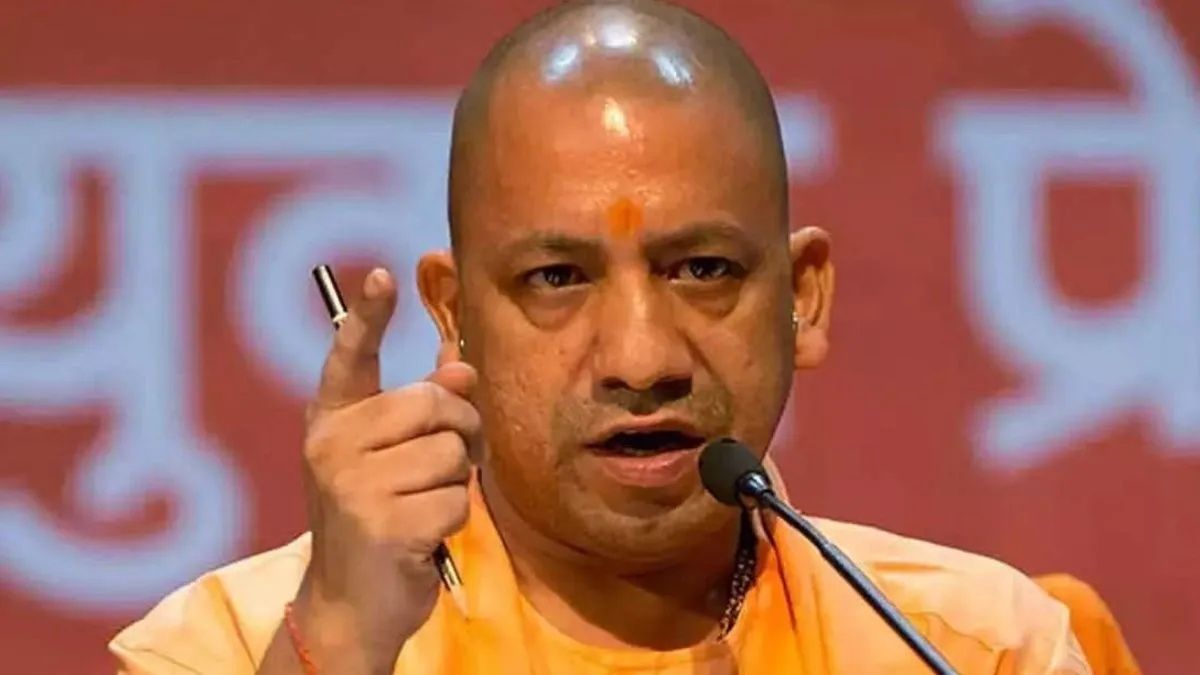
Uttar Pradesh Chief Minister Yogi Adityanath has vowed to pursue swift and decisive action in the Shri Ram Janmabhoomi Teerth Kshetra donation case after a first information report was registered, declaring that attempts to tamper with people's religious convictions will not be permitted. Speaking at a public event in Deoria on Friday, the Chief Minister emphasized the government's commitment to separating fact from fiction in the matter, while positioning the controversy within a broader political framework that pits his administration against opposition parties he accused of historical hostility towards Hindu religious sentiments.
The donation theft case has become a lightning rod for political messaging in India's most populous state, with Yogi framing the investigation as a test of governmental resolve to protect religious integrity. He revealed that a Special Investigation Team report had prompted immediate government intervention, signaling that the administrative machinery was already in motion to address the allegations. The Chief Minister's statements suggest that a comprehensive inquiry is underway, though he stopped short of providing specific details about the alleged theft or the individuals under investigation, maintaining an approach that combines administrative transparency with political messaging.
Ayodhya, the location of the newly consecrated Ram Temple, holds immense significance in Indian Hindu tradition and politics. Yogi emphasized that the city represents not merely a religious site but a symbol of India's broader spiritual heritage, framing any scandal involving the temple as an assault on national identity. This rhetorical positioning transforms what might otherwise be viewed as a routine financial irregularity or criminal matter into a question of national pride and religious respect, effectively broadening the scope of the controversy beyond institutional mismanagement to encompass larger cultural and political narratives.
During his June 19 visit to Ayodhya, Yogi had already signaled that impropriety would be investigated thoroughly once the SIT findings were available. His Friday statements represented a follow-through on that promise, though critics might note that the framing of the investigation has become increasingly politicized, with the Chief Minister using the platform to attack opposition parties rather than focusing exclusively on the facts of the case itself. This dual approach—simultaneous emphasis on impartial investigation and sharp political criticism—characterizes much of contemporary Indian governance at the state level.
The Chief Minister's remarks targeted both the Indian National Congress and the Samajwadi Party, accusations grounded in longstanding disputes over religious matters and temple politics. Yogi alleged that Congress had historically denied the historical existence of Lord Ram, a reference to intellectual debates about archaeological and textual evidence that have long animated Indian political discourse. He further claimed that these parties had obstructed the Ram Janmabhoomi movement through legal challenges and had opposed temple construction efforts, characterizing such opposition as evidence of fundamental hostility to Hindu religious aspirations.
Yogi's invocation of past communal incidents and administrative decisions attributed to previous Samajwadi Party governments added layers of historical grievance to his current statements. He referenced the firing on Ram chant devotees, restrictions on Krishna Janmastami celebrations, limitations on the Kanwar Yatra pilgrimage, and obstacles to Durga Puja festivities, along with the Lar riot. These recitations functioned not merely as historical record but as rhetorical ammunition establishing a pattern of alleged religious discrimination that, in Yogi's narrative, validated the current government's approach to Hindu religious matters.
The Chief Minister's portrayal of his own government as corrective represented a sharp departure from the approaches of previous administrations. He characterized his regime as having ended what he termed the "plunder" associated with Samajwadi Party rule, effectively tying opposition to financial corruption and bureaucratic inefficiency. This conflation of administrative performance with religious sensibility allowed Yogi to position support for his government not merely as a political choice but as a defense of faith and public morality.
For Malaysian readers and broader Southeast Asian observers, the incident illuminates how religious narratives intersect with governance in India's political ecosystem. The Ram Temple itself represents not only architectural achievement but also the culmination of a decades-long political mobilization that restructured Indian electoral patterns and communal dynamics. The donation theft case, however minor the actual financial irregularities may prove, becomes absorbed into this larger narrative of Hindu assertion and what supporters characterize as correction of historical injustices.
Yogi's appeal to Ram devotees to refrain from testing his government's patience carried implicit warnings against destabilization while simultaneously defending against anticipated criticism. His insistence that opposition parties cease making allegations unless armed with concrete evidence reflected a desire to constrain the political terrain surrounding the investigation, preventing the matter from becoming a sustained focus of parliamentary or media scrutiny that might prove embarrassing to the administration.
The Chief Minister's framing of the investigation as requiring political restraint while simultaneously making highly charged political statements revealed an apparent contradiction that observers might puzzle over. He called for a pause in political commentary while his own remarks constituted precisely such commentary, suggesting that his appeal was directed selectively at critics rather than representing a blanket call for restraint across all quarters.
The Special Investigation Team's work will now proceed under considerable political scrutiny, with outcomes potentially interpreted through partisan lenses regardless of factual findings. Whether the investigation uncovers systematic theft, administrative negligence, or minor procedural irregularities, the conclusions will be assessed against the larger political messaging that has already begun to frame the case as emblematic of broader conflicts over religious authority and national identity.
For Uttar Pradesh governance and Hindu-Muslim relations across India, the episode demonstrates how institutional investigations become vehicles for political signaling. The Chief Minister's repeated assurances about separating truth from falsehood suggested confidence in whatever findings might emerge, implying that the investigation would vindicate his government's administrative capacity and religious commitment, whatever specific culprits or circumstances the SIT ultimately identifies.

