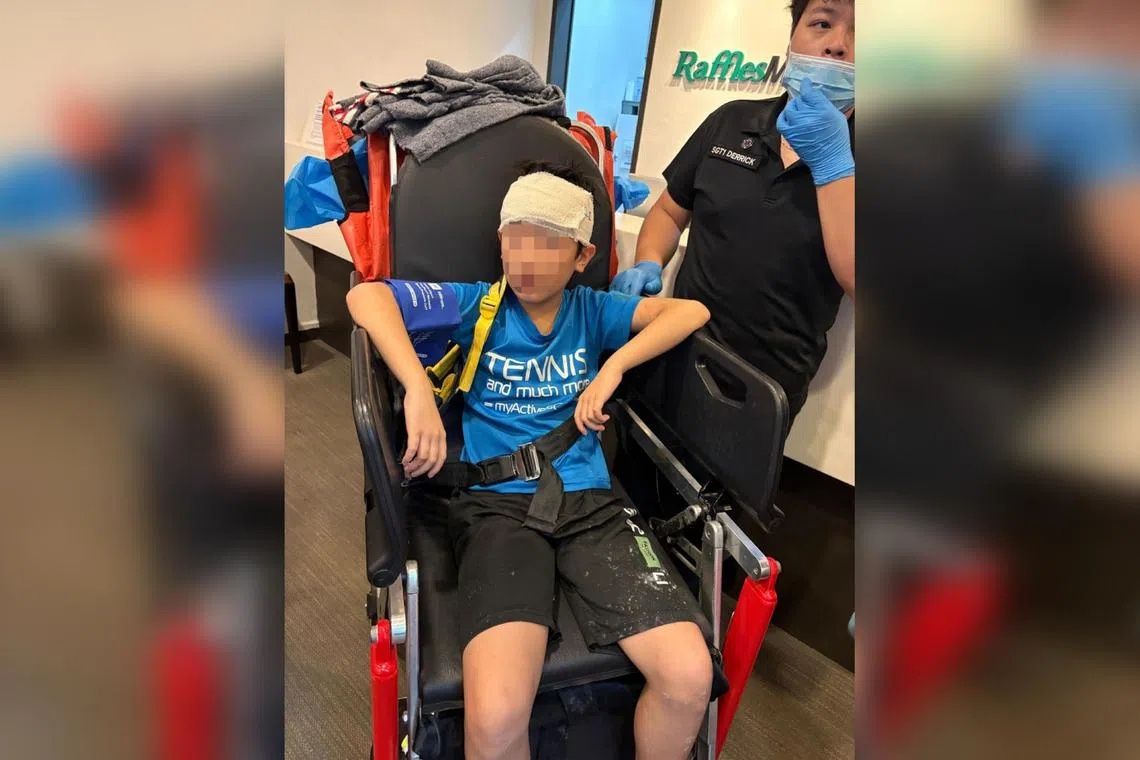
A young boy required hospital treatment after a signboard gave way at a Food Junction restaurant located within Singapore's Rivervale Mall in Sengkang on Saturday, June 20. The Singapore Civil Defence Force responded to an emergency call at approximately 10.30am, transporting the injured child to KK Women's and Children's hospital for medical evaluation and treatment following the structural failure.
The incident has raised questions about safety standards in retail dining establishments across the region. Signboard collapses, while uncommon, represent a significant public safety hazard in busy shopping environments where children and elderly patrons frequently gather. The Rivervale Mall outlet operates on the ground floor, where foot traffic is typically highest, making the incident particularly concerning for mall management and food service operators who share responsibility for customer safety.
Food Junction's management acknowledged the accident promptly, with a company spokesperson confirming awareness of the incident and commending their team's immediate response. The outlet's staff coordinated with both mall authorities and emergency personnel to assist the affected customer. Following initial hospital assessment, the child was discharged to recuperate at home, suggesting injuries were not severe, though the full extent of harm was not disclosed publicly.
The incident triggered a comprehensive safety review at the affected outlet. Food Junction stated that following complete investigation into the root cause of the signboard's failure, they have implemented reinforced safety protocols in accordance with relevant regulatory bodies. This reactive approach is standard in Singapore's retail sector, though it raises broader questions about preventive maintenance schedules and periodic structural inspections that may have prevented the collapse entirely.
Social media footage distributed via TikTok captured the aftermath, showing substantial debris scattered across the entrance to the Food Junction location. The video documentation reveals that while the signboard collapsed completely, portions of the ceiling structure remained partially intact, allowing bystanders to maintain safe distance from the fallen materials. Such visual evidence serves as both documentation of the incident and a reminder of workplace safety concerns in high-traffic commercial venues.
Operations at the foodcourt resumed following the incident, with Food Junction apologising for the disruption and distress caused to customers. The swift return to normal service reflects the mall's confidence in remedial measures, though it also underscores the pressure on hospitality businesses to minimise operational downtime following safety incidents. For Malaysian readers, this incident mirrors concerns about mall maintenance standards and liability frameworks in Southeast Asian shopping centres, where rapid expansion has sometimes outpaced rigorous safety oversight.
The Building and Construction Authority in Singapore has been engaged to investigate the structural failure, representing the regulatory response typical of Singapore's well-established safety protocols. Such involvement ensures that engineering standards and maintenance practices are scrutinised, with findings potentially informing broader industry guidelines. This level of regulatory engagement contrasts with practices in some other regional markets, though increasingly, Malaysian shopping malls and food establishments are adopting comparable standards as consciousness of liability and consumer protection grows.
Rivervale Mall's management has cooperated with authorities investigating the signboard collapse, working alongside emergency responders and the affected restaurant operator to understand how the incident occurred and what preventive measures should be implemented. The mall's willingness to facilitate investigation demonstrates recognition that public confidence in shopping centre safety depends on transparent, thorough responses to structural failures.
For foodcourt operators across Southeast Asia, the incident serves as a cautionary reminder that signage infrastructure requires regular inspection and maintenance despite its apparent permanence. Many establishments prioritise aesthetic updates and menu displays while potentially neglecting the structural integrity of mounting systems, anchoring points, and load-bearing capacity of signs, particularly in high-humidity climates where corrosion and material degradation accelerate. Malaysian mall operators, food service managers, and building authorities might view this Singapore incident as a prompt to audit their own signage safety protocols and maintenance schedules.
The incident also highlights the importance of incident reporting and transparency in maintaining public trust in commercial establishments. The rapid confirmation of details by Food Junction and emergency authorities, combined with operational recovery and safety reinforcement, demonstrates crisis management practices that retail operators throughout the region would be wise to emulate. As consumer awareness of safety standards continues rising across Malaysia and Singapore, establishments that demonstrate proactive safety commitment gain competitive advantages alongside peace of mind for patrons and staff.
While the immediate incident has concluded with the child's recovery and operational resumption, the broader implications for building maintenance culture in Southeast Asian retail spaces remain significant. This event represents an opportunity for industry-wide reflection on preventive maintenance standards, employee training in safety hazard identification, and the establishment of regular inspection schedules that might prevent similar incidents from occurring at other locations across the region.