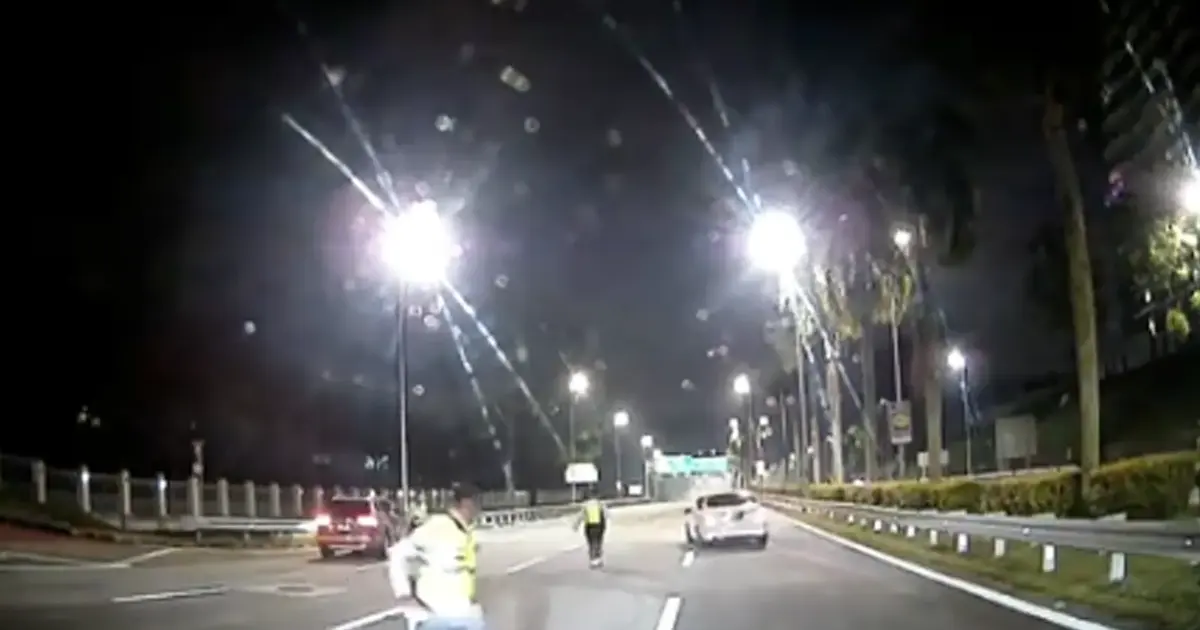
A 20-year-old motorist operating a Mercedes has been taken into custody following his refusal to stop at a police roadblock, marking another instance of dangerous driving behaviour on Malaysian roads. The arrest came after the driver, displaying signs of nervousness according to officers on scene, accelerated through the checkpoint rather than submitting to a routine vehicle and document inspection.
The detained individual now faces charges related to failing to obey lawful directives issued by a police officer in the course of their official duties. This particular offence carries significant legal consequences, reflecting the seriousness with which authorities treat deliberate non-compliance with road enforcement measures. The circumstances of the incident—in which the driver deliberately chose to breach the roadblock—suggest either panic or a calculated attempt to avoid detection for a potential traffic violation or vehicle irregularity.
Roadblocks remain a critical tool in Malaysia's traffic management and law enforcement strategy, particularly in combating dangerous driving practices, vehicle maintenance violations, and ensuring documentation compliance. When drivers circumvent these checkpoints, they undermine public safety measures designed to protect all road users. The increasing number of incidents involving drivers refusing to stop at lawful enforcement points has become a concern for the Royal Malaysia Police, who must balance swift response protocols with community safety.
The apparent nervousness displayed by the driver raises questions about what prompted such a risky manoeuvre. Whether the individual feared exposure of uninsured or unregistered vehicle status, or possessed other contraband or documents of concern, the decision to force through a manned checkpoint demonstrates either poor judgment or deliberate defiance of authority. Such behaviour places not only the driver but also police officers and other road users at immediate risk of collision or accident.
This arrest underscores the persistent challenge Malaysian law enforcement faces in ensuring full public compliance with traffic regulations and roadside checks. Despite ongoing awareness campaigns and penalties, some drivers continue to attempt evasion rather than face potential fines or administrative procedures. The incident also highlights the physical and psychological demands placed on police officers who must make split-second safety decisions when confronted with an approaching vehicle refusing to stop.
The legal framework governing such offences provides authorities with adequate tools to prosecute non-compliance cases. However, the frequency of such incidents suggests that existing deterrents may not sufficiently discourage the behaviour among younger or more reckless drivers. The 20-year-old's age places him within a demographic that insurance statistics and crash data consistently identify as higher-risk for traffic violations and dangerous driving behaviours.
From a procedural standpoint, the arrest represents standard police protocol when a driver fails to comply with enforcement directives. Officers are trained to document such incidents thoroughly, gather witness statements, and ensure appropriate charges are filed. This case will likely proceed through the magistrate's court system, where the prosecution must establish that a lawful order was issued and deliberately disobeyed.
The broader implications for road safety in Malaysia are noteworthy. Roadblocks serve multiple enforcement functions simultaneously—detecting drink-driving, verifying insurance and road tax compliance, identifying stolen vehicles, and conducting safety equipment checks. When drivers bypass these checkpoints, they effectively nullify these protective mechanisms. Encouraging greater compliance through both deterrence and public education remains essential for authorities seeking to reduce road fatalities and injuries.
Forces across the country have increased roadblock frequency in recent years, particularly following traffic fatality statistics that consistently place Malaysia among the higher-casualty nations in the region. These checkpoint operations represent preventive intervention, catching violations before they contribute to serious accidents. The resistance encountered at some checkpoints reflects a small but significant minority of drivers who view enforcement as an inconvenience rather than a public health measure.
Looking forward, this arrest may serve as a cautionary example to other motorists tempted to evade police checkpoints. The legal consequences for non-compliance extend beyond immediate fines, potentially resulting in criminal charges that carry court appearances, legal fees, and a criminal record affecting insurance premiums and future driving privileges. Education campaigns might emphasize these long-term consequences alongside the immediate safety risks posed by high-speed checkpoint breaches.
The investigation into the specific circumstances of this incident will determine whether additional charges might apply. Depending on what authorities discover during their examination of the vehicle and the driver's records, the case could expand beyond simple non-compliance to encompass other traffic or criminal violations. The complete picture will emerge through the court process, providing greater clarity on the driver's motivations and any underlying factors that contributed to the decision to force through the roadblock.

