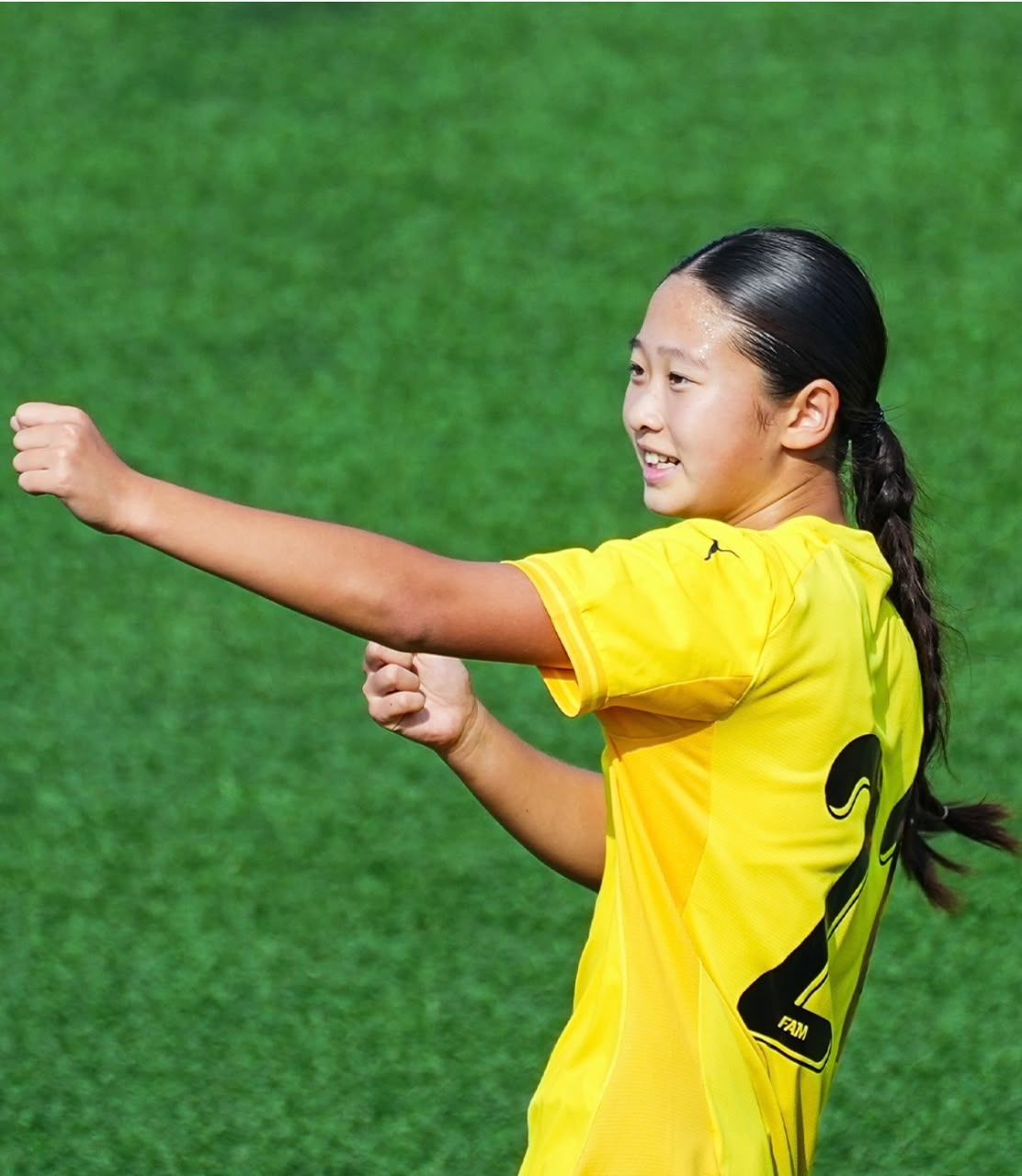
Lim You announced herself to Malaysian football with a striking performance that will linger in the memory of observers and teammates alike. The 14-year-old netted all seven goals in the Malayan Tigress Under-17 squad's commanding 9-0 victory over Saudi Arabia during Group A play at the 2026 Srikandi Merdeka Cup held in Kudus, Indonesia on Tuesday. Every one of her goals came from her favoured left foot, a specialised weapon that has been painstakingly developed since her childhood under the guidance of her father, who recognised early the tactical advantage of nurturing a left-footed player in a sport where such players remain relatively uncommon.
The strategic development of her left-foot technique speaks to a broader understanding within her family about what creates distinctive value in football. Her father identified the potential rarity of left-footed players and invested considerable time in honing this attribute, viewing it not merely as a technique but as a foundational competitive advantage. Speaking to reporters during a virtual press conference conducted by the Football Association of Malaysia, Lim You acknowledged this paternal influence while expressing gratitude for her teammates' contributions to her scoring feast. She demonstrated maturity beyond her years in deflecting sole credit, emphasising that her teammates created the opportunities that allowed her to finish plays effectively. This collaborative perspective suggests a young player already developing the team-oriented mindset essential for sustained international success.
The teenager's journey to this milestone reflects an intriguing geography of Malaysian football talent development. Born in Taiwan and raised in the United States, where she currently resides in Washington, Lim You maintains robust family connections to Malaysia through her parents, who were born and raised in Johor. These ancestral ties form the basis of her eligibility to represent the national squad, and she actively nurtures these relationships, returning to Malaysia every two to four years to visit relatives scattered across Johor and Kuala Lumpur. Her cross-border background positions her within a growing cohort of Malaysian-heritage players developed abroad who increasingly feature in the national programme, bringing international training exposure and diverse tactical experiences to local squads.
The specific timing and manner of her goals underscores her composure and consistency throughout the contest. Lim You found the net in the eighth minute to set the early tone, then struck again in the 22nd and 27th minutes, establishing complete dominance by the match's halfway point. She continued her relentless momentum in the second period, scoring in the 57th minute before adding a penalty conversion in the 75th minute. Her final two goals came in quick succession during the closing stages, in the 83rd and 85th minutes respectively, demonstrating that her focus never wavered even as the contest became a procession. This distribution of goals across both halves reveals both a player operating at peak efficiency and opponents struggling to devise effective defensive countermeasures.
Despite the magnitude of her personal achievement, Lim You candidly acknowledged the psychological pressures accompanying sudden prominence. She admitted to feeling some pressure following the intense media and competitive attention generated by her seven-goal debut, yet her fundamental passion for the sport provides the emotional ballast to navigate such expectations. She explained that football represents far more than mere obligation or sporting duty—it constitutes a genuine source of joy and excitement that activates her whenever she steps onto the pitch, irrespective of opponent calibre. This intrinsic motivation proves invaluable for young athletes operating in the spotlight, as external validation and pressure can quickly overwhelm those lacking deep internal drive.
The transition to international football brought predictable challenges beyond the strictly athletic realm. Lim You encountered initial difficulties with language fluency, having grown up predominantly in English-speaking environments with limited exposure to Malay. Rather than allowing this barrier to impede her integration, she worked actively to adapt with her squad-mates and expressed genuine gratitude for how smoothly she ultimately settled into the team environment. This linguistic challenge, whilst surmountable for an individual player, highlights broader questions about player development pathways for Malaysian-heritage athletes based overseas, and whether football associations should develop targeted language and cultural orientation programmes for such recruits.
Malaysia's broader performance in the tournament reflects the impact of Lim You's contribution within the wider tactical context. The national side completed their Group A campaign with four points, level on points with Hong Kong but advancing to the semi-finals courtesy of superior goal difference. This progression came despite earlier setbacks that tested squad resilience. Malaysia had opened their campaign with a goalless stalemate against Hong Kong before suffering a 0-3 defeat to the tournament hosts Garuda Pertiwi. The demolition of Saudi Arabia provided the momentum correction necessary to salvage advancement from a group where narrow margins determine qualification outcomes.
The supporting goals from teammates emphasise that whilst Lim You dominated the scoring narrative, the squad functioned as an organised attacking unit. Putri Mia Alysa Ahmad Zakiyamani registered one goal in the 45+5th minute, extending the advantage into the second half, whilst Ku Nur Qaleysha Qaisara Ku Zainon added the final goal in the 90+2nd minute to complete the nine-goal tally. These peripheral contributions maintained attacking pressure throughout the contest and ensured that the victory reflected collective attacking dominance rather than dependence on a single player, a healthier dynamic for squad development and tactical balance.
Malaysia's progression to the semi-finals sets up a contest against the Group B winners, with multiple contenders—Thailand, Jordan and Singapore—still competing for that position ahead of the group's concluding matches scheduled for today. The opponent determination depends on results yet to be played, introducing uncertainty into Malaysia's semi-final preparation. Thailand looms as the most likely Group B winner given historical strength in youth women's football within Southeast Asia, suggesting a potential regional contest that would command significant attention from Malaysian football observers and potentially test Lim You's emerging credentials against teams with comparable tournament experience and technical sophistication.

