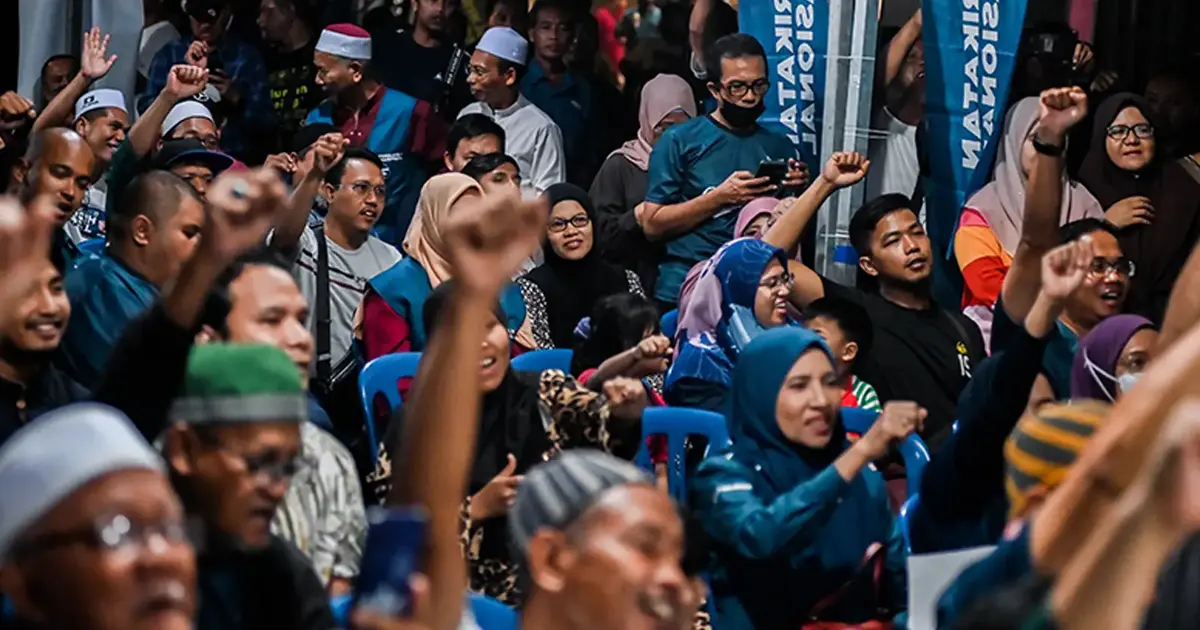
The Ilham Centre's recent analysis of voting behaviour during the Johor and Negeri Sembilan state elections has surfaced troubling patterns in political awareness among younger supporters of Perikatan Nasional, suggesting that youthful enthusiasm for the coalition may not be matched by deep understanding of its internal mechanics or electoral positioning.
During research conducted across both states, the think tank encountered young PN voters who expressed intent to cast ballots for the coalition in seats where it had not fielded any candidates whatsoever. This disconnect between voter intention and electoral reality reveals a potential vulnerability in how the coalition mobilises its younger demographic, particularly given the competitive nature of recent state-level contests across Malaysia.
The finding becomes more significant when contextualised within the broader landscape of Malaysian coalition politics. Perikatan Nasional comprises multiple parties with distinct ideological bases and organisational structures, most notably Parti Islam Se-Malaysia and Bersatu. The coordination between these entities involves complex negotiations over seat allocation, campaign resources, and policy positioning. Younger supporters operating without full grasp of these dynamics may cast votes inefficiently or become disillusioned when coalition performance diverges from their expectations.
This awareness gap extends beyond simple logistical confusion about candidate availability. It suggests that messaging around PN's composition and internal dynamics has not effectively permeated younger voter segments, even as the coalition has made considerable efforts to appeal to this demographic through digital platforms and youth-oriented campaign strategies. The coalition's narrative about itself as a unified political force may be resonating emotionally without conveying substantive information about how its member parties function and coordinate.
The distinction between PAS and Bersatu represents a particularly important dimension of this potential confusion. While both parties operate within PN's framework, they occupy different positions on various policy spectrums and appeal to different constituent bases. PAS brings traditional Islamic organisational structures and grassroots networks, while Bersatu positions itself as a catch-all Malay-Muslim vehicle with cross-cutting appeal. Young voters unclear about these differences may hold unrealistic expectations about what PN would deliver if elevated to government.
In the context of Johor and Negeri Sembilan specifically, these states have distinctive political histories and voter compositions that would normally require tailored messaging strategies. Johor's long-standing role as an economic powerhouse and BN stronghold means young voters there may carry particular assumptions about governance styles and policy priorities. Negeri Sembilan's more competitive electoral environment creates different dynamics again. That young supporters across both states appear equally confused about basic electoral facts suggests the coalition's outreach efforts have not adequately adapted to local contexts.
The Ilham Centre's findings carry implications for how Perikatan Nasional structures its communications with younger audiences heading into future electoral contests. Social media has enabled faster dissemination of political messaging, yet clearly has not ensured accuracy or comprehensiveness of that messaging. Young voters may encounter PN content emphasising emotional appeals or broad policy statements without encountering information about coalition mechanics that would enable informed decision-making.
This knowledge gap also raises questions about the sustainability of PN's youth mobilisation efforts. Voters who cast ballots based on incomplete information and subsequently discover incongruence between expectations and reality may become cynical about politics more broadly or turn away from the coalition. In competitive electoral environments where marginal shifts in turnout can determine outcomes, such dissatisfaction among younger voters could prove consequential.
Moreover, the pattern suggests that rival coalitions may gain advantage through clearer, more consistent messaging about political structures and strategic positioning. If Barisan Nasional, Pakatan Harapan, or other contenders can articulate their own coalition dynamics and seat allocation strategies more transparently to young voters, they might capture support among this demographic through perceived authenticity and clarity.
The Ilham Centre's research underscores a broader challenge facing Malaysian political parties: translating electoral success into durable political support depends not merely on winning votes but on ensuring voters understand what they are supporting. As Malaysian politics continues evolving and coalitions reshape themselves, maintaining alignment between party messaging and voter comprehension becomes increasingly critical. The findings from Johor and Negeri Sembilan suggest that investment in political education and clearer coalition communication strategies should feature prominently in future campaign planning across all major groupings.

