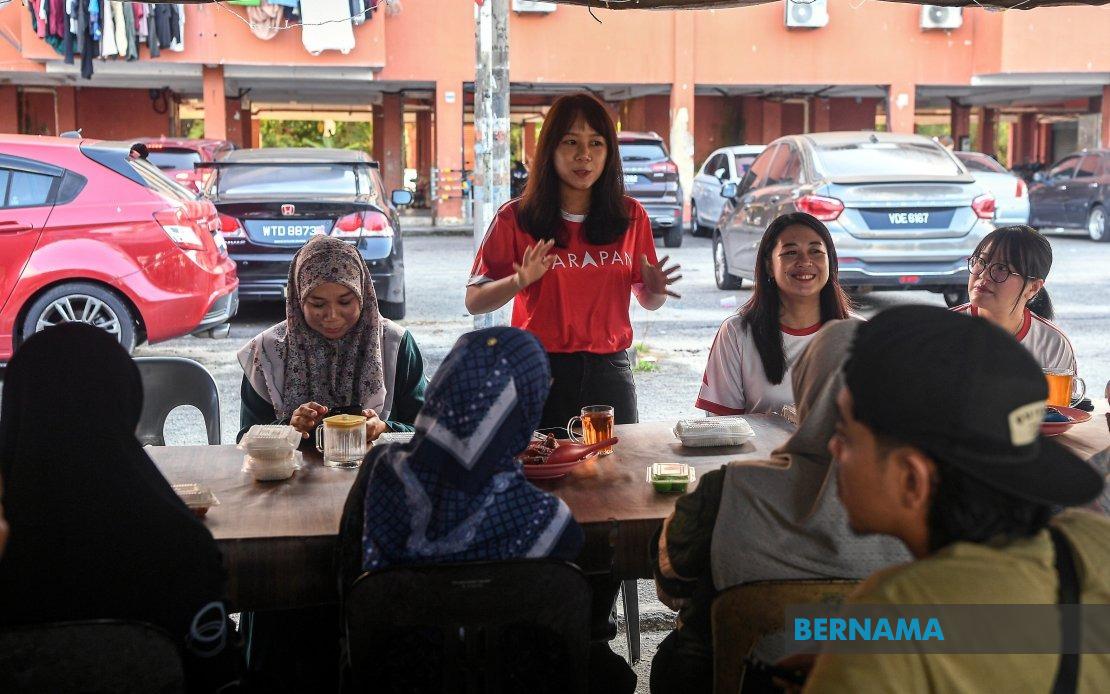
The Johor Jaya state constituency has become a focal point in the sixteenth Johor state election, drawing attention for a contest that exemplifies the broader generational and experiential divides shaping Malaysian politics. Two main contenders—Lee Wern Yiing of Pakatan Harapan and Chan San San representing Barisan Nasional—have articulated distinctly different approaches to constituency development ahead of polling on July 11, with early voting scheduled for July 7. Their competing visions reveal how candidates are adapting their campaigns to address pressing concerns among diverse voter demographics, particularly younger constituents seeking tangible economic prospects and improved quality of life.
Lee, aged thirty and standing as the DAP candidate, represents a demographic increasingly prominent in Malaysian politics: educated professionals who have chosen domestic service over lucrative overseas opportunities. After completing her tertiary education in Singapore in 2018, she made the deliberate decision to return to Malaysia during a period of national optimism following the 2018 general election. This choice to relocate home proved formative in redirecting her trajectory toward political engagement, beginning with a position as special officer to the outgoing Johor Jaya assemblyman Liow Cai Tung. Her progression from advisory role to constituency candidate underscores how younger individuals are building institutional credibility within established coalitions before seeking elected office.
Central to Lee's campaign messaging is a commitment to reshaping perceptions about youth political engagement. She contests the widespread narrative that younger voters demonstrate apathy toward electoral participation and governance issues, instead arguing that this cohort conducts informed evaluation of policy platforms before casting their ballots. This position carries implications for how political parties structure their communication strategies, particularly regarding digital engagement. Lee acknowledges that tailored outreach through social media platforms, combined with community-centred activities such as the Johor Jaya Run event series, represents essential mechanisms for translating policy positions into accessible language for younger demographics. By deliberately bridging institutional politics with grassroots connection, she attempts to demonstrate that representation can be both substantive and relatable.
Her policy platform reflects concerns central to young Malaysian professionals and families: employment accessibility, affordable housing, and managing rising living expenses. Lee situates the Johor-Singapore Special Economic Zone development as a potential catalyst for addressing these interconnected challenges. She envisions the JS-SEZ not merely as an abstract economic initiative but as a practical vehicle for generating employment opportunities that might incentivize young professionals to establish their livelihoods and families within Johor rather than pursuing opportunities in Singapore or other regional hubs. This framing carries particular relevance given Johor's historical experience of talent outmigration toward the republic. Her articulation of making Johor Jaya a destination where young people "want to go home" reflects a broader economic nationalism positioned around reversing brain drain through creating competitive local opportunities.
Chan San San's candidacy presents a contrasting profile rooted in institutional familiarity and accumulated local experience. Self-described as an "anak Plentong," she emphasizes her more than decade-long engagement with community service, grounded in roles including Johor Bahru City Council membership, deputy secretary positions within MCA, and participation in the MCA Crisis Relief Squad volunteer network. Her campaign strategy positions experiential knowledge derived from direct community interaction as superior to policy frameworks developed in abstract terms. By framing "people's problems" as concrete realities rather than statistical abstractions, Chan implicitly critiques approaches that prioritize ideological positioning over pragmatic problem-solving.
Chan's four-point development agenda addresses infrastructure and economic positioning with emphasis on transportation connectivity and congestion mitigation. She identifies transforming Johor Jaya into a transportation hub connecting eastern Johor Bahru with the Rapid Transit System project as instrumental for constituency development. This approach reflects how regional infrastructure investments increasingly determine local economic vitality and residential attractiveness. The RTS connection particularly signifies integration with Singapore's transport network, positioning Johor Jaya for cross-border commuting and trade facilitation. Her focus on local economic strengthening paired with infrastructure improvement suggests a framework prioritizing incremental advancement through leveraging existing development initiatives rather than proposing transformative new programmes.
The four-way contest involving Lee, Chan, Parti Bersama Malaysia candidate Lau Yi Leong, and independent candidate Lim Hun Peaw reflects broader fragmentation within Malaysia's political landscape, particularly as smaller coalitions and independent candidates claim growing space in state elections. The multiplication of contenders complicates voter choice while potentially providing openings for candidates with distinctive positioning. Johor's state election encompasses 172 candidates competing for fifty-six seats, indicating intense competition and suggesting that margin-building efforts and targeted voter mobilization become decisive factors beyond broad policy articulation.
The Johor Jaya race encapsulates tensions between generational renewal and institutional continuity within Malaysian politics. Lee's candidacy embodies the appeal to younger voters through emphasis on employment creation, digital communication accessibility, and framing governance as responsive to contemporary challenges. Chan's positioning leverages trust built through sustained community engagement and technical competence in municipal-level problem-solving. Neither candidate has articulated dramatically innovative policy directions; instead, both operate within existing frameworks while emphasizing distinct implementation philosophies and voter relationship models.
For Malaysian observers and regional analysts, the Johor Jaya contest illuminates how state elections function as laboratories for testing campaign approaches and policy emphasis before general elections. The prominence Lee and Chan accord to employment, housing, and infrastructure reflects nationwide preoccupations increasingly dominating electoral discussions. Both candidates acknowledge that demographic groups—particularly younger voters—require demonstrable evidence that representation translates into material improvements in living standards. The constituency race ultimately suggests that Malaysian electoral competition is evolving toward greater emphasis on granular local delivery, measurable economic outcomes, and authentic community presence, with ideology increasingly filtered through pragmatic governance lens.

