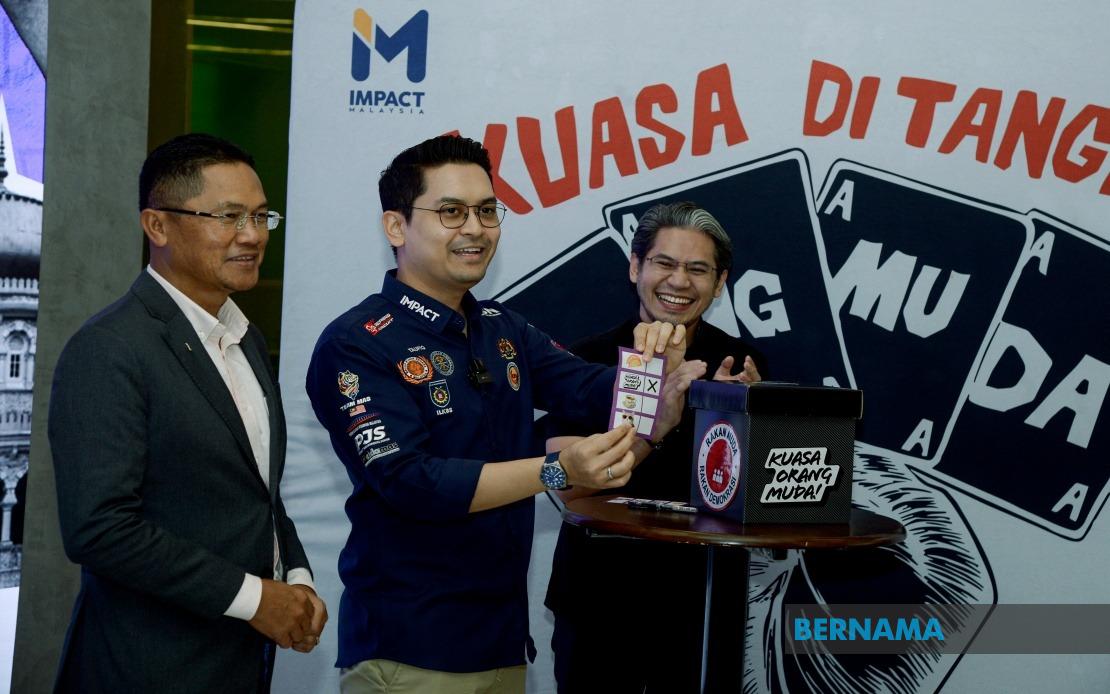
The Ministry of Youth and Sports has embarked on an ambitious nationwide expansion of the Kuasa Orang Muda initiative, signalling the government's commitment to developing informed political participation among Malaysia's newly enfranchised youth electorate. The move reflects recognition that lowering the voting age to 18 requires simultaneous investment in civic education to ensure young voters can make sound decisions at the ballot box. Minister Dr Mohammed Taufiq Johari announced the expansion during the Month of Friends of Democracy campaign, framing democratic literacy as a long-term national priority rather than a quick-fix intervention.
The timing of this expansion carries particular significance for Malaysia's political landscape. Since the government implemented Undi18 on January 1, 2022—following a landmark ruling by the Kuching High Court in Sarawak—the country has brought millions of new voters into the electoral process. However, the Ministry's public acknowledgement that many young people lack foundational knowledge about voting procedures and political processes suggests that the administrative expansion of voting rights has outpaced civic preparation. This initiative represents an effort to close that gap before the next general election cycle, when these younger voters will exercise their franchise in meaningful numbers.
The Kuasa Orang Muda framework operates under the broader Rakan Muda umbrella and targets three interconnected outcomes: boosting political literacy, strengthening democratic understanding, and developing leadership capabilities among Malaysia's youth population. According to the Minister, the approach deliberately avoids partisan messaging, instead emphasizing neutral, easily digestible educational materials that encourage independent critical thinking. This methodological choice is particularly important in Malaysia's multi-ethnic, multi-religious context, where politically divisive approaches could exacerbate communal tensions or alienate segments of the youth population from civic engagement altogether.
A central strategic element of the programme involves reorienting young voters toward performance-based political evaluation rather than identity-driven voting patterns. Dr Taufiq explicitly framed this objective, stating that youth should assess leaders using data, facts, and demonstrated performance rather than relying on sentiment or communal affiliation. This represents a deliberate institutional effort to reshape electoral culture among the youngest cohort of voters before established habits solidify. If successful, such a shift could have reverberating effects on Malaysian politics over the coming decades, as younger voters mature into the core electorate and potentially carry more evidence-based evaluative frameworks into middle age.
The geographical scope of the expansion is comprehensive, extending from higher education institutions and polytechnics to village-level engagements and public spaces. The Ministry plans to conduct touring roadshows across the country while simultaneously hosting major events such as the Youth Power Festival combined with the Mega Careers & Study Fair at the Kuala Lumpur Convention Centre on August 22 and 23. Specific venue partnerships include Kota Kinabalu Polytechnic, Merlimau Polytechnic, MAHSA University, and student markets in various states. This multi-venue strategy acknowledges that youth engagement cannot rely solely on urban centers or tertiary education spaces but must penetrate into smaller towns and villages where younger populations may have less exposure to systematic civic education.
Beyond physical programmes, the initiative leverages digital infrastructure through the online portal belajar.kuasaorangmuda.com, which houses e-learning modules covering public policy fundamentals and local socio-economic information. This digital component is particularly relevant for Malaysia's predominantly young population and reflects the Ministry's understanding that contemporary civic education must meet youth where they already spend time online. The e-learning approach also enables scaling without proportional increases in personnel costs, allowing the programme to reach geographically dispersed populations simultaneously.
A distinctive feature involves the "Youth Power Voice" component, which systematically collects youth aspirations and perspectives for submission to policymakers. This mechanism theoretically transforms the initiative from a one-way educational delivery system into a bidirectional dialogue where young people's input influences policy development. Such channels can increase youth investment in democratic processes by demonstrating that their participation leads to tangible policy consideration. However, the initiative's success ultimately depends on whether policymakers genuinely incorporate youth feedback or whether the mechanism becomes a symbolic gesture that leaves young voters feeling unheard.
The Minister's repeated emphasis that this represents a multi-year commitment rather than a short-term campaign reflects mature understanding of how civic attitudes develop. He acknowledged that meaningful results may take several years to manifest, suggesting the government recognizes that democratic literacy cannot be rushed or reduced to a single intervention. This perspective contrasts with the often-transactional nature of Malaysian political campaigns and indicates a willingness to invest in generational change that may not yield immediate electoral benefits.
For Malaysian observers and regional analysts, the Kuasa Orang Muda expansion offers insights into how democracies adapt when structural reforms—such as age-based voting expansion—outpace institutional preparation. The programme's emphasis on neutral, performance-based political evaluation also hints at government concerns about identity-driven polarization and the potential for younger voters to either amplify or moderate existing political divisions depending on their educational formation. Whether this initiative succeeds in creating more analytically sophisticated voters or merely legitimizes existing structures will become apparent as the first fully Undi18-shaped electorate matures through the next electoral cycle.

