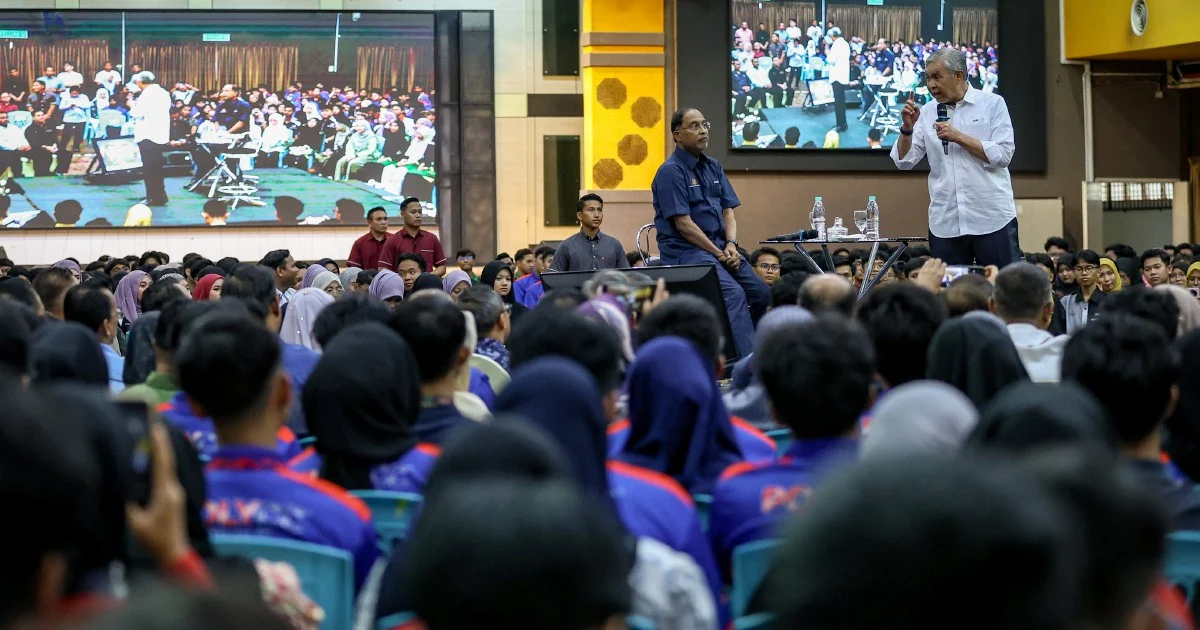
The political trajectory of Johor increasingly depends on how younger voters exercise their electoral power, according to Datuk Seri Dr Ahmad Zahid Hamidi, who delivered this message during an engagement in Pasir Gudang. The demographic composition of Johor's voting population has shifted significantly, with voters aged 40 years or younger now representing a substantial majority of the electorate, fundamentally altering the calculus of state-level politics.
Zahid's appeal to young voters carries particular weight given Malaysia's evolving political landscape, where generational divides have become increasingly pronounced in electoral outcomes. The message reflects a broader recognition among national political leaders that the youth vote is no longer simply a secondary factor but rather a primary determinant of electoral success at both state and federal levels. For Johor specifically, this demographic reality means that candidates and parties must actively engage with younger voters' priorities and concerns rather than relying on traditional voter bases.
The concentration of younger voters in Johor's electorate presents both opportunities and challenges for political parties seeking to consolidate support. Those under 40 tend to have different expectations regarding governance, economic opportunity, and social policy compared to older generations. Issues such as employment prospects, affordable housing, digital infrastructure, and environmental sustainability frequently resonate more strongly with younger demographics. Political organisations that fail to address these concerns risk alienating a majority of the voting population upon whose support electoral victory depends.
Zahid's intervention suggests an awareness within political circles that messages crafted for older voters may not effectively persuade younger electors. The appeal to "choose wisely" underscores an implicit acknowledgment that youth voters possess distinct decision-making criteria and require tailored political communication. This represents a shift from earlier electoral campaigns that often treated younger voters as passive participants in pre-determined political outcomes. Instead, contemporary Malaysian politics increasingly recognises that youth voters are active agents whose preferences substantially shape electoral results.
For Malaysia more broadly, Johor's demographic profile is emblematic of national trends toward youth-dominated electorates. As older generations gradually comprise smaller portions of the overall voting population, their relative political influence diminishes proportionally. Consequently, political parties operating at state or federal level must fundamentally recalibrate their organisational strategies, messaging, and policy priorities to remain electorally competitive. The traditional approaches that mobilised voters in previous decades may prove insufficient for securing support among populations where the majority falls below 40 years of age.
The stakes for Johor's political direction extend beyond internal state politics into the broader Southeast Asian context. As Malaysia's most economically developed state and a crucial southern anchor for the country's manufacturing and services sectors, Johor's governance outcomes have ripple effects throughout the region. Investment decisions, infrastructure development, and regulatory frameworks established in Johor influence not only employment opportunities for young Johoreans but also regional economic dynamics. This economic dimension adds urgency to Zahid's call for careful electoral deliberation among younger voters.
Young voters in Johor face genuine pressure in making informed electoral choices because the competing political visions offered by different parties carry substantial consequences for their economic futures. The choice between candidates becomes inseparable from broader decisions about economic development models, investment attraction, and sector prioritisation. A vote for one party over another potentially determines whether Johor pursues manufacturing-intensive growth, embraces technological innovation, or emphasises service-sector development. For youth considering career prospects and wealth accumulation, these political choices carry immediate practical implications.
Zahid's framing of the youth vote as decisive rather than merely significant carries strategic importance. By elevating younger voters' perceived importance, the statement implicitly encourages greater political participation among those aged 40 and below. Higher youth voter turnout typically benefits parties able to mobilise younger supporters effectively. The message also acknowledges that candidates cannot afford to ignore youth concerns or assume automatic support from older voters, fundamentally reshaping how political campaigns must be structured and resourced in Johor.
The demographic shift toward youth-dominated electorates creates opportunities for political renewal and challenge to established power structures. Younger voters often demonstrate greater willingness to abandon traditional party loyalties and reward candidates demonstrating genuine commitment to addressing contemporary challenges. This volatility contrasts with older voting populations that frequently exhibit stronger attachment to established parties. For Johor politics, this means that the outcome of elections increasingly hinges on parties' capacity to convince younger voters that their specific proposals genuinely address youth priorities.
Looking forward, the political parties competing for influence in Johor would be wise to treat Zahid's observation not as mere rhetoric but as an accurate reflection of electoral reality. The concentration of voters aged 40 and below will only intensify as generational turnover continues. Consequently, investment in understanding youth priorities, developing policy responses to youth concerns, and cultivating organisational capacity to mobilise younger voters represents a strategic imperative rather than an optional add-on to electoral strategy. The future of Johor politics belongs to parties that recognise this reality and adapt accordingly.

